


 Aperçu en situation
 Partager
 Partager
 Détails
 Guide imprimable

 Télécharger
 Articles similaires
 Radiographie
 Voir le diaporama
 Statistiques
Pride (sketch)

 Afficher la suite
Reproduction à l'huile faite à la main
Huile sur toile peinte à la main, avec cadre et dimensions personnalisés, réalisée sur commande par nos artistes. ( Passer au format impression Passer au format image numérique)




P118B €10

P118H €10

P118W €10

P438Z €10

P508JH €12

P508YH €12

P805H €10

P805Z €10

P919BZ €10

P919G €10

P919XJ €10

P959ZH €10

P968JZ €12

W106C €8

W218G €10

W218JH €8

W218Y €10

W307PJ €10

W316G €10

W316PJ €8

W316Y €10

W398PJ €8

W4111J €10

W500HY €15

W500JH €15

W692G €12

W849H €8

W940BG €15

W953PJ €8




Choisissez parmi nos formats prédéfinis qui respectent les proportions originales de l’œuvre.

Saisissez la largeur et la hauteur souhaitées, pour s'adapter à votre cadre ou à votre mur. Cette œuvre est peinte à la main ; ainsi, pour un format de forme différente, l'artiste peut peindre un peu plus autour du tableau ou réduire légèrement les bords — c'est vous qui choisissez. Nous vous envoyons une maquette numérique pour approbation avant que la peinture ne commence. L'image présentée sur cette page ne reflète pas le résultat réel — seule la maquette le fait.
Après la commande, l’équipe AllPaintingsStore.com contactera le client par e-mail pour recueillir ses instructions et lui fournira une maquette d’aperçu
Livraison dans le monde entier () en 3 à 4 semaines au lieu des 5 semaines habituelles. (22 octobre). Aucun compromis sur la qualité.

Livraison express gratuite dans le monde entier

Toile de lin de haute qualité

Assurance transport complète

Garantie de remboursement des droits de douane

Garantie de fidélité des couleurs

Garantie de retour de 100 jours (uniquement en cas de défaut)

Garantie de remboursement à 100%

Tarifs dégressifs sur quantité
 L'option verre n'est disponible que pour les dimensions inférieures à 110 cm.

Pride (sketch)
Technique de reproduction
Format de la reproduction
-


Prix total final
€ 225
The Unsettling Gaze of “Pride”
James Ensor’s “Pride,” a preliminary sketch from his ambitious “Deadly Sins” series, isn't merely a depiction of a gathering; it’s a carefully constructed tableau brimming with psychological tension and veiled social critique. The black-and-white photograph captures the raw energy of an early iteration – a glimpse into Ensor’s creative process before the final, more polished etchings emerged. The scene unfolds within a dimly lit interior, dominated by a central figure—a man standing apart from the throng of formally dressed individuals surrounding him. This isolation immediately draws our attention, suggesting a sense of judgment or perhaps even alienation. The figures themselves are rendered with an unsettling directness; their faces largely obscured by masks – not literal theatrical disguises, but symbolic representations of hidden identities and societal facades.
Ensor’s masterful use of line and shadow creates a palpable atmosphere of unease. Notice the sharp angles of the architecture, the exaggerated proportions of the figures, and the unsettling arrangement of birds scattered throughout the composition. These avian elements aren't simply decorative; they contribute to the overall sense of chaos and disruption, hinting at anxieties about morality and the intrusion of the natural world into a structured social environment. The sketch’s immediacy—the visible pencil strokes, the smudges of charcoal—underscores Ensor’s deliberate rejection of academic formality, aligning him with the burgeoning Expressionist movement that would soon challenge traditional artistic conventions.
A Portrait of Victorian Society – and its Discontents
Created in 1904, “Pride” is deeply rooted within the social anxieties of late Victorian England. Ensor was a keen observer of his native Ostend, Belgium, and he frequently used his art to expose the hypocrisy and superficiality of bourgeois society. The meticulously dressed men – their suits, ties, and carefully constructed postures – represent the rigid expectations and constraints imposed upon individuals by societal norms. The sketch’s title itself, “Pride,” is a deliberate provocation, suggesting that this gathering isn't about genuine connection or celebration but rather an exercise in outward appearances and self-importance. The birds, often associated with freedom and instinct, seem to be mocking the rigid formality of the scene, further emphasizing the disconnect between appearance and reality.
Considering Ensor’s broader body of work, particularly his “Deadly Sins” series, "Pride" can be interpreted as a commentary on vanity, greed, and envy – vices that were considered central to Victorian morality. The sketch's stark monochrome palette amplifies the sense of moral judgment, stripping away any potential distractions and focusing our attention on the underlying tensions within the scene. It’s a powerful reminder that beneath the veneer of respectability often lurks a darker, more unsettling truth.
Technique and Artistic Innovation
Ensor's technique in this sketch is remarkably expressive, anticipating the bold graphic style he would later develop in his etchings. He employs a rapid, gestural approach, utilizing loose lines and varying pressures to create a dynamic sense of movement and emotion. The use of charcoal allows for a rich range of tonal values, contributing to the dramatic lighting effects within the composition. Notably, this sketch served as a preliminary study for the final, more elaborate etchings in the “Deadly Sins” portfolio, demonstrating Ensor’s iterative process – constantly refining his ideas and experimenting with different approaches before committing them to paper.
The influence of Symbolism is evident in Ensor's use of symbolism and his interest in exploring psychological states. He was deeply influenced by the works of Gustave Moreau and Odilon Redon, both prominent figures within the Symbolist movement. However, unlike many of his contemporaries, Ensor pushed beyond purely decorative symbolism, imbuing his work with a distinctly unsettling and often grotesque quality. “Pride” exemplifies this approach – it’s not simply a representation of a scene but an exploration of human nature and its darker impulses.
A Timeless Reflection on Human Nature
“Pride,” in its raw sketch form, offers a profound insight into the artist's vision and his enduring fascination with the complexities of human behavior. It’s a work that continues to resonate today, prompting us to question our own assumptions about social appearances, moral values, and the masks we wear in everyday life. AllPaintingsStore is proud to offer high-quality reproductions of this captivating sketch, allowing you to experience Ensor's unsettling genius firsthand. Whether displayed as a statement piece in your home or studied for its historical significance, “Pride” remains a powerful testament to the enduring legacy of James Ensor.
Questions et réponses
Quelle est l'intensité des couleurs de "Pride (sketch)" ?
Les couleurs de «Pride (sketch)» de James Ensor présentent une saturation Balanced Soft avec une intensité Vivid.
Comment « Pride (sketch) » s'inscrit-il dans les thèmes et le style de James Ensor ?
«Pride (sketch)» partage avec les autres œuvres de James Ensor son style Expressionism ainsi que ses thèmes récurrents : masks, disguise, social critique, carnival, satire, societal norms, belgian folklore, dark humor.
Où et pour quel usage l'œuvre "Pride (sketch)" est-elle recommandée ?
«Pride (sketch)» de James Ensor est recommandé pour Statement, idéalement dans une Living Room. L'usage et l'espace permettent de déterminer où placer une reproduction.
Œuvres similaires


Biographie de l'artiste
jeunesse et parcours artistique
James Sidney Edouard, Baron Ensor, peintre et graveur belge de premier plan, est né le 13 avril 1860 à Ostende, en Belgique. Sa jeunesse fut marquée par un milieu culturel diversifié, avec un père anglais, James Frederic Ensor, et une mère belge, Maria Cathérine Haegheman. Manquant d'intérêt pour les études académiques traditionnelles, Ensor quitta l'école à quinze ans pour poursuivre sa passion pour l'art, se formant auprès de peintres locaux et étudiant ensuite à l’Académie Royale des Beaux-Arts de Bruxelles.style et thèmes artistiques
Le style artistique d'Ensor se caractérisait par son exploration de l'inconscient et d'images oniriques, ce qui a influencé considérablement l'expressionnisme et le surréalisme. Ses peintures mettaient souvent en scène des sujets bizarres, notamment des carnavals, des masques, la marionnetterie, des squelettes et des allégories fantastiques. Parmi ses œuvres notables figurent Les Masques Scandalisés (1883) et Les Squelettes se Battant au Sur un Pendu (1891), qui témoignent de son mélange unique de grotesque et de fantastique.reconnaissance et héritage
Malgré un rejet initial, l'œuvre d'Ensor a progressivement gagné acceptation et reconnaissance. En 1920, il était le sujet de grandes expositions ; en 1929, il fut nommé baron par le roi Albert, et en 1933, il reçut la Légion d’honneur. Son héritage en tant que figure pionnière de l'art moderne est évident dans son influence sur les mouvements artistiques ultérieurs, notamment l'expressionnisme et le surréalisme.Œuvres clés et expositions
* L’Intrigue (90 x 150 cm, Koninklijk Museum voor Schone Kunsten, Anvers, Belgique) * Les Tribulations de Saint Antoine (1887, conservé au Museum of Modern Art, New York)- Découvrez-vous la vie et l'œuvre de James Ensor sur AllPaintingsStore: James Ensor
- Explorez le Musée Mu.Zee à Ostende, Belgique, qui présente une collection d'art belge de 1830 à aujourd’hui sur AllPaintingsStore: Découvrez le Musée Mu.Zee à Ostende, Belgique
- Apprenez-en davantage sur la peinture symboliste et son influence sur l'expressionnisme et le surréalisme sur Wikipédia: Peinture Symboliste
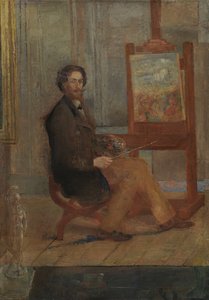
James Ensor
1860 - 1949 , Belgique
En bref
- Artistes Influencés:
- Expressionnisme
- Surréalisme
- Artistes Influents:
- Pieter Bruegel l'Ancien
- Francisco Goya
- James Abbott McNeill Whistler
- Date De Naissance: 13 avril 1860
- Lieu De Naissance: Ostende, Belgique
- Mouvement Artistique: Expressionnisme, Surréalisme
- Nationalité: Belge
- Nom Complet: James Sidney Edouard Ensor
- Oeuvres Notables:
- Les Masques Scandalisés
- Les Tribulations de Saint Antoine
- Squelettes se battant sur un pendu
- Christ entrant à Bruxelles
Articles connexes
Munnings : Les 25 Œuvres Maîtresses du Cavalier Anglais | AllPaintingsStore
Plongez dans l'univers vibrant d'Alfred Munnings ! Découvrez les 25 œuvres maîtresses du peintre anglais, icônes de l'art équestre et de l'impressionnisme britannique. Tableaux de chevaux, paysages idylliques… Trouvez votre inspiration déco sur AllPaintingsStore.com.

James Ensor's Grotesque Visions: Social Commentary & Artistic Innovation
Explore the unsettling yet captivating world of James Ensor, a pioneer of Expressionism. Discover his satirical masterpieces, symbolic imagery & lasting influence on modern art. High-quality reproductions available at AllPaintingsStore.
Unveiling the Mystery: A Journey Through the World's Most Iconic Mask Artworks
Embark on a profound journey through the world's most iconic mask artworks. Explore the spiritual depth, intricate craftsmanship, and rich cultural heritage of global traditions, from Chhau to Gomira, in this expert-led exploration of ancestral artistry and symbolic beauty.
James Abbott McNeill Whistler : Les 25 Œuvres Maîtresses d'un Précurseur de l'Art Moderne
Plongez dans l'univers de James Abbott McNeill Whistler : découvrez ses 25 œuvres les plus emblématiques, des nocturnes aux portraits saisissants. Explorez son esthétisme unique et trouvez l'inspiration déco avec AllPaintingsStore.com.

The Eloquent Line: Exploring the Artistic Significance of Sketches Across Movements and Media
Explore the profound artistic significance of sketches throughout history. From Renaissance masters to modern innovators like Van Gogh & Guston, discover how these foundational works reveal technique, emotion, and vision. Learn more at AllPaintingsStore.


