


 Aperçu en situation
 Partager
 Partager
 Détails
 Guide
Guide

 Télécharger
 Articles similaires
 Radiographie
 Voir le diaporama
 Statistiques
Titania, Bottom and the Fairies
 Oil On Canvas
- WallArt
- Romanticism
 1794
1794- 19th Century
 169.0 x 135.0 cm
 Kunsthaus Zürich
 Afficher la suite
Reproduction à l'huile faite à la main
Huile sur toile peinte à la main, avec cadre et dimensions personnalisés, réalisée sur commande par nos artistes. ( Passer au format impression Passer au format image numérique)




P118B $10

P118H $10

P118W $10

P438Z $10

P508JH $12

P508YH $12

P805H $10

P805Z $10

P919BZ $10

P919G $10

P919XJ $10

P959ZH $10

P968JZ $12

W106C $8

W218G $10

W218JH $8

W218Y $10

W307PJ $10

W316G $10

W316PJ $8

W316Y $10

W398PJ $8

W4111J $10

W500HY $15

W500JH $15

W692G $12

W849H $8

W940BG $15

W953PJ $8




Choisissez parmi nos formats prédéfinis qui respectent les proportions originales de l’œuvre.

Vous pouvez saisir vos propres dimensions pour l'adapter à un cadre ou à un espace spécifique. Si la taille sélectionnée ne correspond pas aux proportions de l'image d'origine, nous recadrerons l'œuvre ou prolongerons la peinture avec des éléments peints à la main supplémentaires. Une maquette numérique vous sera envoyée pour approbation avant le début de la production.
Veuillez noter que l'aperçu à l'écran ne reflète pas le recadrage ou l'extension réels. Seule la maquette montrera fidèlement la composition finale.
Bien que des tailles personnalisées soient disponibles, nous vous recommandons de sélectionner une dimension dans la liste prédéfinie afin de préserver les proportions d'origine.
Après la commande, l’équipe AllPaintingsStore.com contactera le client par e-mail pour recueillir ses instructions et lui fournira une maquette d’aperçu
Livraison dans le monde entier () en 3 à 4 semaines au lieu des 5 semaines habituelles. (21 septembre). Aucun compromis sur la qualité.

Livraison express gratuite dans le monde entier

Toile de lin de haute qualité

Assurance transport complète

Garantie de remboursement des droits de douane

Garantie de fidélité des couleurs

Garantie de retour de 100 jours (uniquement en cas de défaut)

Garantie de remboursement à 100%

Tarifs dégressifs sur quantité
 L'option verre n'est disponible que pour les dimensions inférieures à 110 cm.

Titania, Bottom and the Fairies
Technique de reproduction
Format de la reproduction
-


Prix total final
$ 258
A Visionary Dreamscape: The Enchanting World of Fuseli
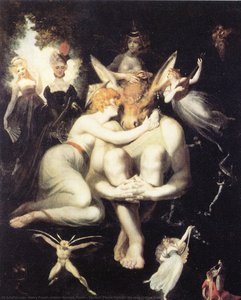
In the grand tapestry of Romantic art, few works capture the feverish intensity of the human imagination quite like Johann Heinrich Füssli’s “Titania, Bottom and the Fairies.” Painted in 1794, this monumental canvas serves as a breathtaking portal into the dreamscape of William Shakespeare’s A Midsummer Night’s Dream. It is not merely a depiction of a theatrical scene, but a profound exploration of the psyche, where the boundaries between reality and illusion dissolve into a mist of magic and desire. As the viewer gazes upon this tableau, they are transported to a realm where the irrational reigns supreme, making it an irresistible centerpiece for any collection dedicated to the sublime and the extraordinary.
The heart of the composition lies in the improbable and intoxicating encounter between Queen Titania, the ethereal ruler of the fairy realm, and Bottom, the weaver transformed by Puck’s mischievous magic into a creature with the head of a donkey. This striking juxtaposition—the divine beauty of the fairy queen contrasted against the grotesque, hybrid form of Bottom—creates a tension that is both unsettling and deeply captivating. Füssli masterfully uses this pairing to symbolize the collision between high fantasy and raw, earthly instinct, mirroring the profound societal anxieties and the yearning for spiritual renewal that characterized the late 18th century.
Mastery of Light and Shadow: The Romantic Technique
Füssli’s technical prowess is on full display through his signature use of dramatic chiaroscuro. By manipulating extreme contrasts between light and shadow, he imbues the scene with a theatrical energy that feels almost alive. The flickering light seems to dance across the frenetic movements of the surrounding fairy court, highlighting the textures of the forest floor and the luminous skin of the supernatural beings. His brushwork, characterized by a certain thick, palpable texture, contributes to a sense of movement and kinetic energy, ensuring that the eye never rests but instead wanders through the lush, chaotic beauty of the enchanted woods.
For the discerning collector or interior designer, this painting offers more than just visual splendor; it provides an emotional anchor. The atmosphere is one of lively, almost manic energy, yet beneath the surface lies a deeper, more contemplative layer of psychological complexity. The presence of Puck and the surrounding sprites adds a sense of whimsical movement, while the subtle inclusion of animal figures near the center of the scene grounds the fantasy in a primal, naturalistic truth. It is a work that demands attention, inviting those who live among art to contemplate the beautiful madness of the creative spirit.
A Timeless Legacy for the Modern Collector
To possess a reproduction of this masterpiece is to invite the spirit of the Romantic rebellion into one's own space. Füssli, heavily influenced by the visionary William Blake and the classical masters he studied in Italy, created a work that transcends its historical era. It remains a potent symbol of the power of the subconscious mind. Whether placed in a grand gallery or used to add a touch of dramatic sophistication to a contemporary study, "Titania, Bottom and the Fairies" serves as a constant reminder of the infinite reaches of human creativity.
This painting is an ideal choice for those seeking to curate an environment filled with narrative depth and historical resonance. It speaks to the soul of the dreamer and the intellect of the scholar alike, making it a timeless investment in beauty and profound storytelling.
Œuvres similaires





Biographie de l'artiste
Early Life and Education
Johann Heinrich Füssli, known as Henry Fuseli, was born on February 7, 1741, in Zurich, Switzerland – the second of eighteen children to Johann Caspar Füssli, a respected portrait painter. His upbringing within an artistic family instilled in him a deep appreciation for visual arts from a young age. He received a comprehensive classical education at the Collegium Carolinum in Zurich, where he honed his skills in Latin, Greek, and rhetoric – foundational disciplines that would later inform his understanding of art history and theory. This rigorous academic training provided him with a solid base upon which to build his artistic career, exposing him to the principles of ancient sculpture and classical literature, elements that profoundly influenced his aesthetic sensibilities.Artistic Career in Europe
Füssli’s artistic journey commenced with his relocation to London in 1764, where he encountered Sir Joshua Reynolds, a pivotal figure in the British art scene. Reynolds recognized Füssli's potential and encouraged him to dedicate himself entirely to painting, steering him away from the more traditional path of church ministry that had initially been envisioned for him. Following this crucial mentorship, Füssli embarked on an extended sojourn through Italy between 1770 and 1778. During this period, he immersed himself in the works of master painters such as Titian, Caravaggio, and the Mannerists – absorbing their techniques, compositional strategies, and expressive approaches to color and light. This Italian experience proved transformative, shaping his artistic style and providing him with a deeper understanding of Western art history.Supernatural Themes and Literary Inspiration
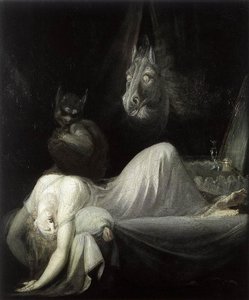
Füssli’s paintings are particularly renowned for their exploration of supernatural themes, often drawing inspiration from literary sources. He created a series of evocative works based on John Milton's epic poems, envisioning a “Milton Gallery” – a concept akin to Boydell’s Shakespeare Gallery – intended to showcase these powerful narratives through visual representation. His most famous work, *The Nightmare* (1782), exemplifies this fascination with the macabre and unsettling, depicting a woman consumed by terror as she confronts a demonic incubus. This painting, along with others like “Titania, Bottom & Fairies,” captured the burgeoning Romantic sensibility of the late 18th century, characterized by an interest in emotion, imagination, and the darker aspects of human experience.Influence and Legacy
Füssli’s distinctive style exerted a considerable influence on subsequent generations of British artists, notably William Blake, whose own work often explored themes of mythology, symbolism, and the subconscious. His dramatic use of chiaroscuro (the contrast between light and dark), coupled with his penchant for depicting fantastical creatures and unsettling scenes, paved the way for Romanticism in Britain. His works continue to be studied and admired for their psychological depth, evocative atmosphere, and masterful execution. Museums worldwide – including the Kunsthaus Zürich in Switzerland and the Albertina in Vienna – house significant collections of Füssli’s paintings, ensuring that his artistic legacy endures as a testament to his unique vision and enduring impact on the history of art.
Johann Heinrich Füssli
1741 - 1825 , Suisse
En bref
- Artistic Movement Or Style: Romantisme, Néoclassicisme
- Artists Or Movements Influenced By This Artist: ['William Blake']
- Artists Who Influenced This Artist:
- Titian
- Caravaggio
- Date Of Birth: 7 février 1741
- Date Of Death: 16 avril 1825
- Full Name: Johann Heinrich Füssli
- Nationality: Suisse
- Notable Artworks:
- Le Cauchemar
- Titania et Bottom
- Place Of Birth: Zurich, Suisse
Articles similaires

Les 10 Chefs-d'œuvre du Paysage Romantique : Artistes et Décor d'Intérieur
Plongez dans l'émotion du Romantisme avec les 10 plus beaux paysages de Friedrich, Turner & Delacroix. Découvrez leur histoire et trouvez l'inspiration déco idéale sur AllPaintingsStore.com !
Henri Matisse : Les 25 Œuvres Maîtresses d'un Génie de la Couleur | AllPaintingsStore
Plongez dans l'univers vibrant d'Henri Matisse ! Découvrez les 25 œuvres majeures du fauvisme et de la peinture moderne. Explorez La Danse, L'Atelier Rouge & plus encore. Reproductions de qualité musée sur AllPaintingsStore.com.

Henry Farny: Romantic Visions of the American West & Indigenous Life
Explore the evocative paintings of Henry Farny, renowned for his romantic realism & depictions of Native American life in the 19th-century West. Discover his legacy and key artworks at AllPaintingsStore.

Les 10 Chefs-d'œuvre Fauves : Couleurs Émotionnelles et Décor d'Art Intemporel
Plongez au cœur du Fauvisme avec les 10 œuvres majeures de Matisse, Derain et Vlaminck. Découvrez l'histoire, la technique et l'impact émotionnel de ces chefs-d’œuvre colorés. Reproductions d'art exceptionnelles sur AllPaintingsStore.com.

10 chefs-d'œuvre du Réalisme Romantique qui capturent l'âme humaine
Plongez dans l'émotion du Réalisme Romantique. Explorez 10 chefs-d'œuvre iconiques, de Constable à Homer, mêlant vérité et passion. Trouvez l'inspiration pour votre décor avec nos reproductions de qualité musée sur AllPaintingsStore.com. Découvrez toute la collection en ligne.


