


 Aperçu en situation
 Partager
 Partager
 Détails
 Guide
Guide

 Télécharger
 Articles similaires
 Radiographie
 Voir le diaporama
 Statistiques
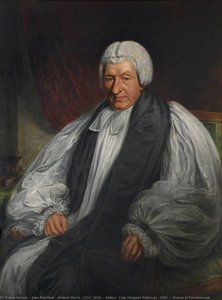
Hibbert Binney (1819–1887), Fellow of Worcester College, Bishop of Nova Scotia (1851–1887)
 Academic Realism
 1852
1852 141.0 x 110.0 cm
 Worcester College
 Afficher la suite
Reproduction à l'huile faite à la main
Huile sur toile peinte à la main, avec cadre et dimensions personnalisés, réalisée sur commande par nos artistes. ( Passer au format impression Passer au format image numérique)




































Choisissez parmi nos formats prédéfinis qui respectent les proportions originales de l’œuvre.

Vous pouvez saisir vos propres dimensions pour l'adapter à un cadre ou à un espace spécifique. Si la taille sélectionnée ne correspond pas aux proportions de l'image d'origine, nous recadrerons l'œuvre ou prolongerons la peinture avec des éléments peints à la main supplémentaires. Une maquette numérique vous sera envoyée pour approbation avant le début de la production.
Veuillez noter que l'aperçu à l'écran ne reflète pas le recadrage ou l'extension réels. Seule la maquette montrera fidèlement la composition finale.
Bien que des tailles personnalisées soient disponibles, nous vous recommandons de sélectionner une dimension dans la liste prédéfinie afin de préserver les proportions d'origine.
Après la commande, l’équipe AllPaintingsStore.com contactera le client par e-mail pour recueillir ses instructions et lui fournira une maquette d’aperçu
Livraison dans le monde entier () en 3 à 4 semaines au lieu des 5 semaines habituelles. (21 septembre). Aucun compromis sur la qualité.

Livraison express gratuite dans le monde entier

Toile de lin de haute qualité

Assurance transport complète

Garantie de remboursement des droits de douane

Garantie de fidélité des couleurs

Garantie de retour de 100 jours (uniquement en cas de défaut)

Garantie de remboursement à 100%

Tarifs dégressifs sur quantité
 L'option verre n'est disponible que pour les dimensions inférieures à 110 cm.

Hibbert Binney (1819–1887), Fellow of Worcester College, Bishop of Nova Scotia (1851–1887)
Technique de reproduction
Format de la reproduction
-


Prix total final
$ 258
Œuvres similaires




Biographie de l'artiste
Early Life and Influences – The Seeds of a Vision
Born in Oxford, England, around 1818 (though precise dates remain elusive), John Bridges’s life unfolded against the backdrop of a rapidly changing Victorian era. While much remains shrouded in the mists of historical record, we can piece together a portrait of an artist deeply rooted in the traditions of English sporting art while simultaneously embracing the burgeoning interest in topographical views. His early years were likely shaped by his family – details are scarce, but it’s understood he was part of a creative lineage, with connections to other artists and potentially within the academic circles of Oxford.
The prevailing artistic currents of the time undoubtedly influenced Bridges's development. The Romantic movement, with its emphasis on emotion, nature, and the sublime, provided a crucial foundation. Simultaneously, the rise of realism in painting—particularly the work of artists like William Turner and J.M.W. Turner—demonstrated the potential for capturing the essence of landscapes and light with unprecedented accuracy. Furthermore, the popularity of sporting scenes – depictions of hunting, racing, and equestrian pursuits – reflected a growing fascination with leisure activities among the Victorian elite. Bridges’s work would ultimately synthesize these diverse influences into a distinctive style.
A Career Forged in Oxford and Beyond
Bridges established himself primarily as a painter based in Oxford, a city renowned for its artistic community during the 19th century. He was associated with the prestigious Worcester College, serving as a Fellow, which suggests an engagement with academic art traditions. However, his primary focus lay outside the confines of formal instruction, dedicating much of his career to capturing the dynamism and beauty of the English countryside and the world of sporting pursuits.
- Sporting Scenes: Bridges excelled at depicting horse racing, hunting expeditions, and other equestrian events. His paintings are characterized by a keen eye for detail, capturing the movement, energy, and excitement of these activities with remarkable skill.
- Topographical Views: Alongside his sporting scenes, Bridges produced a series of topographical views – detailed depictions of landscapes, buildings, and urban settings. These works demonstrate an interest in accurately representing the physical environment, reflecting the Victorian fascination with mapping and surveying.
- Portraiture: Evidence suggests Bridges also engaged in portrait painting, as evidenced by his 1852 portrait of Hibbert Binney, Bishop of Nova Scotia. This work showcases his ability to capture likenesses and convey personality through careful observation and skillful brushwork.
Notable Works and Artistic Style
While a comprehensive catalog of Bridges’s oeuvre remains incomplete, several paintings have survived and offer valuable insights into his artistic style. His work is generally characterized by a meticulous attention to detail, a vibrant use of color, and a skillful rendering of light and shadow. He often employed a loose, expressive brushstroke that conveyed movement and energy, particularly in his depictions of sporting scenes.
- The Hibbert Binney Portrait (1852): This portrait exemplifies Bridges’s academic realism and his ability to capture the likeness and demeanor of his subject.
- Landscape Paintings: His landscapes often feature rolling hills, expansive skies, and carefully rendered details of flora and fauna.
- Racing Scenes: Bridges's racing scenes are particularly noteworthy for their dynamic compositions and skillful depiction of horses in motion.
Legacy and Historical Significance
John Bridges’s contribution to Victorian art lies primarily in his masterful depictions of sporting life and topographical views. He stands as a key figure in the development of English sporting art, capturing the spirit of leisure and adventure that defined the era. His work reflects both the artistic traditions of Oxford and the broader cultural trends of 19th-century England.
Furthermore, Bridges’s career coincided with significant social and political changes, including the gradual dismantling of the British Empire and the rise of industrialization. His paintings offer a glimpse into a world where rural life and traditional pursuits still held considerable importance, even as urban centers grew in size and influence. He is remembered alongside Peter Tillemans, another prominent artist of his time who shared similar interests and techniques.

john bridges
1818 - 1854
En bref
- Artistic Movement Or Style: Sporting art, landscapes
- Artists Or Movements Influenced By This Artist: ['Peter Tillemans']
- Artists Who Influenced This Artist: ['John Allnatt Hedges']
- Date Of Birth: 1818
- Date Of Death: 1854
- Full Name: John Bridges
- Nationality: British
- Notable Artworks:
- Portrait of Hibbert Binney
- Portrait of Lieutnant-General
- Little Betsie
- Place Of Birth: WahooArt
Articles similaires

Realism in Art: A Professional Guide to Authentic Detail and Lifelike Masterpieces for Large-Scale Interior Projects
Master the use of Realism in professional interiors. This expert guide explores 19th-century masterpieces, offering procurement managers and designers technical insights into selecting authentic, hand-painted oil reproductions for high-end hotel and corporate projects.

