Envoyer
 Partager
 Détails de l'œuvre

 Télécharger
 Articles similaires
 Diaporama
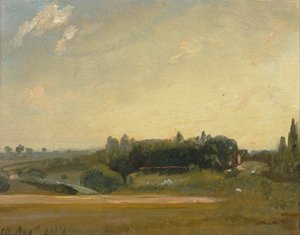
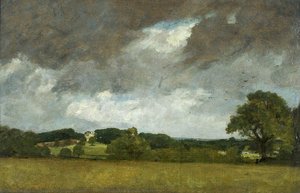
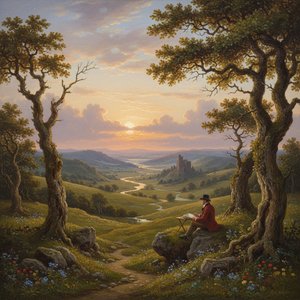
Overbury Hall, Suffolk

 Lire la suite
Giclées et impressions d'art
Impressions giclées ou sur toile de qualité musée, avec une production rapide et des finitions au choix. ( Passer à la peinture faite à la main Passer à l'image)




































Choisissez parmi nos formats prédéfinis qui respectent les proportions originales de l’œuvre.

Vous pouvez saisir vos propres dimensions pour vous adapter à un cadre ou à un espace spécifique. Si la taille sélectionnée ne correspond pas aux proportions de l'image originale, nous recadrerons l'œuvre ou étendrons l'image avec une bordure en miroir ou une couleur unie. Une maquette numérique vous sera envoyée pour approbation avant le début de la production.
Veuillez noter que l'aperçu à l'écran ne reflète pas le recadrage ou l'extension réelle. Seule la maquette montrera avec précision la composition finale.
Bien que des tailles personnalisées soient disponibles, nous vous recommandons de choisir une dimension dans la liste prédéfinie afin de préserver les proportions originales.
Livraison dans le monde entier () en 2 semaines au lieu des 4/5 semaines habituelles. (8 août)

Livraison express gratuite dans le monde entier

Toile de lin de qualité supérieure

Assurance transport complète

Garantie de remboursement des droits de douane

Garantie de fidélité des couleurs

Politique de retour de 60 jours (uniquement en cas de défaut)

Garantie de remboursement à 100%

Offre de tarifs dégressifs
 L'option verre n'est disponible que pour les dimensions inférieures à 110 cm.

Overbury Hall, Suffolk
Giclées et impressions d'art
Format de la reproduction
-


Prix total
$ 64
Description de la pièce
A Suffolk Vision: John Constable’s Overbury Hall
John Constable's “Overbury Hall, Suffolk,” painted in 1815, isn’t merely a depiction of an old building; it’s a carefully constructed meditation on light, texture, and the enduring spirit of rural England. This remarkable pencil drawing, now housed within the Victoria & Albert Museum’s Prints & Drawings Study Room, offers a poignant glimpse into a bygone era – a time when the rhythms of agricultural life intertwined seamlessly with the beauty of the natural world. The scene unfolds in a quiet corner of Suffolk, where Overbury Hall, a modest yet dignified structure, stands nestled amongst rolling fields and a meandering stream. It’s a landscape imbued with a sense of melancholy and timelessness, reflecting Constable's deep connection to his native county.
Constable’s genius lies not just in his technical skill – the meticulous rendering of weathered wood, the subtle gradations of tone achieved through masterful hatching and cross-hatching – but also in his ability to evoke atmosphere. The drawing is dominated by a soft, diffused light, casting long shadows that suggest both the stillness of the afternoon and the passage of time. This atmospheric quality is further enhanced by Constable’s use of perspective; he employs a flattened approach, characteristic of topographical drawings popular at the time, creating an illusion of depth through carefully placed lines and variations in detail. The composition itself is deliberately balanced, with the building anchoring the scene while the surrounding landscape provides a sense of spaciousness and tranquility.
The Painter’s Palette: Technique and Style
Executed entirely in pencil on paper, “Overbury Hall” exemplifies Constable's distinctive style – a blend of meticulous observation and expressive brushwork. He employed a technique known as ‘hatching,’ where parallel lines are drawn closely together to create tonal variations, effectively simulating the texture of wood and stone. Cross-hatching, achieved by layering these hatched lines at an angle, adds further depth and richness to the surface. Notice how Constable meticulously captures the rough grain of the building’s timbers, the unevenness of the fields, and the delicate ripples in the water – each detail rendered with a remarkable degree of sensitivity.
The drawing's overall effect is one of quiet contemplation. The lines are not sharply defined; instead, they possess a fluidity that mirrors the natural world itself. This approach reflects Constable’s belief that painting should be an honest representation of nature, capturing its essence rather than simply imitating its appearance. He was deeply influenced by the works of Claude Lorrain and other Old Masters, but he ultimately developed his own unique style – one characterized by a profound understanding of light, color, and texture.
A Window into Suffolk’s Past
The subject itself, Overbury Hall, is a significant element within the drawing's narrative. While the exact location of the hall remains somewhat debated—scholarly research suggests it may be Overbury Court in Tewkesbury, Worcestershire—it represents a quintessential example of rural architecture from the early 18th century. The building’s modest size and weathered appearance speak to its long history and connection to the land. It's a structure that has witnessed generations of farmers and laborers, silently observing the changing seasons and the ebb and flow of life in Suffolk.
The inclusion of livestock – cows grazing peacefully in the foreground – further reinforces this sense of rural tradition. They are not merely decorative elements; they are integral to the landscape, representing the economic heart of the region. The scene as a whole evokes a feeling of nostalgia for a simpler time—a time when life was closely tied to the rhythms of nature and the land provided sustenance and livelihood.
Symbolism and Emotional Resonance
Beyond its purely representational qualities, “Overbury Hall” is rich in symbolism. The drawing’s muted palette and melancholic atmosphere suggest a sense of loss—the decline of rural life, the fading of traditional ways, and the inevitable passage of time. Yet, there's also an underlying feeling of resilience – a quiet dignity that endures despite the challenges faced by those who inhabit this landscape. Constable’s masterful use of light and shadow creates a powerful emotional resonance, inviting viewers to contemplate the beauty and fragility of the natural world.
Reproductions of “Overbury Hall” offer an exceptional opportunity to bring this evocative scene into your home or office. Whether you're drawn to its historical significance, its artistic merit, or simply its captivating atmosphere, this drawing is a timeless testament to John Constable’s genius and his profound love for the English countryside.


Biographie de l'artiste
**Jeunesse et difficultés**
John Constable, un artiste britannique renommé, est né le 23 juin 1776 à East Bergholt, dans le Suffolk. Sa jeunesse a été marquée par une profonde connexion avec la nature, qui allait devenir la marque de fabrique de son style artistique. Malgré les nombreuses difficultés rencontrées sur le marché de l'art anglais, la détermination inébranlable de Constable envers son métier a ouvert la voie à un héritage qui dépasse largement sa propre époque.**Style artistique et influence**
L’approche distinctive de Constable en matière de peinture paysagère, caractérisée par son accent sur la beauté naturelle et la profondeur émotionnelle, a marqué une évolution significative dans ce genre. Son influence a été particulièrement profonde en France, où elle a joué un rôle clé dans la formation de l'École de Barbizon des peintres. Cette école, connue pour sa focalisation sur le réalisme et la nature, s’est directement inspirée des techniques et des thèmes de Constable.- Netley Abbey (huile sur toile), un témoignage de son talent pour capturer l'essence des paysages naturels.
- The Judges Walk, Hampstead (romantisme, huile), illustrant sa capacité à infuser des touches personnelles dans son travail.
- A View on the Stour near Dedham (129 x 188 cm, romantisme, huile sur toile), un exemple flagrant de son influence sur le genre du paysage.
**Héritage et mémoire**
Aujourd’hui, John Constable est souvenu non seulement comme peintre de paysages mais aussi comme pionnier qui a ouvert de nouvelles possibilités d'expression émotionnelle dans l’art. Son impact profond sur la trajectoire de la peinture de paysage au 19e siècle et au-delà est indéniable. Points clés : * Influencé dans le développement de l'École de Barbizon en France * A ouvert une nouvelle approche de la peinture de paysages, axée sur la beauté naturelle et la profondeur émotionnelle * A lutté pour être reconnu sur le marché de l’art anglais pendant sa vie- Explorez davantage les œuvres de Constable à https://AllPaintingsStore.com/@/john-constable
- Découvrez les chefs-d'œuvre du musée Blake (Royaume-Uni) à https://AllPaintingsStore.com/@@/d3bux7
- Apprenez-en davantage sur l’École de Barbizon et son influence sur la peinture de paysage à https://en.wikipedia.org/wiki/barbizon_school
**Conclusion**
L'héritage de John Constable témoigne du pouvoir transformateur de l’art. Son influence sur la peinture de paysages, à la fois dans sa période et au-delà, nous rappelle l'impact profond qu'un artiste peut avoir sur le monde.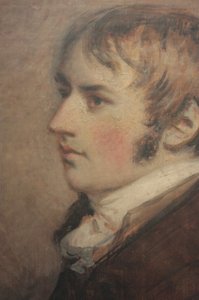
John Constable
1776 - 1837 , Royaume-Uni
L'essentiel de l'artiste
- Artistes Influents:
- Claude Lorrain
- Jacob van Ruisdael
- Date De Décès: 1837
- Date De Naissance: 23 juin 1776
- Influence Sur Les Artistes: ['École de Barbizon']
- Lieu De Naissance: East Bergholt, Royaume-Uni
- Mouvement Artistique: Romantisme
- Nationalité: Britannique
- Nom Complet: John Constable
- Oeuvres Notables:
- Netley Abbey
- The Hay Wain
- Salisbury Cathedral
Articles connexes
John Varley I: Intimate Observation & the British Romantic Landscape
Explore the serene landscapes of John Varley I, a key figure in British Romanticism. Discover his unique watercolour style, collaboration with William Blake & lasting artistic legacy. Learn about collecting Varley's work.

Evoking Arcadia: A Historical & Aesthetic Exploration of Rural Landscape Art
Explore the rich history of pastoral landscape art, from classical Arcadia to Impressionism & beyond. Discover key artists, movements, and how to collect serene rural scenes for your home. Expert insights at AllPaintingsStore.

Brian Hatton: A Study in Early 20th-Century British Landscape Painting & Rural Identity
Explore the captivating landscapes & portraits of Brian Hatton (1887-1916), a promising British artist lost too soon. Discover his unique style, Herefordshire roots, and lasting legacy in early 20th-century art.

John Frederick Lewis: Orientalism, Detail & Genre Painting in 19th-Century British Art
Explore the captivating Orientalist paintings of John Frederick Lewis! Discover his mastery of detail, genre scenes & influence on 19th-century British art. Learn about his life, techniques & legacy at AllPaintingsStore.

Philip Connard: A Study in British Impressionism & the Evocation of Rural England
Explore the captivating world of Philip Connard (1875-1958), a leading British Impressionist painter renowned for his decorative landscapes and wartime artistry. Discover his life, legacy & available artworks at AllPaintingsStore.