


 Aperçu en situation
 Partager
 Partager
 Détails
 Guide imprimable

 Télécharger
 Articles similaires
 Radiographie
 Voir le diaporama
 Statistiques
Ca d
 Drawing
- WallArt
- Romanticism
 1845
1845- 19th Century
 33.0 x 47.0 cm
 Afficher la suite
Reproduction à l'huile faite à la main
Huile sur toile peinte à la main, avec cadre et dimensions personnalisés, réalisée sur commande par nos artistes. ( Passer au format impression Passer au format image numérique)




P118B €10

P118H €10

P118W €10

P438Z €10

P508JH €12

P508YH €12

P805H €10

P805Z €10

P919BZ €10

P919G €10

P919XJ €10

P959ZH €10

P968JZ €12

W106C €8

W218G €10

W218JH €8

W218Y €10

W307PJ €10

W316G €10

W316PJ €8

W316Y €10

W398PJ €8

W4111J €10

W500HY €15

W500JH €15

W692G €12

W849H €8

W940BG €15

W953PJ €8




Choisissez parmi nos formats prédéfinis qui respectent les proportions originales de l’œuvre.

Saisissez la largeur et la hauteur souhaitées, pour s'adapter à votre cadre ou à votre mur. Cette œuvre est peinte à la main ; ainsi, pour un format de forme différente, l'artiste peut peindre un peu plus autour du tableau ou réduire légèrement les bords — c'est vous qui choisissez. Nous vous envoyons une maquette numérique pour approbation avant que la peinture ne commence. L'image présentée sur cette page ne reflète pas le résultat réel — seule la maquette le fait.
Après la commande, l’équipe AllPaintingsStore.com contactera le client par e-mail pour recueillir ses instructions et lui fournira une maquette d’aperçu
Livraison dans le monde entier () en 3 à 4 semaines au lieu des 5 semaines habituelles. (22 octobre). Aucun compromis sur la qualité.

Livraison express gratuite dans le monde entier

Toile de lin de haute qualité

Assurance transport complète

Garantie de remboursement des droits de douane

Garantie de fidélité des couleurs

Garantie de retour de 100 jours (uniquement en cas de défaut)

Garantie de remboursement à 100%

Tarifs dégressifs sur quantité
 L'option verre n'est disponible que pour les dimensions inférieures à 110 cm.

Ca d
Technique de reproduction
Format de la reproduction
-


Prix total final
€ 226
A Witness to Vanishing Splendor
In the delicate, precise lines of John Ruskin’s 1845 work, Ca d'Oro, we find more than just a depiction of Venetian architecture; we encounter a poignant eulogy for a fading era. Created during a transformative and turbulent period in Venice, this piece captures the Casa d’Oro at a moment of profound vulnerability. As Ruskin traversed the canals in 1845, he was not merely an observer of beauty but a witness to its systematic dismantling. The painting serves as a hauntingly beautiful record of the building's facade, capturing the intricate Gothic details and the subtle irregularities that spoke of a glorious, yet decaying, past. For the discerning collector, this work offers a rare window into the soul of 19th-century Venice, preserving the very textures that the era’s "restorations" sought to erase.
The composition is anchored by the magnificent, ornate architecture of the palace, where large, numerous windows create a rhythmic sense of grandeur and light. Ruskin’s technique, rooted in his deep commitment to truth in art, allows the viewer to perceive the weight and history of the stone. The prominent clock tower rises with a commanding presence, acting as a sentinel over the bustling scene below. Scattered throughout the foreground, small figures move through the space, providing a sense of scale that emphasizes the monumental nature of the structure. There is a palpable tension in the brushwork—a careful balance between the architectural precision required to document the Gothic carvings and a soft, atmospheric quality that evokes the humid, shimmering air of the Venetian lagoon.
Beyond its technical mastery, the emotional resonance of Ca d'Oro lies in its inherent melancholy. To look upon this piece is to feel the heartache of the artist, who famously lamented seeing the "noble pile" being hammered down by workmen. The painting captures a fleeting moment of existence before the loss of the red marble bases and the legendary interior staircase. For an interior designer or art enthusiast, this work brings a sense of historical depth and intellectual gravity to any space. It is not merely a decorative element but a conversation piece that invites contemplation on the themes of preservation, the passage of time, and the sanctity of original craftsmanship. Owning a reproduction of this masterpiece means hosting a fragment of history—a tribute to the enduring power of beauty even in the face of inevitable decay.
Questions et réponses
Où puis-je trouver des statistiques concernant «Ca d» de John Ruskin ?
La page Statistiques de «Ca d» de John Ruskin présente les statistiques de visites publiques : le nombre de visites mensuelles de cette œuvre, une comparaison avec les œuvres les plus consultées de l'artiste, ainsi que la provenance des visiteurs.
Puis-je voir une vue aux rayons X de «Ca d» de John Ruskin ?
La vue X de «Ca d» de John Ruskin se trouve sur la page Rayons X de l'œuvre : une exploration interactive de l'image à travers onze couches optiques.
Vers quelle nuance Ca d tend-elle ?
Une nuance Ochre to Sepia traverse «Ca d» de John Ruskin.
Œuvres similaires


Biographie de l'artiste
Premières années et éducation
John Ruskin, un polymathe anglais renommé, est né le 8 février 1819 à Londres, au Royaume-Uni. Son enfance a été façonnée par les influences contrastées de son père, John James Ruskin, et de sa mère, Margaret Cock. Cette dualité se refléterait plus tard dans ses divers intérêts et styles d'écriture. L’éducation précoce de Ruskin a eu lieu à la maison, sous la direction de ses parents et de tuteurs privés. Il a ensuite fréquenté King's College, Londres, où il s'est préparé à l'université d'Oxford. Cette base académique a jeté les bases de ses futures entreprises.Poursuites artistiques et littéraires
Les styles d’écriture et les formes littéraires de John Ruskin étaient aussi variés que ses intérêts. Il a écrit des essais, des traités, de la poésie, des conférences, des guides de voyage et même un conte de fées. Ses croquis et peintures détaillés de roches, de plantes, d'oiseaux, de paysages et de structures architecturales ont mis en valeur sa prouesse artistique. Son premier ouvrage majeur, Modern Painters (1843), a défendu le travail de J. M. W. Turner, en soulignant l'importance de la « vérité à la nature ». Cela a marqué le début de sa reconnaissance et de son influence généralisées sur l’art et la littérature du XIXe siècle.Œuvres notables et héritage
- Dawn, Coniston (Abbot Hall Art Gallery, Kendal, Royaume-Uni) - une peinture à l'eau mettant en valeur la capacité de Ruskin à capturer la beauté de la nature.
- Fors Clavigera (1871-1884) - une série de lettres aux travailleurs et aux ouvriers de Grande-Bretagne, soulignant ses préoccupations sociales et politiques.
Influences et développement
John Ruskin a été influencé par une variété de sources intellectuelles et artistiques. Son intérêt pour la nature et l'architecture gothique est évident dans ses écrits et ses peintures. Il était un critique virulent de l’industrialisation et plaidait pour un retour à des formes d'art plus simples et plus naturelles. Ses idées ont été influencées par les penseurs romantiques tels que William Wordsworth et Samuel Taylor Coleridge, ainsi que par les théories esthétiques de Johann Wolfgang von Goethe. Ruskin a développé une philosophie complexe de l’art qui mettait l’accent sur la vérité, la beauté et le lien entre l'art et la moralité.Signification historique
John Ruskin a eu une influence profonde sur le monde de l’art et de la pensée victorienne. Il est considéré comme un des critiques d'art les plus importants du XIXe siècle, et ses idées ont influencé les mouvements préraphaélites et Arts and Crafts. Son plaidoyer pour la préservation architecturale a contribué à sauver de nombreux bâtiments historiques en Grande-Bretagne. Ruskin était également un social réformateur passionné qui s’est efforcé d’améliorer les conditions de vie des travailleurs et de promouvoir l’éducation.Liens utiles depuis AllPaintingsStore.com

John Ruskin
1819 - 1900 , Royaume-Uni
En bref
- Artistic Movement Or Style: Préraphaélisme, critique d'art
- Artists Or Movements Influenced By This Artist: ['Préraphaélites']
- Artists Who Influenced This Artist: ['J. M. W. Turner']
- Date Of Birth: 8 février 1819
- Date Of Death: 1900
- Full Name: John Ruskin
- Nationality: Britannique
- Notable Artworks:
- Dawn, Coniston
- Fors Clavigera
- Place Of Birth (City And Country): Londres, Royaume-Uni
Articles connexes
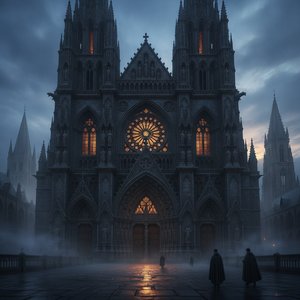
Gothic Art Guide for Hotel Designers: Leveraging Dramatic Shadows and Architectural Grandeur in Luxury Interiors
Elevate hospitality interiors with our expert guide to Gothic art. Discover how to leverage dramatic shadows, architectural grandeur, and high-end reproductions to create sophisticated, atmospheric hotel spaces that captivate guests.

