


 Aperçu en situation
 Partager
 Partager
 Détails
 Guide
Guide

 Télécharger
 Articles similaires
 Radiographie
 Voir le diaporama
 Statistiques
Sailing Ship by the Ponte Veneta Marina, Venice


 Afficher la suite
Reproduction à l'huile faite à la main
Huile sur toile peinte à la main, avec cadre et dimensions personnalisés, réalisée sur commande par nos artistes. ( Passer au format impression Passer au format image numérique)




P118B $10

P118H $10

P118W $10

P438Z $10

P508JH $12

P508YH $12

P805H $10

P805Z $10

P919BZ $10

P919G $10

P919XJ $10

P959ZH $10

P968JZ $12

W106C $8

W218G $10

W218JH $8

W218Y $10

W307PJ $10

W316G $10

W316PJ $8

W316Y $10

W398PJ $8

W4111J $10

W500HY $15

W500JH $15

W692G $12

W849H $8

W940BG $15

W953PJ $8




Choisissez parmi nos formats prédéfinis qui respectent les proportions originales de l’œuvre.

Vous pouvez saisir vos propres dimensions pour l'adapter à un cadre ou à un espace spécifique. Si la taille sélectionnée ne correspond pas aux proportions de l'image d'origine, nous recadrerons l'œuvre ou prolongerons la peinture avec des éléments peints à la main supplémentaires. Une maquette numérique vous sera envoyée pour approbation avant le début de la production.
Veuillez noter que l'aperçu à l'écran ne reflète pas le recadrage ou l'extension réels. Seule la maquette montrera fidèlement la composition finale.
Bien que des tailles personnalisées soient disponibles, nous vous recommandons de sélectionner une dimension dans la liste prédéfinie afin de préserver les proportions d'origine.
Après la commande, l’équipe AllPaintingsStore.com contactera le client par e-mail pour recueillir ses instructions et lui fournira une maquette d’aperçu
Livraison dans le monde entier () en 3 à 4 semaines au lieu des 5 semaines habituelles. (21 septembre). Aucun compromis sur la qualité.

Livraison express gratuite dans le monde entier

Toile de lin de haute qualité

Assurance transport complète

Garantie de remboursement des droits de douane

Garantie de fidélité des couleurs

Garantie de retour de 100 jours (uniquement en cas de défaut)

Garantie de remboursement à 100%

Tarifs dégressifs sur quantité
 L'option verre n'est disponible que pour les dimensions inférieures à 110 cm.

Sailing Ship by the Ponte Veneta Marina, Venice
Technique de reproduction
Format de la reproduction
-


Prix total final
$ 258
Œuvres similaires


Biographie de l'artiste
John Wharlton Bunney: A Venetian Master of Detail and Ruskin’s Faithful Observer
John Wharlton Bunney (1828-1882) wasn't a name that immediately resonates through the halls of art history, yet his meticulous renderings of Venice – its grand architecture, bustling canals, and atmospheric light – represent a significant chapter in 19th-century landscape painting. Often overshadowed by the flamboyant figures of Tintoretto and Carpaccio, Bunney’s legacy lies primarily in his profound devotion to faithfully recreating their masterpieces, transforming them into exquisitely detailed copies that offer intimate glimpses into the Venetian Renaissance.
Born in England, Bunney's early life was shaped by a unique upbringing. His father, a merchant captain, took him on voyages around the world, exposing him to diverse cultures and landscapes – experiences that undoubtedly informed his artistic sensibilities. Crucially, he became deeply influenced by John Ruskin, the renowned art critic and social reformer, studying under him at the Working Men’s College in London. This connection proved pivotal; Ruskin's emphasis on truthfulness, observation, and the importance of capturing the essence of a subject profoundly shaped Bunney’s artistic approach. He wasn’t interested in merely replicating appearances but in conveying the spirit and character of what he observed.
Bunney’s career took an unexpected turn when he was commissioned by Ruskin to travel to Venice, initially as a correspondent for the Society for the Protection of Ancient Buildings. This marked a dramatic shift from his earlier work and established him firmly within the vibrant artistic milieu of the city. He quickly immersed himself in the world of Venetian painting, particularly the works of Tintoretto and Carpaccio – artists whose dynamic compositions and masterful use of light captivated him. It was Ruskin who ultimately secured Bunney’s most enduring role: that of a meticulous copyist, tasked with preserving these iconic paintings for posterity.
The Art of Replication: A Deep Dive into Bunney's Technique
Bunney’s method wasn’t simply about tracing an image; it was a deeply considered process. He spent countless hours studying the originals, meticulously analyzing their structure, color palette, and brushstrokes. Ruskin himself recognized Bunney’s dedication, stating that his work “was so faithful and careful as almost to enable the spectator to imagine himself on the spot.” This commitment extended beyond mere duplication; Bunney sought to understand *why* the original artists had made certain choices – the placement of figures, the direction of light, the emotional impact of a scene.
His copies weren’t carbon copies, however. Bunney subtly adapted his technique, employing a slightly looser brushwork and adding nuances that reflected his own artistic interpretation while remaining true to the spirit of the original. He utilized a refined layering technique, building up color gradually to achieve remarkable depth and luminosity. His attention to detail was astonishing; he captured the texture of fabrics, the reflections in water, and the subtle gradations of light with unparalleled precision. The resulting paintings are not merely reproductions but rather sophisticated interpretations that reveal a deep understanding of both the original works and Bunney’s own artistic vision.
Venetian Landscapes and Religious Scenes: A Dual Focus
While his work is most celebrated for its faithful renderings of Tintoretto and Carpaccio, Bunney also produced a substantial body of landscape paintings depicting the Venetian environs. These scenes – often capturing the city's canals, bridges, and surrounding hills – demonstrate a keen eye for composition and an ability to evoke the atmosphere of Venice. He skillfully rendered the interplay of light and shadow, creating a sense of depth and realism that is characteristic of his style.
However, Bunney’s artistic output wasn't solely confined to landscapes. He also created numerous religious scenes, often based on works by Tintoretto. These paintings showcase his ability to capture the drama and emotion inherent in biblical narratives. His depictions of saints and angels are imbued with a sense of piety and reverence, reflecting Ruskin’s influence.
A Legacy Preserved: Bunney's Influence and Enduring Appeal
John Wharlton Bunney’s contribution to art history may not be immediately apparent, but his meticulous copies of Tintoretto and Carpaccio have had a lasting impact. They provide invaluable insights into the techniques and artistic sensibilities of these two masters, allowing viewers to appreciate their works on a deeper level. Furthermore, Bunney's dedication to faithful representation serves as an example of the importance of observation and understanding in art.
His work continues to be exhibited and studied today, demonstrating its enduring appeal. The National Portrait Gallery holds one of his self-portraits, offering a glimpse into the life of this dedicated artist. And through his copies, Bunney’s legacy lives on – a testament to his skill, devotion, and profound appreciation for the beauty and complexity of Venetian art.

john wharlton bunney
1828 - 1882
En bref
- Artistic Movement Or Style: Topographical & Landscape
- Artists Or Movements Influenced By This Artist:
- Tintoretto Copies
- Carpaccio Paintings
- Artists Who Influenced This Artist: ['John Ruskin']
- Date Of Birth: June 20, 1828
- Date Of Death: September 23, 1882
- Full Name: John Wharlton Bunney
- Nationality: English
- Notable Artworks:
- Venetian Architecture
- St. Mark's Basilica
- Florence Landscapes
- Place Of Birth: England
Articles similaires

Golden Light & Rich Color: The Timeless Magic of Venetian Renaissance Art
Explore the luminous beauty of Venetian Renaissance art. Discover how masters like Titian used colorito and golden light to redefine painting through texture, emotion, and atmospheric brilliance in a masterclass of historical artistry.
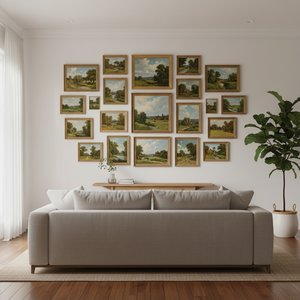
Constable : Les 25 Chefs-d'Œuvre du Maître Anglais | AllPaintingsStore
Plongez dans l'univers de John Constable avec les 25 œuvres incontournables du maître anglais. Découvrez l'histoire, la technique et l'émotion derrière ses paysages romantiques. Reproductions de qualité muséale sur AllPaintingsStore.com.
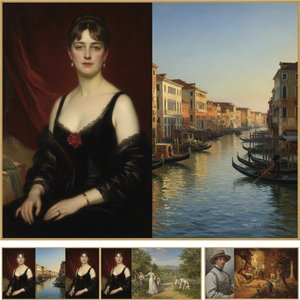
John Singer Sargent : Les 25 Œuvres Maîtresses d'un Portraitiste Éminent | AllPaintingsStore
Plongez dans l'univers de John Singer Sargent : découvrez les 25 œuvres qui ont marqué l'histoire de l'art. Portraits impressionnants, réalisme exquis et couleurs vibrantes. Retrouvez ces chefs-d'œuvre en reproduction haute définition sur AllPaintingsStore.com.

Jacopo Tintoretto : Les 25 Chefs-d'œuvre du Maître Vénitien | AllPaintingsStore
Plongez dans l'univers dramatique de Jacopo Tintoretto ! Découvrez les 25 œuvres incontournables du maître vénitien, ses techniques uniques et son style baroque. Reproductions de qualité muséale sur AllPaintingsStore.com.

Expédition et retours
APS offre une expédition d'art experte à l'échelle mondiale, avec des soins de niveau musée, un suivi complet et une garantie de remboursement sous 100 jours. Du soutien douanier à la Production Prioritaire, faites confiance à un service transparent, un emballage sécurisé et une livraison fiable pour les collectionneurs, les designers et les galeries.

