


 Aperçu en situation
 Envoyer
 Partager
 Détails de l'œuvre

 Télécharger
 Articles similaires
 Radiographie
 Diaporama
BACCHANTE


 Lire la suite
Giclées et impressions d'art
Impressions giclées ou sur toile de qualité musée, avec une production rapide et des finitions au choix. ( Commander la reproduction peinte à la main Télécharger l'image haute résolution)




P118B $10

P118H $10

P118W $10

P438Z $10

P508JH $12

P508YH $12

P805H $10

P805Z $10

P919BZ $10

P919G $10

P919XJ $10

P959ZH $10

P968JZ $12

W106C $8

W218G $10

W218JH $8

W218Y $10

W307PJ $10

W316G $10

W316PJ $8

W316Y $10

W398PJ $8

W4111J $10

W500HY $15

W500JH $15

W692G $12

W849H $8

W940BG $15

W953PJ $8




Choisissez parmi nos formats prédéfinis qui respectent les proportions originales de l’œuvre.

Vous pouvez saisir vos propres dimensions pour vous adapter à un cadre ou à un espace spécifique. Si la taille sélectionnée ne correspond pas aux proportions de l'image originale, nous recadrerons l'œuvre ou étendrons l'image avec une bordure en miroir ou une couleur unie. Une maquette numérique vous sera envoyée pour approbation avant le début de la production.
Veuillez noter que l'aperçu à l'écran ne reflète pas le recadrage ou l'extension réelle. Seule la maquette montrera avec précision la composition finale.
Bien que des tailles personnalisées soient disponibles, nous vous recommandons de choisir une dimension dans la liste prédéfinie afin de préserver les proportions originales.
Livraison dans le monde entier () en 2 semaines au lieu des 4/5 semaines habituelles. (19 août)

Livraison express gratuite dans le monde entier

Toile de lin de qualité supérieure

Assurance transport complète

Garantie de remboursement des droits de douane

Garantie de fidélité des couleurs

Politique de retour de 60 jours (uniquement en cas de défaut)

Garantie de remboursement à 100%

Offre de tarifs dégressifs
 L'option verre n'est disponible que pour les dimensions inférieures à 110 cm.

BACCHANTE
Giclées et impressions d'art
Format de la reproduction
-


Prix total
$ 64
Description de la pièce
A Vision of Mythological Splendor
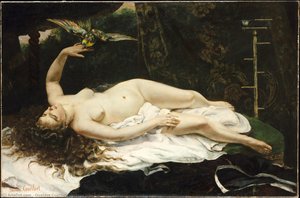
In the lush, untamed heart of a primordial forest, Léon Riesener’s BACCHANTE unfolds as a breathtaking encounter with the divine and the sensual. The painting presents a reclining nude figure, her form draped in a state of graceful languor, intertwined seamlessly with the verdant textures of the natural world. This is not merely a portrait of a woman, but an invitation into the ecstatic realm of Dionysus. Accompanied by the sleek, watchful presence of a leopard, the composition breathes with the spirit of Bacchic revelry, where the boundaries between humanity, animal instinct, and botanical abundance dissolve into a single, harmonious vision of mythological life.
The emotional resonance of the piece lies in its ability to evoke both intimacy and wildness. There is a profound sense of peace in the figure's repose, yet the surrounding elements—the shadows of the deep woods and the predatory grace of the leopard—hint at the untamed energies of nature. For the discerning collector or interior designer, this artwork offers a captivating focal point that brings a sense of romantic drama and classical elegance to any space, acting as a window into an era of poetic imagination.
Mastery of Color and Romantic Technique
Léon Riesener, a pioneer of color within the French Romantic movement, demonstrates his technical virtuosity through a sophisticated interplay of light and shadow. The palette is a rich tapestry of earthy tones; deep forest greens, warm ochre, and mossy browns create a dense, atmospheric setting that feels almost tactile. Against this darker, more mysterious backdrop, the pale, luminous skin of the Bacchante serves as a brilliant highlight, drawing the eye immediately to the central figure. Riesener’s brushwork is both precise and painterly, utilizing subtle gradations to render the softness of human flesh against the rougher textures of tree bark and the sleek fur of the leopard.
The technique employed here suggests a deep understanding of light's transformative power. The lighting is soft and diffused, as if filtered through a thick canopy of leaves, which avoids harsh shadows and instead creates a gentle, enveloping glow. This approach lends the work a decorative quality that is both sophisticated and timeless. The layering of oil paints provides a rich saturation that ensures the colors remain vibrant, making a high-quality reproduction an enduring investment for those who appreciate the depth and luminosity of 19th-century academic realism.
Symbolism and the Spirit of Abundance
Every element within this composition serves a symbolic purpose, contributing to the overarching theme of fertility and the eternal cycle of nature. The presence of the leopard is a direct nod to the iconography of Dionysus, representing the wild, uninhibited side of the god's followers. Similarly, the lush vegetation and hints of grapes serve as emblems of abundance, wine, and the bountiful gifts of the earth. Riesener uses these symbols to weave a narrative of plenty, where the physical beauty of the Bacchante mirrors the fertile richness of her environment.
To possess a piece such as BACCHANTE is to hold a fragment of Romanticism's most evocative era. It is an artwork that speaks to the soul's desire for connection with the natural world and the celebration of life's sensory delights. Whether placed in a grand salon or a curated private study, this masterpiece continues to inspire awe through its seamless blend of technical brilliance, mythological depth, and an everlasting sense of enchantment.
Œuvres similaires


Biographie de l'artiste
Léon Riesener: A Pioneer of Romantic Color
Léon Riesener (1808 – 1878) stands as a singular figure in the burgeoning landscape of French Romantic painting, recognized not merely for his artistic output but also for his groundbreaking exploration into the science of color and his unwavering dedication to capturing the essence of nature with unprecedented vibrancy. Born into an artistic lineage—his father, Henri-François Riesener, was himself a painter—Léon’s formative years instilled in him a profound appreciation for visual artistry and propelled him toward mastering the craft from a young age. His early training under Antoine-Jean Gros solidified his understanding of studio practice and established a foundation for his future endeavors.Early Influences: The Seeds of Innovation
Riesener's artistic journey commenced with a meticulous study of tonal divisions, predating Chevreul’s scientific breakthrough into color theory by several decades. This intellectual curiosity fueled his pursuit of perfection in artistic expression, particularly concerning the depiction of skin texture—a testament to his tactile sensitivity and desire to convey realism. Unlike many artists of his time who adhered to strict academic conventions prioritizing idealized forms and muted tones, Riesener embraced a radically different approach rooted in observation and experimentation. He sought inspiration from Rubens, whom he considered “the Shakespeare of painting,” recognizing his masterful ability to infuse emotion into visual narratives—a conviction that profoundly shaped Riesener’s artistic sensibilities. This admiration extended beyond mere stylistic imitation; it represented a deep engagement with the philosophical implications of portraying human experience authentically.Rubensian Reverie: Echoes of Dramatic Genius
Riesener harbored an ardent admiration for Rubens, whom he considered “the Shakespeare of painting,” recognizing his masterful ability to infuse emotion into visual narratives. This influence profoundly shaped Riesener’s artistic sensibilities, guiding him toward a style characterized by dramatic lighting and expressive modeling—techniques that would later become integral to Impressionist painters like Monet and Renoir. He meticulously analyzed Rubens's monumental canvases, absorbing their compositional strategies and mastering his masterful use of color palettes—a process that instilled in him a conviction that art should strive for an honest portrayal of reality mirroring the spirit of Romanticism. Riesener’s artistic vision centered on conveying “the heat of the day, the melancholy of the evening,” mirroring his fascination with capturing the subtleties of natural phenomena.Scientific Exploration & Artistic Technique: Challenging Convention
Driven by scientific rigor, Riesener investigated the principles of color mixing and pigment dispersion—techniques that would later become integral to Impressionist painters like Monet and Renoir. He meticulously analyzed the works of Titian, Veronese, and Correggio, absorbing their compositional strategies and mastering their masterful use of color palettes. Riesener deliberately eschewed blacks and whites for shading prioritizing visual impact over strict adherence to traditional methods—a bold decision that signaled a decisive departure from artistic dogma. He sought to emulate Rubens's expressive style prioritizing emotional resonance over precise anatomical accuracy. This innovative technique reflected his belief that art should strive for an honest portrayal of reality mirroring the spirit of Impressionism.Notable Works & Legacy: A Visionary’s Contribution
Riesener’s oeuvre encompasses a diverse range of landscapes and genre scenes—particularly portraits imbued with psychological depth—demonstrating his versatility as an artist. Among his most celebrated paintings are “Fountain,” “Venus et Amour,” and “Léda”—each piece exemplifies his masterful blending of color and light capturing the beauty of nature and exploring profound emotional themes. His refusal to employ conventional contours instead favoring shadows and modeling represented a decisive departure from artistic dogma. Riesener faced considerable opposition from Salon juries and the Institut de France during his lifetime who deemed his experimental methods unacceptable—despite these challenges he remained steadfast in his commitment to artistic integrity pursuing his vision with unwavering determination. His enduring legacy resides not only in his individual artworks but also in his pioneering contribution to the advancement of color theory and his unwavering advocacy for authentic representation—a testament to his singular vision and lasting impact on art history.
Léon Riesener
1808 - 1878 , France
L'essentiel de l'artiste
- Artistic Movement Or Style: Romantic Painter; Impressionism precursor
- Artists Or Movements Influenced By This Artist: ['Impressionism']
- Artists Who Influenced This Artist:
- Rubens
- Titian
- Veronese
- Correggio
- Date Of Birth: 1808
- Date Of Death: 1878
- Full Name: Louis Antoine Léon Riesener
- Nationality: Francais
- Notable Artworks:
- Fountain
- Venus et Amour
- Léda
- Place Of Birth: France
Articles connexes

The Enduring Allure of the Nude: A Historical & Artistic Exploration of the Human Form
Explore the captivating history of nude art! Discover iconic paintings & artists from classical to modern eras. Uncover symbolism, techniques & find museum-quality reproductions at AllPaintingsStore.

The Eloquent Form: A Historical & Aesthetic Exploration of the Nude in Art
Explore the captivating history of the nude in art! From ancient Greece to modern masters, discover its evolving symbolism, techniques & enduring beauty. Expert insights for collectors and enthusiasts.

The Evocative Brushstroke: Exploring Emotion, Individuality & the Sublime in Romanticism's Artistic Landscape
Explore the passionate world of Romanticism! Discover masterpieces by Friedrich & Goya, delve into the sublime, and understand the movement's lasting impact on art history. Expert analysis & insights at AllPaintingsStore.

The Power of Emotion: A Definitive Guide to the Sublime and Soulful Art of Romanticism
Explore the profound emotional depth of the Romanticism art movement. Discover how masters like Delacroix and Friedrich captured the sublime through passion, nature, and intuition in this definitive guide for history lovers and art collectors.

Le Sublime et le Sensuel : Émotion et Individualité dans la Révolution Romantique
Explorez le Romantisme : du sublime à la sensualité, découvrez l'expression de l'âme et l'individualité dans ce mouvement artistique révolutionnaire. Analyse approfondie et héritage durable.


