


 Aperçu en situation
 Partager
 Partager
 Détails
 Guide imprimable

 Télécharger
 Articles similaires
 Radiographie
 Voir le diaporama
 Statistiques
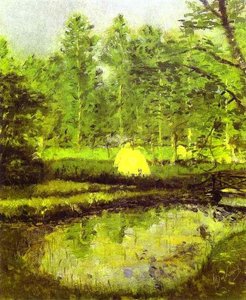
Man sitting beside a window


 Afficher la suite
Giclées et impressions d'art
Impressions giclées ou sur toile de qualité musée, avec une production rapide et des finitions au choix. ( Acheter la peinture faite à la main Passer au format image numérique)




P118B $10

P118H $10

P118W $10

P438Z $10

P508JH $12

P508YH $12

P805H $10

P805Z $10

P919BZ $10

P919G $10

P919XJ $10

P959ZH $10

P968JZ $12

W106C $8

W218G $10

W218JH $8

W218Y $10

W307PJ $10

W316G $10

W316PJ $8

W316Y $10

W398PJ $8

W4111J $10

W500HY $15

W500JH $15

W692G $12

W849H $8

W940BG $15

W953PJ $8




Choisissez parmi nos formats prédéfinis qui respectent les proportions originales de l’œuvre.

Vous pouvez saisir vos propres dimensions pour vous adapter à un cadre ou à un espace spécifique. Si la taille sélectionnée ne correspond pas aux proportions de l'image originale, nous recadrerons l'œuvre ou étendrons l'image avec une bordure en miroir ou une couleur unie. Une maquette numérique vous sera envoyée pour approbation avant le début de la production.
Veuillez noter que l'aperçu à l'écran ne reflète pas le recadrage ou l'extension réelle. Seule la maquette montrera avec précision la composition finale.
Bien que des tailles personnalisées soient disponibles, nous vous recommandons de choisir une dimension dans la liste prédéfinie afin de préserver les proportions originales.
Livraison dans le monde entier () en 2 semaines au lieu des 4/5 semaines habituelles. (26 septembre)

Livraison express gratuite dans le monde entier

Toile de lin de haute qualité

Assurance transport complète

Garantie de remboursement des droits de douane

Garantie de fidélité des couleurs

Garantie de retour de 100 jours (uniquement en cas de défaut)

Garantie de remboursement à 100%

Tarifs dégressifs sur quantité
 L'option verre n'est disponible que pour les dimensions inférieures à 110 cm.

Man sitting beside a window
Giclées et impressions d'art
Format de la reproduction
-


Prix total final
$ 64
A Moment of Quietude: The Soul of Duchamp’s Early Mastery
In the vast, often turbulent history of modern art, there exists a rare, fleeting moment where the revolutionary spirit of Marcel Duchamp was still anchored in the serene beauty of the visible world. Man Seated by a Window, painted in 1907, captures this exquisite tension. Before he became the iconoclast who would dismantle the very definition of art through Dada and Readymades, Duchamp was a painter deeply engaged with the sensory delights of his surroundings. This piece invites the viewer into a private sanctuary, presenting a solitary figure lost in thought, framed by the soft light of a window and the vibrant life of blossoming flora. It is not merely a depiction of a man at rest; it is an invitation to pause, to breathe, and to find resonance in the quiet intervals of existence.
The composition functions as a delicate dialogue between the interior and the exterior worlds. As the eye wanders across the canvas, one encounters a masterful use of Post-Impressionist techniques that prioritize emotional atmosphere over rigid anatomical precision. The artist employs loose, gestural brushstrokes that imbue the scene with a sense of living movement—the gentle sway of leaves, the dappled light filtering through the glass, and the soft texture of the man's clothing. This stylistic choice creates a luminous quality, where the muted blues and greens of the background harmonize with warmer, sun-drenched hues from the garden outside, establishing a visual equilibrium that is both soothing and intellectually stimulating.
Technique and the Art of Atmosphere
Executed in oil on canvas, the painting showcases Duchamp’s formidable command over medium and light. The texture of the oil paint allows for a rich layering of color, which lends depth to the shadows within the room and brilliance to the petals of the flowers. For the discerning collector or interior designer, this work offers a sophisticated interplay of tones that can anchor a room with its tranquil energy. Unlike the starker, more clinical works of later modernism, this painting possesses a tactile warmth; it feels inhabited, as if the scent of the garden could drift through the frame. The way the light interacts with the subject suggests a daytime setting filled with the gentle vitality of spring or summer, making it an ideal centerpiece for spaces designed for contemplation and repose.
Beyond its aesthetic charm, the painting serves as a profound historical document. It captures a period of transition in art history, where the boundaries between Impressionism and the burgeoning movements of Cubism were still being negotiated. In this work, we see the seeds of Duchamp’s later philosophical inquiries—the way he uses the window not just as a physical object, but as a metaphorical lens through which we perceive reality. To possess a reproduction of this masterpiece is to hold a piece of the very foundation of modern thought, wrapped in the beautiful, accessible language of classical beauty.
An Inspiration for the Modern Interior
For those looking to curate an environment of elegance and intellectual depth, Man Seated by a Window offers unparalleled versatility. Its palette—a sophisticated blend of organic greens, deep blues, and soft floral accents—complements a wide array of interior styles, from contemporary minimalism to classic European aesthetics. The painting’s ability to evoke a sense of peace makes it a transformative element in a study, a library, or a quiet corner of a living space. It does not demand attention through noise, but rather commands respect through its profound stillness, acting as a window into a more thoughtful and reflective way of being.
Œuvres similaires




Biographie de l'artiste
jeune vie et débuts artistiques
marcel duchamp, peintre, sculpteur, joueur d'échecs et écrivain français-américain, est né le 28 juillet 1887 à Blainville-Crevon, en Normandie, France. Sa famille, connue pour ses inclinations culturelles, a encouragé son intérêt précoce pour l’art. Le parcours artistique de Duchamp a commencé avec des styles post-impressionnistes, expérimentant avec les techniques et les sujets classiques.évolution artistique et œuvres notables
- L'œuvre de marcel duchamp est associée au cubisme, à l’art conceptuel et au dadaïsme, bien qu'il soit prudent quant à son utilisation du terme dada.
- L'une de ses œuvres les plus célèbres, Fountain (1917), un urinoir signé « r. mutt », est un exemple de ses ready-mades, remettant en question la notion de ce qui constitue l’art.
- Portrait de joueurs d'échecs (1911), une œuvre cubiste, met en évidence son intérêt pour le jeu et ses aspects stratégiques.
- To be looked at (from the other side of the glass) with one eye, close to, for almost an hour (1945) est une autre œuvre notable, reflétant ses inclinations dadaïstes.
influence et héritage
L'impact de Duchamp sur l’art du XXe siècle est immense. Il, avec Pablo Picasso et Henri Matisse, a défini les arts plastiques au début du XXe siècle. Son approche conceptuelle de l’art a influencé des générations d’artistes.- Explorez davantage les œuvres de Duchamp sur AllPaintingsStore : Marcel Duchamp | œuvres
- Découvrez le Musée Ohara d'art, au Japon, qui présente des collections d’art occidental, dont certaines influencées par le style de Duchamp : Musée Ohara d'art, Japon
- Apprenez-en davantage sur le lettrisme, un mouvement influencé par le dadaïsme et le surréalisme, dans lequel Duchamp participait : Mouvement artistique du lettrisme
conclusion
L’approche énigmatique de l’art de Marcel Duchamp, combinant des éléments conceptuels et dadaïstes, a laissé une marque indélébile sur le monde de l’art. Son héritage continue d'inspirer les artistes et d'influencer le développement de l’art moderne et contemporain. Franck Scurti, artiste français connu pour son art conceptuel, suit les traces de cet artiste pionnier.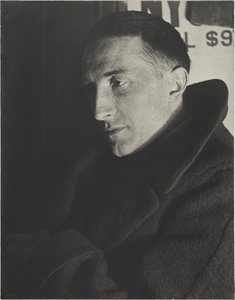
Marcel Duchamp
1887 - 1968 , France
En bref
- Artistes Influencés: ['Franck Scurti']
- Date De Décès: 2 octobre 1968
- Date De Naissance: 28 juillet 1887
- Influence:
- Pablo Picasso
- Henri Matisse
- Lieu De Naissance: Blainville-sur-Mer, France
- Mouvement Artistique:
- Cubisme
- Dadaïsme
- Art conceptuel
- Nationalité: Français-Américain
- Nom Complet: Marcel Duchamp
- Oeuvres Notables:
- Fontaine
- Portrait de joueurs d'échecs
- La Grande Verrière
- Boîte-en-valise
Articles similaires

Beyond Impressionism: Exploring the Emotional Depth and Vibrant Mastery of Post-Impressionist Art
Discover the profound evolution of art beyond Impressionism. Explore the emotional depth, vibrant colors, and revolutionary techniques of Post-Impressionist masters like Van Gogh and Cézanne in this expert guide to art history's most expressive movement.

Post-Impressionism Guide: Bold Colors and Expressive Masterpieces for Professional Hotel Decorators
Elevate hospitality interiors with Post-Impressionist masterpieces. A professional guide for hotel designers on selecting bold, expressive oil reproductions and large-scale murals to create impactful, high-end guest experiences through expert art procurement.


