Aperçu en situation
 Envoyer
 Partager
 Détails de l'œuvre

 Télécharger
 Articles similaires
 Radiographie
 Diaporama
No. 7


 Lire la suite
Giclées et impressions d'art
Impressions giclées ou sur toile de qualité musée, avec une production rapide et des finitions au choix. ( Commander la reproduction peinte à la main Télécharger l'image haute résolution)




P118B $10

P118H $10

P118W $10

P438Z $10

P508JH $12

P508YH $12

P805H $10

P805Z $10

P919BZ $10

P919G $10

P919XJ $10

P959ZH $10

P968JZ $12

W106C $8

W218G $10

W218JH $8

W218Y $10

W307PJ $10

W316G $10

W316PJ $8

W316Y $10

W398PJ $8

W4111J $10

W500HY $15

W500JH $15

W692G $12

W849H $8

W940BG $15

W953PJ $8




Choisissez parmi nos formats prédéfinis qui respectent les proportions originales de l’œuvre.

Vous pouvez saisir vos propres dimensions pour vous adapter à un cadre ou à un espace spécifique. Si la taille sélectionnée ne correspond pas aux proportions de l'image originale, nous recadrerons l'œuvre ou étendrons l'image avec une bordure en miroir ou une couleur unie. Une maquette numérique vous sera envoyée pour approbation avant le début de la production.
Veuillez noter que l'aperçu à l'écran ne reflète pas le recadrage ou l'extension réelle. Seule la maquette montrera avec précision la composition finale.
Bien que des tailles personnalisées soient disponibles, nous vous recommandons de choisir une dimension dans la liste prédéfinie afin de préserver les proportions originales.
Livraison dans le monde entier () en 2 semaines au lieu des 4/5 semaines habituelles. (15 août)

Livraison express gratuite dans le monde entier

Toile de lin de qualité supérieure

Assurance transport complète

Garantie de remboursement des droits de douane

Garantie de fidélité des couleurs

Politique de retour de 60 jours (uniquement en cas de défaut)

Garantie de remboursement à 100%

Offre de tarifs dégressifs
 L'option verre n'est disponible que pour les dimensions inférieures à 110 cm.

No. 7
Giclées et impressions d'art
Format de la reproduction
-


Prix total
$ 64
Description de la pièce
Mark Rothko’s ‘No. 7’: A Descent into Quietude
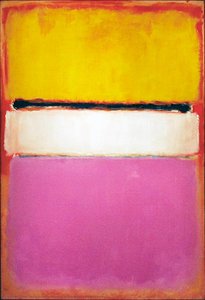
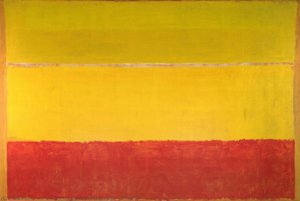
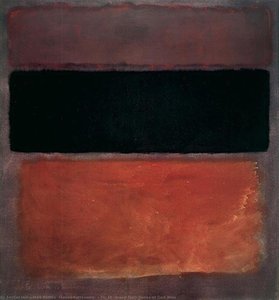
Mark Rothko's “No. 7,” painted in 1964, isn't merely a canvas adorned with color; it’s an invitation to a profoundly personal and contemplative experience. This monumental work, executed in oil on canvas, exemplifies the core tenets of Rothko’s Color Field aesthetic – a deliberate rejection of representational imagery in favor of pure emotional expression. The painting immediately commands attention with its dominance of deep charcoal gray and black hues, colors that evoke a sense of solemnity and introspection, mirroring the artist's own struggles with existential themes.
Rothko’s genius lay in his ability to manipulate color not as decorative elements but as vehicles for raw emotion. The rectangular field, nearly filling the canvas, creates an immersive environment, drawing the viewer into a space devoid of distraction. There are no sharp edges or defined boundaries; instead, the colors subtly bleed and shift, suggesting layers of pigment applied with painstaking care – a technique that contributes to the painting’s almost tactile quality. Close inspection reveals subtle textural variations, likely born from multiple washes of oil paint, adding another layer of complexity to this deceptively simple composition.
The Rothko Chapel Context: A Space for Reflection
Understanding “No. 7” requires acknowledging its genesis within the Rothko Chapel in Houston, Texas – a space meticulously designed by the artist himself. Commissioned by John and Dominique de Menil, the chapel was conceived as a sanctuary dedicated to contemplation and spiritual exploration. Rothko’s fourteen murals within the chapel were intended not as decorative pieces but as integral components of this meditative environment. The Chapel's architecture—an octagon inscribed in a Greek cross—and its design were largely influenced by Rothko himself, reflecting his desire to create a space that bypassed rational thought and engaged directly with emotion.
The chapel’s purpose extended beyond mere religious observance; it became a center for international colloquiums focused on issues of human rights and social justice. This commitment to using art as a catalyst for dialogue is powerfully reflected in “No. 7,” suggesting a yearning for understanding and connection amidst the darkness.
Decoding the Symbolism: Melancholy and Yearning
The absence of recognizable imagery within "No. 7" is deliberate, serving to amplify its emotional impact. The dominant dark colors – charcoal gray and black – are often interpreted as representing feelings of melancholy, solitude, or even spiritual yearning. Rothko himself frequently stated that he sought to evoke a sense of “panic” in the viewer, not through overt horror but through a subtle suggestion of profound unease. The painting’s lack of defined form encourages viewers to project their own emotions and experiences onto the canvas, creating a deeply personal encounter.
Furthermore, the painting's scale – large and imposing – contributes to its emotional weight, enveloping the viewer in its somber atmosphere. It is a work that demands attention, inviting prolonged contemplation and a willingness to confront difficult emotions. The subtle gradations of tone across the surface suggest a constant flux, mirroring the ever-shifting nature of human experience.
A Legacy of Color: Rothko’s Enduring Influence
"No. 7" stands as a pivotal work in Mark Rothko's oeuvre and a cornerstone of Abstract Expressionism. Its influence can be seen in countless subsequent artists who sought to harness the power of color for emotional expression. The painting’s enduring appeal lies not just in its technical mastery but in its profound ability to connect with viewers on a deeply visceral level. It is a testament to Rothko's belief that art could transcend the purely visual and become a conduit for universal human emotions – a legacy that continues to resonate powerfully today.
Œuvres similaires


Biographie de l'artiste
enfance et influences
Mark Rothko (Marcus Rothkowitz), un artiste américain renommé, est né le 25 septembre 1903 à Dvinsk, Lettonie. Sa famille a immigré aux États-Unis lorsqu'il n’avait que dix ans. Ce changement culturel aura influencé plus tard son style artistique.évolution artistique
Le travail précoce de Rothko était caractérisé par l’expressionnisme abstrait, un style qui mettait l’accent sur le processus de création d'une œuvre d'art plutôt que sur le produit final. Ses peintures, telles que No. 18 (1948) et Untitled (1948), mettaient en valeur son approche unique de la couleur et de la forme.- Champ de couleurs : L'utilisation par Rothko de champs de couleurs audacieux et rectangulaires, souvent en contraste saisissant les uns avec les autres, créait une sensation de profondeur et d’émotion.
- Structure organique : Ses peintures semblaient respirer la vie, comme si les couleurs étaient des entités vivantes.
œuvres notables et expositions
- No. 10 (1950), une peinture qui marquait un tournant significatif dans le style de Rothko, est maintenant au sein de la collection du Museum of Modern Art.
- Les Seagram Murals, une série de peintures commandées pour le restaurant Four Seasons, mettait en valeur la capacité de Rothko à adapter son style à différents environnements.
- No. 3 (1950), une peinture qui exemplifie l'utilisation par Rothko de champs de couleurs audacieux et rectangulaires.
vie tardive et héritage
La vie de Rothko a été marquée par des luttes contre la santé mentale et un mariage tumultueux. Il est décédé le 25 février 1970, à l'âge de 66 ans. Malgré ses difficultés, Rothko a laissé une marque indélébile sur le monde de l’art. Ochre et rouge sur rouge (champ de couleurs), une peinture qui met en valeur l'approche unique de Rothko à la couleur, peut être trouvée dans la collection AllPaintingsStore.com. La page Wikipédia de Mark Rothko fournit des informations supplémentaires sur sa vie et son style artistique.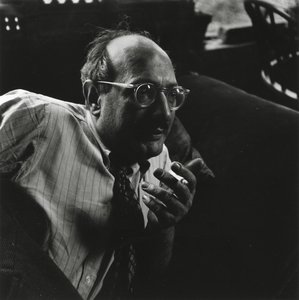
Mark Rothko
1903 - 1970 , Lettonie
L'essentiel de l'artiste
- Artistes Influents:
- Sigmund Freud
- Marcel Proust
- Date De Décès: 25 février 1970
- Date De Naissance: 25 septembre 1903
- Influences Artistiques:
- Minimalisme
- Art contemporain
- Lieu De Naissance: Daugavpils, Lettonie
- Mouvement Artistique: Expressionnisme abstrait
- Nationalité: Américaine
- Nom Complet: Mark Rothko / Marcus Rothkowitz
- Œuvres Notables:
- No. 18 (1948)
- No. 10 (1950)
- Murals Seagram
- White Center (1957)
Articles connexes
Au-Delà de la Représentation : Exploration du Paysage Émotionnel de l'Expressionnisme Abstrait
Explorez l'univers fascinant de l'Expressionnisme Abstrait avec AllPaintingsStore. Analyse approfondie des maîtres (Pollock, Rothko, De Kooning) et conseils d'experts pour collectionner ces œuvres emblématiques. Découvrez une sélection unique.

The Sublimity of Color: Exploring the Emotional Landscapes of Mark Rothko's Abstract Expressionism
Explore the profound emotional depth of Mark Rothko's abstract expressionism. Discover the history, techniques & lasting impact of this pivotal Color Field painter. Expert insights for collectors and art enthusiasts.

Au-delà de la Représentation : Décoder l'Émotion et le Sens dans l'Art Abstrait Moderne
Explorez l'art abstrait moderne avec AllPaintingsStore : découvrez les maîtres, décryptez les émotions et investissez en toute confiance dans des œuvres exceptionnelles. Conseils d'experts & reproductions de qualité.

Paul Jenkins: Abstraction, Color Field Painting & the Pursuit of Lyrical Expression
Explore the captivating world of Paul Jenkins, a pioneer of abstract expressionism & color field painting. Discover his unique ‘Phenomena’ series and investment potential for art collectors. Expert insights at AllPaintingsStore.

Henry Wolf: A Legacy of Abstract Expressionism & Emotional Resonance in Post-War Art
Explore the profound legacy of Henry Wolf, a pivotal figure in Abstract Expressionism and post-war visual culture. Discover his impact on graphic design, photography, and art collecting with AllPaintingsStore.