


 Aperçu en situation
 Envoyer
 Partager
 Détails de l'œuvre

 Télécharger
 Articles similaires
 Radiographie
 Diaporama
Untitled 44

 Lire la suite
Giclées et impressions d'art
Impressions giclées ou sur toile de qualité musée, avec une production rapide et des finitions au choix. ( Commander la reproduction peinte à la main Télécharger l'image haute résolution)




P118B $10

P118H $10

P118W $10

P438Z $10

P508JH $12

P508YH $12

P805H $10

P805Z $10

P919BZ $10

P919G $10

P919XJ $10

P959ZH $10

P968JZ $12

W106C $8

W218G $10

W218JH $8

W218Y $10

W307PJ $10

W316G $10

W316PJ $8

W316Y $10

W398PJ $8

W4111J $10

W500HY $15

W500JH $15

W692G $12

W849H $8

W940BG $15

W953PJ $8




Choisissez parmi nos formats prédéfinis qui respectent les proportions originales de l’œuvre.

Vous pouvez saisir vos propres dimensions pour vous adapter à un cadre ou à un espace spécifique. Si la taille sélectionnée ne correspond pas aux proportions de l'image originale, nous recadrerons l'œuvre ou étendrons l'image avec une bordure en miroir ou une couleur unie. Une maquette numérique vous sera envoyée pour approbation avant le début de la production.
Veuillez noter que l'aperçu à l'écran ne reflète pas le recadrage ou l'extension réelle. Seule la maquette montrera avec précision la composition finale.
Bien que des tailles personnalisées soient disponibles, nous vous recommandons de choisir une dimension dans la liste prédéfinie afin de préserver les proportions originales.
Livraison dans le monde entier () en 2 semaines au lieu des 4/5 semaines habituelles. (21 août)

Livraison express gratuite dans le monde entier

Toile de lin de qualité supérieure

Assurance transport complète

Garantie de remboursement des droits de douane

Garantie de fidélité des couleurs

Politique de retour de 60 jours (uniquement en cas de défaut)

Garantie de remboursement à 100%

Offre de tarifs dégressifs
 L'option verre n'est disponible que pour les dimensions inférieures à 110 cm.

Untitled 44
Giclées et impressions d'art
Format de la reproduction
-


Prix total
$ 64
Description de la pièce
Exploring the Quiet Intensity of Mark Rothko’s Untitled 44
The painting “Untitled 44” by Mark Rothko stands as a testament to the profound power of abstract expressionism—a movement that sought to transcend representational art and delve into the realm of emotion. Measuring an unknown dimension, this monumental canvas presents a deceptively simple composition: blocks of color – predominantly shades of green – layered upon one another to create a mesmerizing visual experience. Yet, beneath its apparent stillness lies a complex tapestry of ideas and feelings, reflecting Rothko’s deeply personal engagement with existential concerns.- Subject Matter: While seemingly devoid of recognizable objects, the painting isn't entirely without reference to the everyday. A book rests upon the dining table alongside two chairs—symbols of contemplation and domestic life—and a wheel occupies central space, hinting at cyclical time and perhaps even spiritual journey.
- Style & Technique: Rothko’s signature technique – known as “color field painting”—is characterized by its deliberate avoidance of brushstrokes. Instead, he applied thin washes of pigment to the canvas, allowing the colors to bleed into one another, creating luminous horizontal bands that seem to hover in space. This method prioritizes color itself as a vehicle for conveying emotion rather than depicting visual reality.
- Historical Context: Rothko emerged during the Second World War and its aftermath, a period marked by disillusionment and anxiety about humanity’s place in the universe. The broader context of abstract expressionism—artists like Jackson Pollock and Willem de Kooning—was driven by a desire to express inner turmoil and grapple with trauma—themes that resonated powerfully with Rothko's own experiences.
- Symbolism: The dominant green hue is particularly significant. Often associated with renewal, growth, and harmony, it can also evoke feelings of melancholy and introspection. Rothko deliberately avoided explicit symbolism, believing that color alone could communicate profound truths about the human condition. He aimed to create paintings that would elicit a visceral response from viewers—a feeling of awe, sorrow, or transcendence.
The Emotional Resonance of Color Field Painting
Rothko’s approach wasn't merely stylistic; it was fundamentally philosophical. He argued that color could bypass the intellect and speak directly to the subconscious mind, accessing emotions and intuitions that words couldn’t capture. By reducing forms to pure pigment—eliminating detail and perspective—he sought to create a space for contemplation where viewers could confront their own inner landscapes. This deliberate simplification is mirrored in the painting's scale; its grandeur encourages prolonged observation and invites viewers into a meditative state.A Legacy of Quiet Contemplation
“Untitled 44” exemplifies Rothko’s enduring contribution to art history. It represents not just an innovative technique but also a courageous exploration of the human psyche—a quest for beauty and meaning amidst uncertainty. Its impact extends far beyond the canvas itself, influencing generations of artists who followed in his footsteps and solidifying his place as one of the most influential figures of 20th-century art. Reproductions of this artwork offer collectors and interior designers alike a chance to experience Rothko’s vision—a powerful reminder that art can transcend representation and speak directly to our deepest emotions.Œuvres similaires


Biographie de l'artiste
enfance et influences
Mark Rothko (Marcus Rothkowitz), un artiste américain renommé, est né le 25 septembre 1903 à Dvinsk, Lettonie. Sa famille a immigré aux États-Unis lorsqu'il n’avait que dix ans. Ce changement culturel aura influencé plus tard son style artistique.évolution artistique
Le travail précoce de Rothko était caractérisé par l’expressionnisme abstrait, un style qui mettait l’accent sur le processus de création d'une œuvre d'art plutôt que sur le produit final. Ses peintures, telles que No. 18 (1948) et Untitled (1948), mettaient en valeur son approche unique de la couleur et de la forme.- Champ de couleurs : L'utilisation par Rothko de champs de couleurs audacieux et rectangulaires, souvent en contraste saisissant les uns avec les autres, créait une sensation de profondeur et d’émotion.
- Structure organique : Ses peintures semblaient respirer la vie, comme si les couleurs étaient des entités vivantes.
œuvres notables et expositions
- No. 10 (1950), une peinture qui marquait un tournant significatif dans le style de Rothko, est maintenant au sein de la collection du Museum of Modern Art.
- Les Seagram Murals, une série de peintures commandées pour le restaurant Four Seasons, mettait en valeur la capacité de Rothko à adapter son style à différents environnements.
- No. 3 (1950), une peinture qui exemplifie l'utilisation par Rothko de champs de couleurs audacieux et rectangulaires.
vie tardive et héritage
La vie de Rothko a été marquée par des luttes contre la santé mentale et un mariage tumultueux. Il est décédé le 25 février 1970, à l'âge de 66 ans. Malgré ses difficultés, Rothko a laissé une marque indélébile sur le monde de l’art. Ochre et rouge sur rouge (champ de couleurs), une peinture qui met en valeur l'approche unique de Rothko à la couleur, peut être trouvée dans la collection AllPaintingsStore.com. La page Wikipédia de Mark Rothko fournit des informations supplémentaires sur sa vie et son style artistique.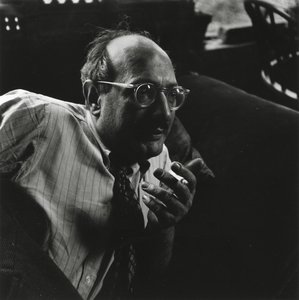
Mark Rothko
1903 - 1970 , Lettonie
L'essentiel de l'artiste
- Artistes Influents:
- Sigmund Freud
- Marcel Proust
- Date De Décès: 25 février 1970
- Date De Naissance: 25 septembre 1903
- Influences Artistiques:
- Minimalisme
- Art contemporain
- Lieu De Naissance: Daugavpils, Lettonie
- Mouvement Artistique: Expressionnisme abstrait
- Nationalité: Américaine
- Nom Complet: Mark Rothko / Marcus Rothkowitz
- Œuvres Notables:
- No. 18 (1948)
- No. 10 (1950)
- Murals Seagram
- White Center (1957)
Articles connexes

Mark Rothko : Les 25 Œuvres Maîtresses de l'Abstraction Coloriste | AllPaintingsStore
Plongez dans l'univers émotionnel de Mark Rothko avec les 25 œuvres clés du maître de l'abstraction. Découvrez l'histoire, la technique et le pouvoir des couleurs de ces tableaux iconiques. Reproductions d'art de qualité musée sur AllPaintingsStore.com

Abstraction Géométrique : Les 10 Chefs-d'œuvre qui ont Marqué l'Histoire de l'Art
Plongez au cœur de l'abstraction géométrique avec AllPaintingsStore.com ! Découvrez les 10 œuvres majeures de Mondrian, Malevitch et Kandinsky qui ont révolutionné l'art moderne. Inspirez votre décoration intérieure avec des reproductions de tableaux exceptionnelles. Explorez la collection en ligne !

Color Field Painting: The Emotional Power of Pure Abstraction and Chromatic Depth
Explore the profound emotional depth of Color Field painting. Discover the history of mid-century abstraction, from Rothko to Newman, and learn how pure color transforms the viewer's experience through our expert art history guide.

Neo-Abstract Art: The High-Impact Evolution of Modern Visual Energy and Geometric Sophistication
Discover the power of Neo-Abstract art. Explore how bold geometric forms and high-impact visual energy are redefining modern design. Learn to curate sophisticated, high-energy spaces with the latest trends in contemporary abstraction and structural color.

The Sublimity of Color: Exploring the Emotional Landscapes of Mark Rothko's Abstract Expressionism
Explore the profound emotional depth of Mark Rothko's abstract expressionism. Discover the history, techniques & lasting impact of this pivotal Color Field painter. Expert insights for collectors and art enthusiasts.


