


 Aperçu en situation
 Partager
 Partager
 Détails
 Guide imprimable

 Télécharger
 Articles similaires
 Radiographie
 Voir le diaporama
 Statistiques
Lynn Meadows


 Afficher la suite
Giclées et impressions d'art
Impressions giclées ou sur toile de qualité musée, avec une production rapide et des finitions au choix. ( Acheter la peinture faite à la main Passer au format image numérique)




P118B €10

P118H €10

P118W €10

P438Z €10

P508JH €12

P508YH €12

P805H €10

P805Z €10

P919BZ €10

P919G €10

P919XJ €10

P959ZH €10

P968JZ €12

W106C €8

W218G €10

W218JH €8

W218Y €10

W307PJ €10

W316G €10

W316PJ €8

W316Y €10

W398PJ €8

W4111J €10

W500HY €15

W500JH €15

W692G €12

W849H €8

W940BG €15

W953PJ €8




Choisissez parmi nos formats prédéfinis qui respectent les proportions originales de l’œuvre.

Saisissez la largeur et la hauteur souhaitées pour qu'elles s'adaptent à votre cadre ou à votre mur. Une impression ne peut être que découpée, elle ne peut jamais être agrandie au-delà de l'image originale ; ainsi, un format de forme différente entraînera la perte d'une partie de l'image. Nous vous envoyons une maquette numérique pour approbation avant toute impression. L'image présentée sur cette page ne montre pas le recadrage réel — seule la maquette le permet.
Livraison dans le monde entier () en 2 semaines au lieu des 4/5 semaines habituelles. (24 octobre)

Livraison express gratuite dans le monde entier

Toile de lin de haute qualité

Assurance transport complète

Garantie de remboursement des droits de douane

Garantie de fidélité des couleurs

Garantie de retour de 100 jours (uniquement en cas de défaut)

Garantie de remboursement à 100%

Tarifs dégressifs sur quantité
 L'option verre n'est disponible que pour les dimensions inférieures à 110 cm.

Lynn Meadows
Giclées et impressions d'art
Format de la reproduction
-


Prix total final
€ 56
A Symphony of Light and Marsh – Exploring Martin Johnson Heade’s “Lynn Meadows”
Martin Johnson Heade's "Lynn Meadows," painted in 1863, isn’t merely a depiction of a marsh landscape; it’s an immersion into a specific moment of time, a carefully orchestrated dialogue between light, color, and the quiet drama of nature. This painting, now meticulously reproduced for art lovers worldwide, offers a glimpse into the heart of Luminism – a movement that sought to capture the ephemeral qualities of light and atmosphere with remarkable subtlety and grace. Heade, a master of this style, wasn’t interested in grand vistas or heroic subjects; instead, he focused on the intimate details of the natural world, particularly the serene beauty of coastal marshes.
The scene unfolds before us as a horizontal expanse dominated by the muted browns and greens of the marsh itself. A prominent bridge, rendered with delicate precision, acts as a visual anchor, drawing the eye into the heart of the composition. The foreground is populated with figures – likely laborers engaged in their daily tasks – adding a subtle layer of human presence to this otherwise solitary landscape. However, these individuals are deliberately understated, almost dissolving into the surrounding environment, reinforcing the painting’s overall sense of tranquility and timelessness. The color palette is remarkably restrained, relying on soft washes of ochre, umber, and sage green, creating an atmosphere of hazy warmth and diffused light – a hallmark of Luminist technique.
Luminism: Capturing the Essence of Light
Heade’s work falls squarely within the Luminist movement, which flourished in America during the mid-19th century. Unlike their Hudson River School counterparts who often depicted dramatic mountain scenes and heroic narratives, Luminists were primarily concerned with capturing the fleeting effects of light on natural subjects. They eschewed heavy brushwork and detailed rendering in favor of loose, atmospheric strokes that suggested movement and transparency. This approach allowed them to convey the subtle shifts in color and tone as sunlight filtered through clouds or reflected off water surfaces. Heade’s “Lynn Meadows” exemplifies this philosophy perfectly – it's less about a literal representation of the marsh and more about evoking its feeling, its mood, its very essence.
The painting’s historical context is equally important to understanding its significance. Painted in 1863, during the American Civil War, “Lynn Meadows” offers a poignant contrast to the turmoil of the nation. It's a scene of quiet contemplation and resilience – a reminder of the enduring beauty of nature even amidst times of great upheaval. The bridge itself can be interpreted as a symbol of connection and progress, linking the human world with the natural one.
Technique and Materials: A Master’s Touch
Heade employed oil paints on canvas, utilizing a technique characterized by thin layers of color applied in rapid succession. This layering creates a remarkable sense of luminosity – as if the light itself is emanating from the surface of the painting. The brushstrokes are loose and expressive, yet carefully controlled to create a harmonious composition. The artist’s mastery of glazing techniques allows him to build up depth and dimension with subtle variations in color and tone. Close examination reveals the meticulous attention to detail – the texture of the reeds, the ripples on the water, the shadows cast by the bridge.
Symbolism and Emotional Resonance
Beyond its technical brilliance, “Lynn Meadows” is rich in symbolism. The setting sun evokes a sense of transition and closure, suggesting both the end of one day and perhaps even the end of an era. The figures working in the foreground represent the enduring connection between humanity and nature – a reminder that we are part of this intricate ecosystem. Ultimately, the painting’s emotional impact is profoundly serene and contemplative, inviting viewers to pause, reflect, and appreciate the simple beauty of the natural world. It's a piece that speaks to our deepest longing for peace and tranquility, offering a moment of respite from the complexities of modern life.
Questions et réponses
Quelle est la taille d'impression recommandée pour «Lynn Meadows» de Martin Johnson Heade ?
La taille d'impression recommandée pour «Lynn Meadows» de Martin Johnson Heade est Large.
Comment le contraste et l'harmonie se conjuguent-ils dans « Lynn Meadows » ?
Dans « Lynn Meadows », un Statement contraste s'allie à une Strong Color Unity harmonie.
Quelle atmosphère se dégage de « Lynn Meadows » ?
«Lynn Meadows» dégage une atmosphère Serene.
Œuvres similaires


Biographie de l'artiste
Première vie et formation
Martin Johnson Heade, un peintre américain, est né le 11 août 1819 à Lumberville, en Pennsylvanie. Sa jeunesse fut marquée par une forte inclination pour l'art, ce qui le conduisit à étudier sous la tutelle d’Edward Hicks et possiblement de Thomas Hicks. Cette formation fondamentale posa les bases de ses futures réalisations artistiques.Carrière artistique
La carrière artistique de Heade peut être globalement divisée en plusieurs phases, chacune étant marquée par un changement distinct dans son sujet et son style. Initialement, il se concentra sur le portrait, avec son œuvre la plus ancienne connue datant de 1839. Par la suite, il voyagea en Europe, où il fut exposé à diverses influences artistiques.- Son travail commença à montrer un intérêt marqué pour la peinture de paysage, notamment après avoir rencontré des artistes de l'Hudson River School, tels que John Frederick Kensett et Benjamin Champney.
- Ses voyages au Brésil (1863-1864) et ses voyages ultérieurs en Nicaragua, Colombie, Panama et Jamaïque (1866 et 1870) influencèrent profondément son œuvre, conduisant à une série de petites peintures représentant des colibris.
- Ses dernières années à St. Augustine, en Floride, furent marquées par un intérêt accru pour la nature morte, en particulier les fleurs de magnolias posées sur du velours.
Style et Œuvres Notables
Le style de Martin Johnson Heade se caractérise par une approche romantique de ses sujets, souvent axée sur le jeu d'ombre et de lumière. Ses œuvres les plus renommées comprennent des représentations des marais salants côtiers de la Nouvelle-Angleterre, ce qui a conduit certains historiens à le catégoriser comme un peintre luministe.- Son œuvre fait désormais partie d’importants musées et collections, notamment la collection Martin Johnson Heade sur AllPaintingsStore.
- Certaines de ses peintures notables, telles que *Forked Tailed Woodnymph*, peuvent être trouvées dans la collection sur AllPaintingsStore.
- Pour plus d'informations sur la vie et l'œuvre de Heade, consultez la page Wikipédia sur Martin Johnson Heade.
Héritage
Bien qu’il n’ait pas été largement reconnu de son vivant, l'œuvre de Martin Johnson Heade a attiré l'attention des érudits et des collectionneurs depuis les années 1940. Aujourd'hui, il est reconnu comme un artiste américain majeur, ses peintures étant parfois découvertes dans des endroits inattendus tels que des ventes de garage et des marchés aux puces. Points clés :- Né : 11 août 1819, Lumberville, Pennsylvanie
- Décédé : 4 septembre 1904
- Œuvres notables : paysages de marais salants, marines, représentations d'oiseaux tropicaux, lotus et natures mortes
- Style : approche romantique avec un accent sur l’ombre et la lumière, classé comme peintre luministe
- Collections : principaux musées et la collection Martin Johnson Heade sur AllPaintingsStore

Martin Johnson Heade
1819 - 1904 , États-Unis d'Amérique
En bref
- Artistic Movement Or Style: Luminisme, Romantisme
- Artists Who Influenced This Artist:
- Edward Hicks
- Thomas Hicks
- John Frederick Kensett
- Benjamin Champney
- Date Of Birth: 11 août 1819
- Date Of Death: 4 septembre 1904
- Full Name: Martin Johnson Heade
- Nationality: Américain
- Notable Artworks:
- Forked Tailed Woodnymph
- Lotus Blossom with Hummingbird
- Place Of Birth (City And Country): Lumberville, États-Unis
Articles connexes
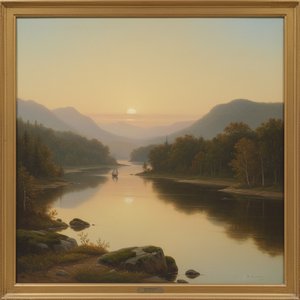
David Johnson: A Luminist Master of the Hudson River School & Beyond
Explore the captivating landscapes of David Johnson, a key figure in the Hudson River School & Luminism movement. Discover his artistic evolution, legacy, and how to collect his works with AllPaintingsStore.

Évocations de lieux : Un voyage historique à travers l'art du paysage
Explorez l'histoire fascinante de la peinture de paysage à travers les chefs-d'œuvre du Romantisme. Découvrez Friedrich, Turner et Aivazovski et laissez-vous inspirer par la beauté sauvage et le sublime. Reproduction d'art de qualité chez AllPaintingsStore.
Constable : Les 25 Chefs-d'Œuvre du Maître Anglais | AllPaintingsStore
Plongez dans l'univers de John Constable avec les 25 œuvres incontournables du maître anglais. Découvrez l'histoire, la technique et l'émotion derrière ses paysages romantiques. Reproductions de qualité muséale sur AllPaintingsStore.com.

Martin Johnson Heade: Luminism, American Identity & the Poetic Still Life
Explore the captivating world of Martin Johnson Heade, a master of Luminism. Discover his serene landscapes, vibrant still lifes & profound connection to American identity. Learn about his techniques and legacy.

Les 10 Chefs-d'œuvre du Paysage Romantique : Artistes et Décor d'Intérieur
Plongez dans l'émotion du Romantisme avec les 10 plus beaux paysages de Friedrich, Turner & Delacroix. Découvrez leur histoire et trouvez l'inspiration déco idéale sur AllPaintingsStore.com !


