Aperçu en situation
 Envoyer
 Partager
 Détails de l'œuvre

 Télécharger
 Articles similaires
 Radiographie
 Diaporama
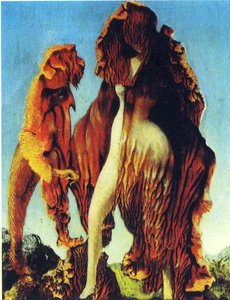
Ohne Titel

 Lire la suite
Giclées et impressions d'art
Impressions giclées ou sur toile de qualité musée, avec une production rapide et des finitions au choix. ( Commander la reproduction peinte à la main Télécharger l'image haute résolution)




P118B $10

P118H $10

P118W $10

P438Z $10

P508JH $12

P508YH $12

P805H $10

P805Z $10

P919BZ $10

P919G $10

P919XJ $10

P959ZH $10

P968JZ $12

W106C $8

W218G $10

W218JH $8

W218Y $10

W307PJ $10

W316G $10

W316PJ $8

W316Y $10

W398PJ $8

W4111J $10

W500HY $15

W500JH $15

W692G $12

W849H $8

W940BG $15

W953PJ $8




Choisissez parmi nos formats prédéfinis qui respectent les proportions originales de l’œuvre.

Vous pouvez saisir vos propres dimensions pour vous adapter à un cadre ou à un espace spécifique. Si la taille sélectionnée ne correspond pas aux proportions de l'image originale, nous recadrerons l'œuvre ou étendrons l'image avec une bordure en miroir ou une couleur unie. Une maquette numérique vous sera envoyée pour approbation avant le début de la production.
Veuillez noter que l'aperçu à l'écran ne reflète pas le recadrage ou l'extension réelle. Seule la maquette montrera avec précision la composition finale.
Bien que des tailles personnalisées soient disponibles, nous vous recommandons de choisir une dimension dans la liste prédéfinie afin de préserver les proportions originales.
Livraison dans le monde entier () en 2 semaines au lieu des 4/5 semaines habituelles. (19 août)

Livraison express gratuite dans le monde entier

Toile de lin de qualité supérieure

Assurance transport complète

Garantie de remboursement des droits de douane

Garantie de fidélité des couleurs

Politique de retour de 60 jours (uniquement en cas de défaut)

Garantie de remboursement à 100%

Offre de tarifs dégressifs
 L'option verre n'est disponible que pour les dimensions inférieures à 110 cm.

Ohne Titel
Giclées et impressions d'art
Format de la reproduction
-


Prix total
$ 64
Description de la pièce
A Surrealist Echo: Unpacking Max Ernst’s “Ohne Titel”
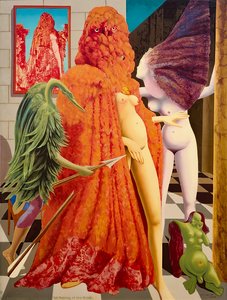
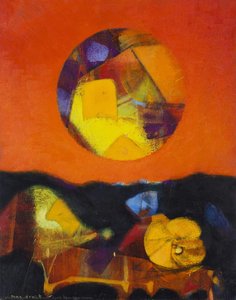
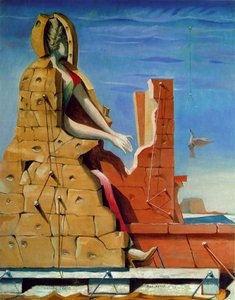
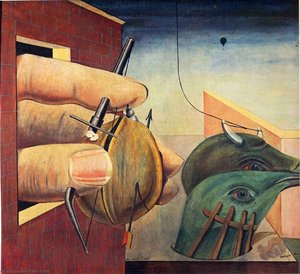
Max Ernst's "Ohne Titel" – often referred to as "Personnages or Le Chapeau Rouge" – isn’t merely a painting; it’s an invitation into the labyrinthine depths of the subconscious. Created in 1949, this remarkable etching and aquatint, rendered in vibrant color on Japanese paper, embodies the core tenets of Surrealism while simultaneously hinting at the artist's lifelong fascination with chance, memory, and the evocative power of imagery. It’s a piece that rewards repeated viewing, revealing new layers of meaning with each encounter. Ernst, born in Brühl, Germany, in 1891, was a restless spirit who rejected conventional artistic paths, forging his own unique trajectory through experimentation and intellectual exploration – a path deeply intertwined with the burgeoning Surrealist movement. His early years were marked by a rejection of academic art, leading him to embrace Dadaism before ultimately finding resonance within the more psychologically-oriented Surrealism championed by André Breton.The Alchemy of Chance: Technique and Process
At first glance, “Ohne Titel” appears chaotic – a swirling vortex of greens, reds, yellows, and blacks colliding across the page. However, this apparent disorder is meticulously orchestrated. Ernst employed a technique he termed "collage," layering aquatint and etching plates to create a complex matrix of tonal variations. The process involved applying ink to the plate, then covering it with wax before exposing it to light through a photographic negative. This created areas of varying density, which would subsequently be etched – resulting in the final image. Crucially, Ernst embraced chance within this controlled system. He often left portions of the plate unworked, allowing the etching process itself to introduce unexpected textures and patterns. The result is a mesmerizing interplay between deliberate design and serendipitous discovery—a testament to Ernst’s belief that true creativity arises from the collision of intention and accident. The use of Japanese paper adds an element of subtle elegance and texture, further enhancing the artwork's visual richness.Symbolic Landscapes: Unveiling Hidden Meanings
While devoid of recognizable figures or objects, “Ohne Titel” is profoundly symbolic. The dominant greens evoke a sense of primal nature, hinting at both fertility and decay – a recurring motif in Ernst’s work. The vibrant reds and yellows suggest energy, passion, and perhaps even danger. The fragmented forms, resembling distorted human shapes or abstract landscapes, are deliberately ambiguous, inviting the viewer to project their own experiences and emotions onto the scene. Some art historians interpret these figures as echoes of childhood memories, while others see them as representations of the anxieties and uncertainties of a rapidly changing world. The title itself – “Ohne Titel” – underscores the artwork’s inherent openness, suggesting that its meaning is not fixed but rather emerges from the interaction between the viewer and the image. The inclusion of "Personnages or Le Chapeau Rouge" hints at both human figures and a flamboyant hat, adding another layer of visual intrigue.A Window into the Unconscious: Context and Legacy
“Ohne Titel” was created during a period of intense artistic experimentation and intellectual ferment – the aftermath of World War II and the rise of Cold War anxieties. Surrealism, with its emphasis on dreams, irrationality, and the exploration of the unconscious mind, provided a powerful framework for grappling with these turbulent times. Ernst’s work reflects this broader cultural context, offering a glimpse into the psychological landscape of a generation struggling to make sense of a world shattered by violence and uncertainty. His innovative techniques – including frottage (rubbing textures onto paper) and decalcomania (transferring ink from one surface to another) – became hallmarks of Surrealist art, influencing countless artists who followed in his footsteps. “Ohne Titel” stands as a prime example of Ernst’s enduring legacy—a testament to the power of imagination and the transformative potential of artistic experimentation.A Timeless Resonance: Emotional Impact and Aesthetic Appeal
Ultimately, "Ohne Titel" transcends its technical complexities to offer a deeply resonant emotional experience. The swirling colors, fragmented forms, and ambiguous imagery create a sense of unease, mystery, and profound beauty. It’s a piece that lingers in the mind long after it has been viewed, prompting reflection on themes of memory, identity, and the nature of reality. Its vibrant palette and intricate textures make it equally captivating as a standalone artwork or as part of a carefully curated interior design scheme. The work's inherent ambiguity ensures its continued relevance, inviting viewers to engage with it on a personal level and discover their own unique interpretations. It’s a powerful reminder that art can be both intellectually stimulating and emotionally evocative—a true testament to the genius of Max Ernst.Œuvres similaires



Biographie de l'artiste
Max Ernst : Une Vie au Sein du Surréalisme
Jeunesse et Éducation
- Né le: 1er avril 1891 à Brühl, en Allemagne.
- Le père d'Ernst, Philipp Ernst, était enseignant des sourds et peintre amateur, encourageant ainsi l'intérêt précoce de Max pour l'art.
- Il a étudié la philosophie, l'histoire de l'art, la littérature, la psychologie et la psychiatrie à l'Université de Bonn de 1909.
- Ce parcours académique diversifié a profondément influencé ses explorations artistiques ultérieures.
Développement Artistique & Influences
- Un moment décisif fut l'exposition Sonderbund à Cologne (1912), où il a découvert des œuvres de Pablo Picasso, Vincent van Gogh, et Paul Gauguin.
- En 1914, il a rencontré Hans Arp, débutant une amitié qui a durablement façonné son parcours artistique.
- La Première Guerre mondiale a profondément marqué Ernst ; ses expériences de soldat ont conduit à la déception et à une vision critique de la société.
- Il s'est inspiré des écrits de Sigmund Freud, explorant les thèmes de l'inconscient dans son art.
Dadisme & Surréalisme
- Ernst est devenu une figure clé du groupe Dadiste de Cologne après la Première Guerre mondiale, rejetant les conventions artistiques traditionnelles.
- Il a pionné des techniques innovantes telles que frottage (frotter un crayon sur des surfaces texturées) et grattage (gratter la peinture pour révéler les couches sous-jacentes).
- Dans les années 1920, il a rejoint le mouvement surréaliste à Paris, collaborant avec des artistes tels que Paul Éluard.
- Son œuvre de cette période explorait des images oniriques et des thèmes psychologiques.
Œuvres Majeures & Techniques
- Frottage : Une technique utilisée pour créer des textures et des images inattendues, exemplifiée dans de nombreuses œuvres.
- Collage : Ernst a fréquemment utilisé le collage, combinant des éléments disparates pour créer des compositions surréalistes.
- Œuvres Notables :
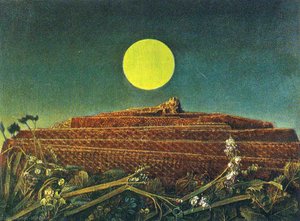
- La Ville Entière
- Euclides
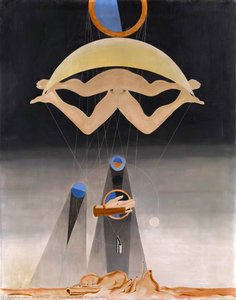
- De Ceci, Personne Ne Devrait Savoir
- Forêt et Colombe
- Ses peintures présentent souvent des images symboliques, notamment les oiseaux (en particulier son alter ego Loplop), les paysages et des juxtapositions troublantes.
Vie Tardive & Héritage
- Ernst s'est installé aux États-Unis pendant la Seconde Guerre mondiale, continuant à peindre et à expérimenter de nouvelles techniques.
- Il est revenu en France après la guerre et est resté actif jusqu'à sa mort le 1er avril 1976 à Paris.
- Signification Historique : Les contributions d'Ernst au Dadisme et au Surréalisme ont été révolutionnaires. Il a défié les normes artistiques, exploré l’esprit inconscient et inventé des techniques innovantes qui continuent d’inspirer les artistes aujourd’hui.
- Il reste l'un des figures les plus importantes et influentes de l'art du 20e siècle.
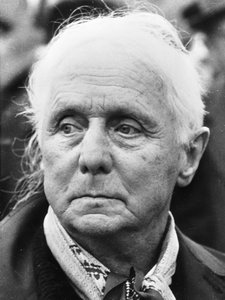
Max Ernst
1891 - 1976 , Allemagne
L'essentiel de l'artiste
- Artistes Influents:
- Pablo Picasso
- Vincent van Gogh
- Paul Gauguin
- Date De Décès: 1er avril 1976
- Date De Naissance: 1er avril 1891
- Lieu De Naissance: Brühl, Allemagne
- Mouvement Artistique: Dadaïsme et Surréalisme
- Nationalité: Allemand/Américain/Français
- Nom Complet: Max Ernst
- Œuvres Notables:
- La Ville Entière
- Euclides
- Forêt et Colombe
Articles connexes

Expressionist Abstraction: A Procurement Guide to Bold Colors and Emotional Impact for Modern Hotel Interiors
Elevate hospitality spaces with Expressionist Abstraction. A professional procurement guide for hotel designers on sourcing bold, large-scale abstract oil paintings to create impactful, high-end modern interiors through reliable bulk-order art solutions.

Strategic Sourcing of Premium Abstract Art for High-Impact Commercial Interiors and Large-Scale Hotel Projects
Streamline your commercial art procurement with our expert guide to sourcing premium abstract art for hotel and large-scale projects. Discover professional solutions for custom sizing, multi-panel layouts, and reliable bulk ordering designed for hospitality designers.