Aperçu en situation
 Envoyer
 Partager
 Détails de l'œuvre

 Télécharger
 Articles similaires
 Radiographie
 Diaporama
untitled (2260)


 Lire la suite
Giclées et impressions d'art
Impressions giclées ou sur toile de qualité musée, avec une production rapide et des finitions au choix. ( Commander la reproduction peinte à la main Télécharger l'image haute résolution)




P118B $10

P118H $10

P118W $10

P438Z $10

P508JH $12

P508YH $12

P805H $10

P805Z $10

P919BZ $10

P919G $10

P919XJ $10

P959ZH $10

P968JZ $12

W106C $8

W218G $10

W218JH $8

W218Y $10

W307PJ $10

W316G $10

W316PJ $8

W316Y $10

W398PJ $8

W4111J $10

W500HY $15

W500JH $15

W692G $12

W849H $8

W940BG $15

W953PJ $8




Choisissez parmi nos formats prédéfinis qui respectent les proportions originales de l’œuvre.

Vous pouvez saisir vos propres dimensions pour vous adapter à un cadre ou à un espace spécifique. Si la taille sélectionnée ne correspond pas aux proportions de l'image originale, nous recadrerons l'œuvre ou étendrons l'image avec une bordure en miroir ou une couleur unie. Une maquette numérique vous sera envoyée pour approbation avant le début de la production.
Veuillez noter que l'aperçu à l'écran ne reflète pas le recadrage ou l'extension réelle. Seule la maquette montrera avec précision la composition finale.
Bien que des tailles personnalisées soient disponibles, nous vous recommandons de choisir une dimension dans la liste prédéfinie afin de préserver les proportions originales.
Livraison dans le monde entier () en 2 semaines au lieu des 4/5 semaines habituelles. (14 août)

Livraison express gratuite dans le monde entier

Toile de lin de qualité supérieure

Assurance transport complète

Garantie de remboursement des droits de douane

Garantie de fidélité des couleurs

Politique de retour de 60 jours (uniquement en cas de défaut)

Garantie de remboursement à 100%

Offre de tarifs dégressifs
 L'option verre n'est disponible que pour les dimensions inférieures à 110 cm.

untitled (2260)
Giclées et impressions d'art
Format de la reproduction
-


Prix total
$ 64
Description de la pièce
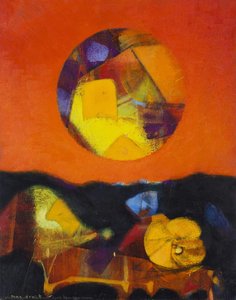
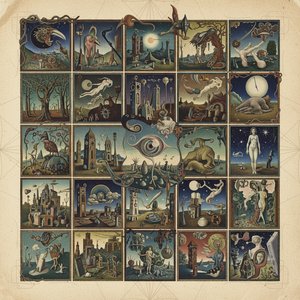
A Vision of Disquieting Harmony: Exploring Max Ernst’s “Untitled (2260)”
Max Ernst's "Untitled (2260)" stands as a testament to the Surrealist impulse—a deliberate confrontation with the subconscious mind and a rejection of rational order. Created sometime around 1937, this enigmatic landscape painting embodies Ernst’s signature blend of meticulous technique and dreamlike imagery, inviting viewers into a realm where familiar forms twist into unsettling juxtapositions. The artwork's enduring fascination stems from its ability to evoke profound emotional responses while simultaneously stimulating intellectual contemplation about the anxieties of the era.The Genesis of Surrealism: Ernst’s Philosophical Roots
Ernst’s artistic journey began not with formal instruction but with a fervent engagement with philosophical currents—particularly Nietzsche and Freud—that questioned established beliefs about morality and consciousness. Influenced by Nietzsche's concept of the Übermensch, striving for self-overcoming and rejecting societal constraints, Ernst sought to liberate art from conventional representations of reality. Simultaneously, Freud’s psychoanalytic theories provided a framework for exploring the hidden depths of the human psyche—a preoccupation that would permeate his artistic output. This intellectual grounding fueled his desire to tap into the realm of dreams and irrational impulses, mirroring the core tenets of Surrealism.Technique and Texture: Ernst's Innovative Approaches
Ernst’s distinctive style is characterized by a masterful manipulation of texture and surface—a cornerstone of his groundbreaking techniques like frottage and grattage. Frottage involves rubbing pencil or charcoal over textured surfaces (such as wood grain or fabric) to transfer their impressions onto canvas, generating unexpected patterns and suggestive imagery. Ernst famously employed this method extensively, layering textures to create a palpable sense of atmosphere and hinting at hidden narratives beneath the surface. Grattage takes this process further by scraping paint across the canvas with knives or spatulas, revealing underlying layers and creating striking visual effects—a technique that powerfully communicates the artist’s preoccupation with primal forces and subconscious anxieties.Symbolism Within Landscape: Birds, Time, and Psychological Tension
The landscape depicted in “Untitled (2260)” is rife with symbolic significance. Dominating the composition is a colossal clock tower, representing not merely time but also the oppressive weight of societal expectations and the relentless march toward inevitable decay—themes central to Ernst’s artistic concerns. Scattered throughout the scene are trees and mountains, offering respite from the towering structure yet simultaneously embodying resilience and permanence. However, it's the presence of birds that arguably holds the key to unlocking the painting’s emotional core. Birds frequently appear in Ernst’s oeuvre as emblems of freedom, aspiration, and spiritual transcendence—yet here they seem trapped within the confines of the landscape, mirroring the artist’s own struggle for liberation from psychological constraints.Emotional Resonance: Capturing the Anxiety of an Era
Ultimately, “Untitled (2260)” succeeds in conveying a palpable sense of unease and disorientation—a reflection of the anxieties prevalent during Ernst's time. The unsettling juxtaposition of natural beauty and artificial dominance underscores the artist’s critique of Western civilization’s obsession with reason and control. The painting compels viewers to confront uncomfortable truths about human existence, prompting introspection and fostering a deeper appreciation for the power of imagination as a means of resisting oppressive forces. Its enduring appeal lies in its ability to resonate with audiences who recognize the universal yearning for authenticity and liberation—a legacy cemented by Ernst’s pioneering role in shaping the artistic landscape of the 20th century.Œuvres similaires


Biographie de l'artiste
Max Ernst : Une Vie au Sein du Surréalisme
Jeunesse et Éducation
- Né le: 1er avril 1891 à Brühl, en Allemagne.
- Le père d'Ernst, Philipp Ernst, était enseignant des sourds et peintre amateur, encourageant ainsi l'intérêt précoce de Max pour l'art.
- Il a étudié la philosophie, l'histoire de l'art, la littérature, la psychologie et la psychiatrie à l'Université de Bonn de 1909.
- Ce parcours académique diversifié a profondément influencé ses explorations artistiques ultérieures.
Développement Artistique & Influences
- Un moment décisif fut l'exposition Sonderbund à Cologne (1912), où il a découvert des œuvres de Pablo Picasso, Vincent van Gogh, et Paul Gauguin.
- En 1914, il a rencontré Hans Arp, débutant une amitié qui a durablement façonné son parcours artistique.
- La Première Guerre mondiale a profondément marqué Ernst ; ses expériences de soldat ont conduit à la déception et à une vision critique de la société.
- Il s'est inspiré des écrits de Sigmund Freud, explorant les thèmes de l'inconscient dans son art.
Dadisme & Surréalisme
- Ernst est devenu une figure clé du groupe Dadiste de Cologne après la Première Guerre mondiale, rejetant les conventions artistiques traditionnelles.
- Il a pionné des techniques innovantes telles que frottage (frotter un crayon sur des surfaces texturées) et grattage (gratter la peinture pour révéler les couches sous-jacentes).
- Dans les années 1920, il a rejoint le mouvement surréaliste à Paris, collaborant avec des artistes tels que Paul Éluard.
- Son œuvre de cette période explorait des images oniriques et des thèmes psychologiques.
Œuvres Majeures & Techniques
- Frottage : Une technique utilisée pour créer des textures et des images inattendues, exemplifiée dans de nombreuses œuvres.
- Collage : Ernst a fréquemment utilisé le collage, combinant des éléments disparates pour créer des compositions surréalistes.
- Œuvres Notables :
- La Ville Entière
- Euclides
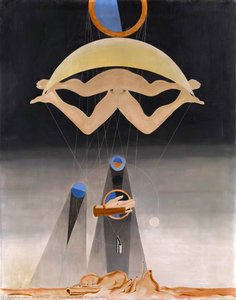
- De Ceci, Personne Ne Devrait Savoir
- Forêt et Colombe
- Ses peintures présentent souvent des images symboliques, notamment les oiseaux (en particulier son alter ego Loplop), les paysages et des juxtapositions troublantes.
Vie Tardive & Héritage
- Ernst s'est installé aux États-Unis pendant la Seconde Guerre mondiale, continuant à peindre et à expérimenter de nouvelles techniques.
- Il est revenu en France après la guerre et est resté actif jusqu'à sa mort le 1er avril 1976 à Paris.
- Signification Historique : Les contributions d'Ernst au Dadisme et au Surréalisme ont été révolutionnaires. Il a défié les normes artistiques, exploré l’esprit inconscient et inventé des techniques innovantes qui continuent d’inspirer les artistes aujourd’hui.
- Il reste l'un des figures les plus importantes et influentes de l'art du 20e siècle.
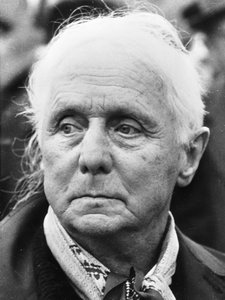
Max Ernst
1891 - 1976 , Allemagne
L'essentiel de l'artiste
- Artistes Influents:
- Pablo Picasso
- Vincent van Gogh
- Paul Gauguin
- Date De Décès: 1er avril 1976
- Date De Naissance: 1er avril 1891
- Lieu De Naissance: Brühl, Allemagne
- Mouvement Artistique: Dadaïsme et Surréalisme
- Nationalité: Allemand/Américain/Français
- Nom Complet: Max Ernst
- Œuvres Notables:
- La Ville Entière
- Euclides
- Forêt et Colombe
Articles connexes

Concrete Visions: Exploring the Urban Landscape in Painting – From Realism to Contemporary Art
Explore the evolution of cityscape painting from Realism to contemporary art with AllPaintingsStore. Discover key artists & invest in timeless urban visions. Expert guidance, museum-quality reproductions.
Max Ernst : Les 25 Œuvres Maîtresses d'un Surréalisme Révolutionnaire | AllPaintingsStore
Plongez dans l'univers surréaliste de Max Ernst ! Découvrez les 25 œuvres les plus emblématiques du maître allemand, entre frottage, collage et rêves éveillés. Inspirez votre décoration intérieure avec AllPaintingsStore : reproductions de tableaux de qualité muséale et collection d'art unique. Explorez la co

Au-delà des Limites de la Réalité : L'Évolution Fascinante de la Peinture Surréaliste
Explorez l'évolution fascinante de la peinture surréaliste : des racines dadaïstes à l'influence de Freud, en passant par les techniques automatiques et les figures clés comme Dalí. Découvrez un mouvement artistique révolutionnaire.

Au-Delà des Limites du Réel : Fondements Philosophiques et Évolution du Surréalisme
Explorez les fondements philosophiques et l'évolution du surréalisme avec AllPaintingsStore. Découvrez les œuvres emblématiques de Dalí, Magritte et Breton. Un voyage fascinant au cœur d'un mouvement artistique révolutionnaire.

James Sant: Capturing Victorian Childhood & the Evolving Landscape of British Genre Painting
Explore the life & art of James Sant (1820-1916), renowned Victorian portraitist to Queen Victoria. Discover his captivating depictions of childhood, landscapes, and aristocratic society. Learn about his legacy & find fine art reproductions.