


 Aperçu en situation
 Partager
 Partager
 Détails
 Guide imprimable

 Télécharger
 Articles similaires
 Radiographie
 Voir le diaporama
 Statistiques
Albert Einstein (1879–1955)
 Oil On Canvas
- WallArt
- Impressionism
 1922
1922 100.0 x 75.0 cm
 La Royal Society
 Afficher la suite
Giclées et impressions d'art
Impressions giclées ou sur toile de qualité musée, avec une production rapide et des finitions au choix. ( Acheter la peinture faite à la main Passer au format image numérique)




P118B €10

P118H €10

P118W €10

P438Z €10

P508JH €12

P508YH €12

P805H €10

P805Z €10

P919BZ €10

P919G €10

P919XJ €10

P959ZH €10

P968JZ €12

W106C €8

W218G €10

W218JH €8

W218Y €10

W307PJ €10

W316G €10

W316PJ €8

W316Y €10

W398PJ €8

W4111J €10

W500HY €15

W500JH €15

W692G €12

W849H €8

W940BG €15

W953PJ €8




Choisissez parmi nos formats prédéfinis qui respectent les proportions originales de l’œuvre.

Saisissez la largeur et la hauteur souhaitées pour qu'elles s'adaptent à votre cadre ou à votre mur. Une impression ne peut être que découpée, elle ne peut jamais être agrandie au-delà de l'image originale ; ainsi, un format de forme différente entraînera la perte d'une partie de l'image. Nous vous envoyons une maquette numérique pour approbation avant toute impression. L'image présentée sur cette page ne montre pas le recadrage réel — seule la maquette le permet.
Livraison dans le monde entier () en 2 semaines au lieu des 4/5 semaines habituelles. (25 octobre)

Livraison express gratuite dans le monde entier

Toile de lin de haute qualité

Assurance transport complète

Garantie de remboursement des droits de douane

Garantie de fidélité des couleurs

Garantie de retour de 100 jours (uniquement en cas de défaut)

Garantie de remboursement à 100%

Tarifs dégressifs sur quantité
 L'option verre n'est disponible que pour les dimensions inférieures à 110 cm.

Albert Einstein (1879–1955)
Giclées et impressions d'art
Format de la reproduction
-


Prix total final
€ 56
A Portrait of Genius: Max Liebermann’s Einstein
Max Liebermann's 1922 portrait of Albert Einstein isn’t merely a likeness; it’s a carefully constructed distillation of intellect, contemplation, and the burgeoning promise of a revolutionary mind. Painted during a pivotal period in Einstein’s career – immediately following his Nobel Prize win and the confirmation of his theories through the Eddington-Dyson eclipse observations – this oil painting transcends simple representation, offering a glimpse into the very essence of scientific genius. Liebermann, a master of Impressionism tempered with a keen observational eye, avoids the stark formality often associated with portraits of prominent figures, instead opting for an intimacy that draws the viewer directly into Einstein’s world.
The composition itself is deceptively simple: Einstein occupies most of the frame, his face turned slightly towards the left, creating a sense of quiet engagement. His hands, resting loosely on what appears to be a table or desk, subtly convey a restless energy – a mind constantly in motion, grappling with complex ideas. Liebermann’s brushwork is deliberately loose and expressive, eschewing sharp lines for a more impressionistic approach. This technique isn't about photographic accuracy; it’s about capturing the *feeling* of Einstein, his thoughtful demeanor, and the aura of intellectual intensity that surrounded him. The use of browns and ochres dominates the palette, lending the painting a warm, almost contemplative atmosphere – a visual echo of the quiet hours spent in deep thought.
The Impressionist Lens on Scientific Icon
Liebermann’s stylistic choices are deeply rooted in the tenets of Impressionism. He prioritizes capturing fleeting moments and subjective impressions over meticulous detail. This is evident in the way he renders light, using broken brushstrokes to suggest the play of illumination across Einstein's face and clothing. The shallow perspective further enhances this effect, creating a sense of immediacy and drawing the viewer into the scene as if they are witnessing this portrait firsthand. Unlike traditional portraits that often aim for an idealized representation, Liebermann’s Einstein is presented with a certain vulnerability – a hint of weariness around the eyes, suggesting the immense mental effort required to unravel the mysteries of the universe.
The historical context surrounding the painting is crucial to understanding its significance. 1922 was a time of great intellectual ferment in Europe, marked by the rise of modern physics and a growing sense of optimism about the future. Einstein’s work had already begun to transform our understanding of space, time, and gravity, and he was quickly becoming a global icon. Liebermann's portrait captures this moment perfectly, presenting Einstein not just as a brilliant scientist but also as a symbol of human ingenuity and progress.
Symbolism and the Portrait’s Essence
Beyond its technical merits, the painting is rich in symbolic meaning. The seated posture suggests contemplation and intellectual rigor – qualities inextricably linked to Einstein's legacy. The hands, resting casually yet deliberately, represent his engagement with ideas, his willingness to explore new possibilities. The muted color palette contributes to a sense of quiet introspection, inviting the viewer to share in Einstein’s mental landscape. It is important to note that Liebermann was not simply depicting a famous scientist; he was attempting to capture something deeper – the very spirit of scientific inquiry and the relentless pursuit of knowledge.
Furthermore, the painting subtly reflects the broader cultural anxieties of the era. The rise of science and technology was accompanied by concerns about the potential consequences of unchecked progress. Liebermann’s portrait, with its emphasis on intellectual contemplation, can be interpreted as a reminder of the importance of ethical considerations alongside scientific advancement. It's a poignant image that speaks to both the brilliance and the responsibility inherent in pushing the boundaries of human understanding.
A Timeless Reproduction
Reproductions of Liebermann’s Einstein portrait offer an exceptional opportunity to bring this remarkable work into any setting. The textured brushwork, the subtle nuances of light and shadow, and the intimate portrayal of a scientific icon are all faithfully captured in high-quality reproductions. Whether displayed in a study, a gallery, or a private residence, this painting continues to resonate with viewers today, serving as a powerful reminder of the enduring legacy of Albert Einstein and the transformative power of art.
Questions et réponses
En quelle année et dans quel mouvement "Albert Einstein (1879–1955)" a-t-elle été réalisée ?
«Albert Einstein (1879–1955)» de Max Liebermann date de 1922 et appartient au mouvement Impressionism.
Quel emplacement convient au format de «Albert Einstein (1879–1955)» de Max Liebermann ?
Le format Portrait de «Albert Einstein (1879–1955)» de Max Liebermann est recommandé pour une Living Room. Le format et l'espace guident ensemble l'emplacement d'une reproduction.
Quel format d'impression pour «Albert Einstein (1879–1955)» de Max Liebermann convient à la pièce recommandée ?
Dans une Living Room, nous suggérons un format d'impression de Medium pour « Albert Einstein (1879–1955) ».
Œuvres similaires


Biographie de l'artiste
Première Vie et Formation
- Né: Berlin, Allemagne (1847)
- Décédé: 1935
Carrière Artistique et Style
- Impressionnisme: Liebermann est devenu un fervent défenseur de l'impressionnisme en Allemagne, capturant des instants fugaces de la vie moderne avec une attention particulière à la lumière et à la couleur.
- Influences: Son style a été notablement influencé par Édouard Manet, se reflétant dans son esprit et son approche picturale.
- Motifs: Il représentait fréquemment des scènes de la bourgeoisie et des aspects de son jardin près du lac Wannsee.
- Portraitiste: Liebermann a acquis une renommée en tant que portraitiste talentueux, créant plus de 200 portraits commandés, dont ceux d'Albert Einstein et de Paul von Hindenburg.
Œuvres Notables et Réalisations
- "Jésus de douze ans au temple": Une œuvre précoce qui a suscité des débats en raison de sa représentation d'un garçon Jésus sémitique.
- Élection à l’Académie prussienne des arts: Une reconnaissance significative de son mérite artistique et de sa contribution.
- Direction de la Sécession berlinoise (1899-1911): Il a dirigé cette formation d'avant-garde majeure en Allemagne, remettant en question les normes artistiques traditionnelles.
Vie Ulérieure et Importance Historique
- Démission de l’Académie prussienne des arts: En 1933, il a démissionné suite à la décision de l'académie d'exclure les artistes juifs.
- Décès et Héritage: Il est décédé à Berlin en 1935, laissant derrière lui un corpus important d’œuvres qui continuent d’être célébrées pour leur style impressionniste et leur portrait perspicace de la société allemande.
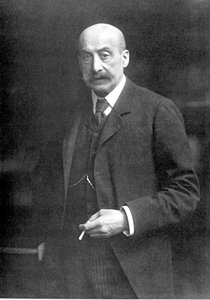
Max Liebermann
1847 - 1935 , Allemagne
En bref
- Artistes Influents: ['Édouard Manet']
- Date De Décès: 8 février 1935
- Date De Naissance: 20 juillet 1847
- Lieu De Naissance: Berlin, Allemagne
- Mouvement Artistique: Impressionnisme
- Mouvements Influencés: ['Sécession berlinoise']
- Nationalité: Allemande
- Nom Complet: Max Liebermann
- Oeuvres Notables:
- Le Jésus de douze ans au temple
- La Meuleuse
- Portrait d'Albert Einstein
Articles connexes

The Enduring Legacy of Oil on Canvas: Technique, History & Aesthetic Impact
Explore the rich history & techniques of oil painting – from Renaissance masters to Impressionism. Discover pigments, layering methods, and why this timeless medium endures. Expert insights for artists & art enthusiasts.

The Timeless Beauty of Oil on Panel: Capturing Light and Texture through the Impressionist Lens
Discover the exquisite depth of oil on panel. Explore how Impressionist masters captured light and texture through tactile brushwork, and learn how to bring these museum-quality, hand-painted masterpieces into your home with expert curation.

The Timeless Charm of Oil on Board: Reimagining Texture and Light through the Impressionist Lens
Discover the profound intimacy of oil on panel. Explore how Impressionist masters used rigid supports to capture light, texture, and impasto depth through exquisite, handmade oil reproductions for discerning collectors.

The Soul of Impressionism: Why Oil on Canvas Captures Eternal Light and Timeless Emotion
Discover the enchanting alchemy of Impressionism. Explore how the mastery of oil on canvas, through glazing and impasto, captures eternal light and emotion. Perfect for lovers of Monet and Van Gogh seeking the profound depth of hand-painted fine art.
Max Ernst : Les 25 Œuvres Maîtresses d'un Surréalisme Révolutionnaire | AllPaintingsStore
Plongez dans l'univers surréaliste de Max Ernst ! Découvrez les 25 œuvres les plus emblématiques du maître allemand, entre frottage, collage et rêves éveillés. Inspirez votre décoration intérieure avec AllPaintingsStore : reproductions de tableaux de qualité muséale et collection d'art unique. Explorez la co


