


 Aperçu en situation
 Envoyer
 Partager
 Détails de l'œuvre
 Guide
Guide

 Télécharger l'image
 Articles similaires
 Radiographie
 Diaporama
 Statistiques
Solveig


 Lire la suite
Giclées et impressions d'art
Impressions giclées ou sur toile de qualité musée, avec une production rapide et des finitions au choix. ( Commander la reproduction peinte à la main Passer au format numérique)




P118B €10

P118H €10

P118W €10

P438Z €10

P508JH €12

P508YH €12

P805H €10

P805Z €10

P919BZ €10

P919G €10

P919XJ €10

P959ZH €10

P968JZ €12

W106C €8

W218G €10

W218JH €8

W218Y €10

W307PJ €10

W316G €10

W316PJ €8

W316Y €10

W398PJ €8

W4111J €10

W500HY €15

W500JH €15

W692G €12

W849H €8

W940BG €15

W953PJ €8




Choisissez parmi nos formats prédéfinis qui respectent les proportions originales de l’œuvre.

Saisissez la largeur et la hauteur souhaitées pour qu'elles s'adaptent à votre cadre ou à votre mur. Une impression peut être recadrée, mais jamais agrandie au-delà de l'image originale ; ainsi, un format de forme différente entraînera la perte d'une partie de l'image. Nous vous envoyons une maquette numérique pour approbation avant toute impression. L'image présentée sur cette page ne montre pas le recadrage réel — seule la maquette le permet.
Livraison dans le monde entier () en 2 semaines au lieu des 4/5 semaines habituelles. (27 octobre)

Livraison express gratuite dans le monde entier

Toile de lin de qualité supérieure

Assurance transport complète

Garantie de remboursement des droits de douane

Garantie de fidélité des couleurs

Politique de retour de 100 jours (uniquement en cas de défaut)

Garantie de remboursement à 100%

Offre de tarifs dégressifs
 L'option verre n'est disponible que pour les dimensions inférieures à 110 cm.

Solveig
Giclées et impressions d'art
Format de la reproduction
-


Prix total
€ 56
Nicholas Roerich’s “Solveig”: A Portrait of Grace and Spiritual Seeking
“Solveig,” painted in 1912 by the visionary artist Nicholas Roemerich, is more than just a portrait; it's an evocative meditation on beauty, femininity, and perhaps, a subtle yearning for something beyond the material world. The painting immediately draws the eye to its central figure – a woman of quiet dignity, dressed in a flowing white gown accented with delicate bands of red and blue. Her posture is poised, her gaze direct, inviting the viewer into a silent conversation. This isn’t a snapshot of a fleeting moment but rather a carefully constructed image imbued with the artist's deep philosophical concerns.
- Subject & Composition: The subject, “Solveig,” which translates to "strong" or "resolute," is presented in a classic portrait format, emphasizing her presence and individuality. The background, deliberately blurred, serves to focus attention entirely on the woman herself and subtly suggests an interior space – perhaps a studio or a private chamber – adding to the sense of intimacy.
- Art Nouveau Influence: Roemerich’s work during this period is firmly rooted in the Art Nouveau movement, characterized by its flowing lines, organic forms, and emphasis on decorative detail. The swirling patterns within the red and blue accents, mirroring natural motifs like flowers or water, exemplify this stylistic influence.
Technique and Materials: A Master’s Hand
Roemerich was a meticulous craftsman, renowned for his layering technique – a hallmark of his style. He built up the image through multiple thin glazes of oil paint, creating a luminous depth and richness that is characteristic of his work. The use of color is particularly noteworthy; the subtle gradations between the white, red, and blue evoke a sense of ethereal beauty. The canvas itself would have been primed with several layers of gesso to ensure optimal adhesion for the subsequent paint application. Roerich’s attention to detail extends beyond mere color; the texture of the fabric is rendered with remarkable accuracy, contributing to the overall realism of the piece.
- Oil on Canvas: The painting utilizes oil paints on a canvas support, a standard technique for the period and crucial to achieving Roemerich’s signature luminous effects.
- Layered Glazes: Roerich's masterful use of glazes created depth and richness in color, a key element of his artistic style.
Symbolism and Historical Context
Painted in 1912, “Solveig” reflects the broader intellectual currents of the early 20th century. Roerich was deeply interested in Eastern philosophy, particularly the concepts of spiritual evolution and the interconnectedness of all things. The woman’s direct gaze can be interpreted as a symbol of inner strength and awareness – qualities that were central to his artistic vision. Furthermore, the Art Nouveau style itself was often associated with ideas of nature, beauty, and the sublime, reflecting a desire to transcend the mundane and connect with something greater.
Roerich’s work during this period is also linked to his exploration of esoteric traditions and his belief in the power of art to influence human consciousness. He saw himself as a ‘painter-mystic,’ using his art as a vehicle for spiritual expression.Emotional Impact & Reproduction
“Solveig” possesses a quiet, contemplative beauty that invites prolonged viewing. The painting’s serene atmosphere and the subject's dignified presence evoke feelings of peace, grace, and perhaps even a touch of melancholy. AllPaintingsStore.com offers meticulously crafted hand-painted reproductions of this iconic work, allowing you to bring its timeless elegance into your home or office. Our skilled artisans faithfully recreate Roerich’s technique and color palette, ensuring that the essence of this remarkable painting is preserved for generations to come. Choose from a range of sizes to perfectly suit your space and enjoy owning a piece of art history.
Questions et réponses
Quel est le niveau de contraste dans «Solveig» de Nicolas Roerich ?
Le niveau de contraste de «Solveig» de Nicolas Roerich est Bold.
Quelle atmosphère et quelle émotion se dégagent de « Solveig » ?
«Solveig» de Nicolas Roerich dégage un sentiment Romantic au sein d'une atmosphère globalement Ethereal.
Quel est l'usage recommandé pour une impression de « Solveig » ?
L'utilisation suggérée pour «Solveig» de Nicolas Roerich est Statement. Elle peut également servir à d'autres fins.
Œuvres similaires


Biographie de l'artiste
Nicholas Roerich : Vie, Art et Héritage
Jeunesse et Éducation
- Nicolas Constantinovich Roerich est né le 9 octobre 1874 à Saint-Pétersbourg, en Russie.
- Son père, notaire public allemand de la Baltique, et sa mère, une femme russe, ont cultivé chez lui un goût précoce pour les arts.
- Roerich a poursuivi le droit et l'art simultanément, s'inscrivant à l'Université de Saint-Pétersbourg et à l'Académie des Beaux-Arts impériale en 1893.
- Il a reçu le titre d'"Artiste" en 1897 et un diplôme de droit l'année suivante.
Poursuites Artistiques et Influences
- Le développement artistique de Roerich a été significativement influencé par le Symbolisme russe, un mouvement mettant l'accent sur la spiritualité et la profondeur émotionnelle.
- Il s'est impliqué dans la société "World of Art" de Sergueï Diaghilev, devenant son président de 1910 à 1916.
- Ses premières œuvres ont mis en évidence une fascination pour l'archéologie et la conception de décors de scène, menant à des collaborations sur des productions pour les Ballets Russes.
- Il a également été influencé par l'apocryphe et les écrits sectaires médiévaux comme le Livre de Colombe.
Collaboration avec les Ballets Russes
- Les conceptions de Roerich pour les Ballets Russes ont été très saluées, en particulier son travail sur l'Opéra Prince Igor d'Alexandre Borodine (1909) et l’Opéra Le Rite de Printemps d'Igor Stravinsky (1913).
- Ses décors de scène ont combiné des recherches historiques avec un art imaginatif, créant des productions visuellement époustouflantes.
- Cette collaboration l'a établi comme une figure de proue en matière de conception théâtrale au début du XXe siècle.
Développement Artistique et Thèmes
- Les peintures de Roerich ont évolué pour incorporer des thèmes de plus en plus mystiques et spirituels, reflétant son intérêt croissant pour la Théosophie et les religions orientales.
- Sa série Études architecturales (1904–1905) a démontré sa prouesse architecturale et son engagement à préserver le patrimoine culturel.
- Des motifs récurrents dans son œuvre comprennent des paysages majestueux, des villes anciennes et des figures religieuses telles que Saint Panteleimon et Kuan Yin.
- Il a souvent représenté l'Himalaya, une région qui avait un profond sens spirituel pour lui.
Réalisations Majeures et Reconnaissance
- Roerich était un défenseur dévoué de la protection de l'art et de l'architecture pendant les temps de guerre.
- Ses efforts ont conduit à la création du Pacte Roerich (1935), un traité international pour la préservation des objets culturels, lui valant de nombreuses nominations au prix Nobel de la paix.
- Il a voyagé largement en Asie centrale, menant des recherches archéologiques et documentant les cultures anciennes.
- Son œuvre est présentée dans des collections muséales prestigieuses du monde entier, notamment la Galerie d'art d'Astrachane.
Signification Historique et Héritage
- L'impact de Nicolas Roerich sur l'art et la culture russes est immeasurable.
- Il a comblé le fossé entre l'expression artistique et l'exploration spirituelle, influençant des générations d'artistes et de penseurs.
- Son engagement à préserver le patrimoine culturel reste pertinent aujourd'hui, soulignant l'importance de protéger notre héritage commun.
- L'héritage de Roerich s'étend au-delà de ses peintures ; il est souvenu comme un artiste visionnaire, érudit et humanitaire.

Nicolas Roerich
1874 - 1947 , Russie
L'essentiel de l'artiste
- Artistes Influents: ['Symbolisme russe']
- Date De Décès: 13 décembre 1947
- Date De Naissance: 9 octobre 1874
- Lieu De Naissance: Saint-Pétersbourg, Russie
- Mouvement Artistique: Symbolisme russe
- Nationalité: Russe
- Nom Complet: Nicolas Roerich
- Œuvres Notables:
- Lac des Nagas
- Mont de cinq trésors
- Chemin vers Kailas 4
- Tempe-jal-tzen-baykin
- Guerrier
- Pont de Gloire
Articles connexes

Serene Blue Backgrounds: Discover Soulful Art to Transform Your Space with Timeless Elegance
Transform your home with soulful blue art. From serene Monet impressions to modern textured sculptures, discover curated masterpieces designed to inspire calm. Explore expert art consultations and bespoke hand-painted reproductions to create your personal sanctuary.

Liquid Vibes: Bold Water Landscapes & Deep Blue Textures to Level Up Your Space
Elevate your space with bold water landscapes and deep blue textures. Discover trending abstract art, from sculptural textiles to premium oil reproductions, designed to bring high-impact, liquid vibes to modern urban interiors.

The Allure of Azure: Exploring the Symbolic & Aesthetic Depths of Blue in Art History
Explore the rich history of blue in art! Discover its symbolism, from ancient pigments to modern masterpieces by Kandinsky & Seurat. Uncover the psychological impact and cultural meanings behind this captivating hue.
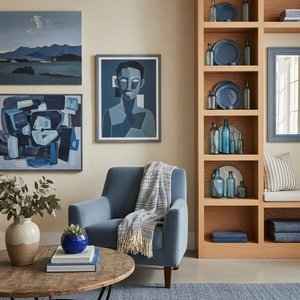
Les 10 Chefs-d'œuvre Dominés par le Bleu Ardoise : Art, Histoire & Décor
Plongez dans l'univers fascinant des 10 plus beaux tableaux dominés par le bleu ardoise. Découvrez l'histoire, les artistes et les techniques de ces chefs-d'œuvre impressionnistes et contemporains. Inspirez votre décoration intérieure avec !

Giclée Prints: Archival Quality & Aesthetic Nuances for the Discerning Collector
Explore the world of giclée prints with AllPaintingsStore. Learn about archival quality, aesthetic nuances & investment potential. Expert guidance for discerning art collectors seeking museum-quality reproductions and lasting value.


