


 Aperçu en situation
 Partager
 Partager
 Détails
 Guide imprimable

 Télécharger
 Articles similaires
 Radiographie
 Voir le diaporama
 Statistiques
Midas and Bacchus

 Afficher la suite
Giclées et impressions d'art
Impressions giclées ou sur toile de qualité musée, avec une production rapide et des finitions au choix. ( Acheter la peinture faite à la main Passer au format image numérique)




P118B $10

P118H $10

P118W $10

P438Z $10

P508JH $12

P508YH $12

P805H $10

P805Z $10

P919BZ $10

P919G $10

P919XJ $10

P959ZH $10

P968JZ $12

W106C $8

W218G $10

W218JH $8

W218Y $10

W307PJ $10

W316G $10

W316PJ $8

W316Y $10

W398PJ $8

W4111J $10

W500HY $15

W500JH $15

W692G $12

W849H $8

W940BG $15

W953PJ $8




Choisissez parmi nos formats prédéfinis qui respectent les proportions originales de l’œuvre.

Vous pouvez saisir vos propres dimensions pour vous adapter à un cadre ou à un espace spécifique. Si la taille sélectionnée ne correspond pas aux proportions de l'image originale, nous recadrerons l'œuvre ou étendrons l'image avec une bordure en miroir ou une couleur unie. Une maquette numérique vous sera envoyée pour approbation avant le début de la production.
Veuillez noter que l'aperçu à l'écran ne reflète pas le recadrage ou l'extension réelle. Seule la maquette montrera avec précision la composition finale.
Bien que des tailles personnalisées soient disponibles, nous vous recommandons de choisir une dimension dans la liste prédéfinie afin de préserver les proportions originales.
Livraison dans le monde entier () en 2 semaines au lieu des 4/5 semaines habituelles. (26 septembre)

Livraison express gratuite dans le monde entier

Toile de lin de haute qualité

Assurance transport complète

Garantie de remboursement des droits de douane

Garantie de fidélité des couleurs

Garantie de retour de 100 jours (uniquement en cas de défaut)

Garantie de remboursement à 100%

Tarifs dégressifs sur quantité
 L'option verre n'est disponible que pour les dimensions inférieures à 110 cm.

Midas and Bacchus
Giclées et impressions d'art
Format de la reproduction
-


Prix total final
$ 64
A Symphony of Light and Antiquity: Exploring Nicolas Poussin’s Midas and Bacchus
Nicolas Poussin's "Midas and Bacchus" stands as an emblem of French Baroque painting, yet its genesis lies firmly within the Italian Renaissance tradition. Completed around 1648-1650, this monumental canvas transcends mere depiction; it embodies a profound meditation on myth, desire, and the transformative power of divine grace—themes central to Poussin’s artistic philosophy. The painting resides in the Musée du Louvre, Paris, where its breathtaking scale and meticulous detail continue to captivate audiences centuries after its creation.- Subject Matter: Drawn from Greek mythology, “Midas and Bacchus” recounts the tale of King Midas’s hubristic wish—to turn everything he touched into gold—and his subsequent encounter with Dionysus (Bacchus), god of wine and revelry. The scene unfolds in a stylized Roman landscape, populated by figures representing both earthly pleasure and spiritual contemplation.
- Style: Poussin’s style is characterized by its serene composure and masterful use of chiaroscuro—the dramatic interplay between light and shadow—a technique perfected during his formative years in Rome. Unlike the exuberant dynamism of Caravaggio, Poussin prioritizes balance and harmony, striving to convey an idealized vision of beauty.
Technique: The Art of Illusion – Mastering Chiaroscuro and Atmospheric Perspective
Poussin’s technique exemplifies the Renaissance preoccupation with scientific observation. He meticulously studied aerial perspective—the gradual blurring of distant objects due to atmospheric haze—creating an illusion of depth that surpasses mere visual representation. Layers upon layers of thinly applied paint, painstakingly blended by hand, contribute to the painting's luminous quality and enhance its sense of realism. The artist’s meticulous attention to detail extends beyond the figures themselves; he renders every leaf, stone, and ripple of water with astonishing accuracy.Symbolism: Divine Intervention and Moral Reflection
Beyond its visual splendor, “Midas and Bacchus” is laden with symbolic significance. Dionysus’s presence represents divine indulgence and the allure of sensual gratification—a stark contrast to Midas's folly. The shepherdess, positioned centrally in the composition, embodies purity and innocence, serving as a moral counterpoint to the king’s avarice. Furthermore, the golden fleece adorning Midas’s tunic symbolizes wealth and earthly ambition, ultimately undermined by the transformative influence of Dionysus’s wine—a reminder that true happiness resides not in material possessions but in spiritual enlightenment.Emotional Impact: Tranquility Amidst Chaos – A Vision of Sublime Beauty
Despite its narrative complexity, “Midas and Bacchus” exudes an aura of profound tranquility. Poussin’s masterful orchestration of light and color evokes a sense of sublime beauty—a feeling akin to awe and wonder—inspiring contemplation on the human condition. The painting's stillness belies the tumultuous events unfolding within its frame, suggesting that inner peace can prevail even amidst external pressures. It remains an enduring testament to Poussin’s artistic genius and his unwavering commitment to conveying a vision of idealized harmony.Concluding Thoughts: An Artistic Legacy Enduring Through Time
“Midas and Bacchus” continues to resonate with audiences today, securing its place as one of the most celebrated paintings of the Baroque era. Its influence can be discerned in countless subsequent artworks—a testament to Poussin’s pioneering role in establishing a new aesthetic standard. More than simply a depiction of mythic narrative, it represents an exploration of fundamental human concerns—desire, morality, and the pursuit of spiritual fulfillment—making it an invaluable contribution to the history of art and a source of inspiration for generations of artists.Œuvres similaires


Biographie de l'artiste
jeune vie et formation
nicolas poussin, né en juin 1594, était la quintessence de la peinture baroque française classique. Malgré avoir passé la majeure partie de sa carrière à Rome, il est resté profondément ancré dans les traditions artistiques françaises. Ses premiers jours en tant que peintre étaient enveloppés d'incertitude, mais dès 1612, il avait initié des études formelles à Paris, absorbant les influences d'artistes moins connus avant d'être attiré par Rome en 1624.style artistique et influences
L’esthétique de Poussin, célébrée pour sa composition cohérente et sa priorité accordée à la linéarité, a jeté un précédent qui a influencé des maîtres comme jacques-louis david et paul cézanne bien au 20e siècle. Son style distinct s'est cristallisé à travers des œuvres célèbres comme la mort de Germanicus et sa série emblématique les sept sacrements.œuvres notables et musées
- nicolas poussin: autoportrait1 (baroque, huile), un témoignage de sa maîtrise du médium.
- Bacchanale devant un temple (74 x 101 cm, Legion of Honor, San Francisco, États-Unis, huile sur toile), mettant en valeur sa capacité à équilibrer la composition et le récit.
- le musée des beaux-arts de Carcassonne, une destination incontournable pour les amateurs d'art, abritant une impressionnante collection de peintures occidentales du 17e au 20e siècle.
héritage et impact
L’allégeance de Poussin est restée à Rome, où il s'est finalement concentré sur l'incorporation d'paysages vastes dans son art. Sa maturité en tant qu'artiste est encapsulée dans des œuvres comme Orion aveuglé à la recherche du soleil et les saisons, annonçant une ère de composition rigoureuse imprégnée de la beauté sereine du monde naturel.explorez davantage avec AllPaintingsStore.com
découvrez les chefs-d'œuvre du musée France et plongez dans le monde de la peinture baroque française avec musée picasso, musée des beaux-arts de Carcassonne et d'autres musées notables. Visitez la page de Nicolas Poussin sur AllPaintingsStore.com pour explorer davantage de ses œuvres et en apprendre davantage sur le contexte dans lequel elles ont été créées.références
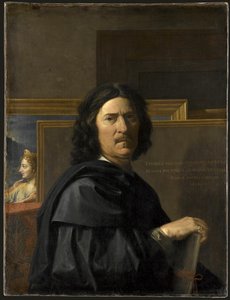
Nicolas Poussin
1594 - 1665 , France
En bref
- Artistes Influents:
- Raphaël
- Titian
- Date De Décès: 1665
- Date De Naissance: Juin 1594
- Influence Sur Les Artistes:
- Jacques-Louis David
- Paul Cézanne
- Lieu De Naissance: Le Havre, France
- Mouvement Artistique: Baroque français classique
- Nationalité: Française
- Nom Complet: Nicolas Poussin
- Oeuvres Notables:
- La Mort de Germanicus
- Les Sept Sacrements
- Un Chemin romain
- Orion aveuglé
- Les Saisons
Articles similaires

Baroque Classicism: A Professional Guide to Integrating Timeless Grandeur into Luxury Hotel Interiors
Elevate luxury hospitality with Baroque Classicism. Our guide for hotel designers explores integrating grand, classical oil reproductions into professional interiors. Discover efficient bulk procurement, custom sizing, and large-format murals to create timeless, high-impact spaces.


