- Accueil

- Impression sur toile
- Paul Cézanne
- untitled (5385)

 Preview
 Partager
 Partager
 Détails de l'œuvre

 Télécharger
 Articles similaires
 Radiographie
 Diaporama
untitled (5385)

 Afficher la suite
Giclée / Impression d'art
Impression giclée ou sur toile de qualité musée, avec une production rapide et des finitions au choix. ( Switch to hand made Painting Switch to Image)




P118B $10

P118H $10

P118W $10

P438Z $10

P508JH $12

P508YH $12

P805H $10

P805Z $10

P919BZ $10

P919G $10

P919XJ $10

P959ZH $10

P968JZ $12

W106C $8

W218G $10

W218JH $8

W218Y $10

W307PJ $10

W316G $10

W316PJ $8

W316Y $10

W398PJ $8

W4111J $10

W500HY $15

W500JH $15

W692G $12

W849H $8

W940BG $15

W953PJ $8




Choisissez parmi nos formats prédéfinis qui respectent les proportions originales de l’œuvre.

Vous pouvez saisir vos propres dimensions pour vous adapter à un cadre ou à un espace spécifique. Si la taille sélectionnée ne correspond pas aux proportions de l'image originale, nous recadrerons l'œuvre ou étendrons l'image avec une bordure en miroir ou une couleur unie. Une maquette numérique vous sera envoyée pour approbation avant le début de la production.
Veuillez noter que l'aperçu à l'écran ne reflète pas le recadrage ou l'extension réelle. Seule la maquette montrera avec précision la composition finale.
Bien que des tailles personnalisées soient disponibles, nous vous recommandons de choisir une dimension dans la liste prédéfinie afin de préserver les proportions originales.
Livraison dans le monde entier () en 2 semaines au lieu des 4/5 semaines habituelles. (29 juillet)

Livraison express gratuite dans le monde entier

Toile de lin de haute qualité

Assurance transport complète

Garantie de remboursement des frais de douane

Garantie de fidélité des couleurs

Politique de retour de 60 jours (uniquement en cas de défaut)

Garantie de remboursement à 100%

Réduction sur les achats groupés
 L'option verre n'est disponible que pour les dimensions inférieures à 110 cm.

untitled (5385)
Giclée / Impression d'art
Format de reproduction
-


Prix total final
$ 64
Description de l'œuvre
A Revolutionary Vision: The Life and Art of Paul Cézanne
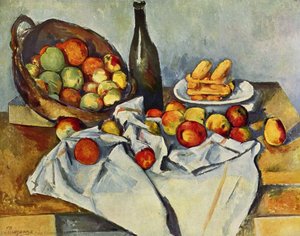
Paul Cézanne remains an artist whose influence continues to resonate within the artistic landscape today. Born in Aix-en-Provence in 1839, he embarked on a path less traveled—one characterized by unwavering dedication to his craft amidst considerable initial skepticism from the art establishment. This journey wasn’t merely about mastering brushstrokes; it was about fundamentally reshaping how artists perceived and represented the world around them. His father, initially a hatmaker who transitioned into banking, instilled in Cézanne a degree of financial stability uncommon for aspiring painters—a privilege that allowed him to prioritize artistic pursuits without the immediate constraints of commercial pressures. Despite his father’s aspirations for him to pursue law, Cézanne's innate inclination toward painting prevailed, marking the beginning of an extraordinary creative odyssey. Early influences included Impressionism and Japanese prints, which profoundly impacted Cézanne’s aesthetic sensibilities. He absorbed the luminous qualities of Impressionist landscapes—the dappled sunlight filtering through foliage—and incorporated elements of Japanese compositional techniques—particularly asymmetrical arrangements—into his own work. These explorations weren't simply stylistic choices; they represented a deliberate effort to challenge conventional artistic conventions and forge new pathways for visual expression. Cézanne’s initial paintings often depicted familiar subjects—fruit bowls, portraits of family members—executed with meticulous detail and tonal accuracy. However, he soon began experimenting with bolder colors and simplified forms, signaling a decisive departure from Impressionistic ideals. The pivotal moment arrived during his time in Paris, where Cézanne encountered the burgeoning Cubist movement spearheaded by Picasso and Braque. This encounter catalyzed a transformative shift in his artistic approach—one that would propel him toward the development of Cubism’s groundbreaking principles. Unlike Impressionists who sought to capture fleeting moments of visual sensation, Cézanne aimed to convey an underlying sense of structure and permanence—a conviction rooted in his belief that objects exist simultaneously in multiple perspectives. He meticulously dissected forms into geometric planes—cubes, cylinders, cones—representing them not as they appear to the eye but as they are understood intellectually. This technique wasn’t merely a stylistic innovation; it was an epistemological assertion—a declaration that art could transcend mere representation and engage with deeper truths about reality. “Still Life with Apples,” Cézanne's iconic 1897 masterpiece, exemplifies this revolutionary vision. The painting depicts three apples arranged on a draped cloth against a muted background. Cézanne’s masterful use of color—primarily ochre, crimson, and lemon yellow—creates an illusion of depth and luminosity without resorting to traditional perspective techniques. Instead, he employs overlapping planes of color to suggest the contours of the fruit—a technique that anticipates Cubist fragmentation while retaining Impressionistic tonal harmony. The apples themselves are rendered as simplified geometric forms—cubes and cylinders—that convey a sense of solidity and permanence despite their apparent fragility. This deliberate simplification underscores Cézanne’s conviction that artistic representation should prioritize underlying structure over superficial appearance. The painting's emotional impact transcends mere visual pleasure; it evokes contemplation and invites viewers to consider the complexities of perception. Cézanne doesn’t merely depict apples; he captures a moment of stillness—a tableau vivant—that embodies the artist’s profound engagement with the natural world. The muted color palette contributes to an atmosphere of tranquility and introspection, encouraging viewers to linger on the canvas and absorb its subtle nuances. Furthermore, the painting's asymmetrical composition—characteristic of Cézanne’s stylistic evolution—challenges conventional notions of balance and harmony, mirroring the artist’s own intellectual curiosity and his willingness to embrace unconventional artistic ideas. “Still Life with Apples” stands as a testament to Cézanne’s enduring legacy—a symbol of artistic innovation and a beacon of inspiration for generations of artists to come.Œuvres apparentées


Biographie de l'artiste
jeune vie et influences
paul cézanne, peintre français post-impressionniste, est né le 19 janvier 1839 à Aix-en-Provence, en France. Sa jeune vie a été marquée par un fort attachement à sa famille, dont l'entreprise bancaire lui assurait une sécurité financière. Cela lui a permis de se consacrer à ses aspirations artistiques sans être entravé par des soucis financiers. les nabis, néo-impressionnisme et symbolisme ont influencé le travail de Cézanne au début, qui se caractérisait par son accent sur les formes géométriques et une palette de couleurs limitée. Son intérêt pour les œuvres de paul gauguin et georges seurat a renforcé son style post-impressionniste.style artistique et techniques
L'utilisation innovante de Cézanne des plans de couleurs et de petits coups de pinceau répétitifs a créé des champs complexes qui exprimaient son étude approfondie des sujets. Son approche souvent exploratoire de l'art a conduit au développement d'une nouvelle langue picturale, mettant l'accent sur la structure sous-jacente des objets dans une composition.- caractéristiques principales :
- formes géométriques et façonnage
- palette de couleurs réduite
- importance de l'essence constructive du monde physique
- perspective multiple et simultanéité
- œuvres influentes :
- le plan d'eau de Jas de Bouffan (1880)
- portrait d’Émile Zola (1866)
- forêt (1892)
- musées présentant l'œuvre de Cézanne :
- le musée Marmottan Monet à Paris, en France
- le musée des beaux-arts à Houston, aux États-Unis
héritage et impact
Le travail pionnier de Cézanne en post-impressionnisme a ouvert la voie à divers mouvements avant-gardistes, notamment le cubisme, le fauvisme et le surréalisme. Son influence se retrouve dans les œuvres de pablo picasso, henri matisse et georges braque. L'héritage de Cézanne continue d’inspirer les artistes et les amateurs d’art, consolidant ainsi sa place en tant que figure centrale de l’histoire de l’art moderne.- mouvements artistiques connexes :
- consultez les œuvres de Cézanne :
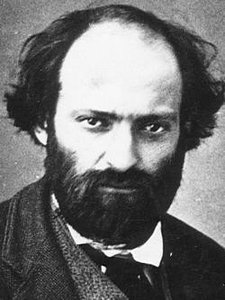
Paul Cézanne
1839 - 1906 , France
En bref
- Artistes Influents:
- Paul Gauguin
- Georges Seurat
- Date De Décès: 22 octobre 1906
- Date De Naissance: 19 janvier 1839
- Influences Artistiques:
- Pablo Picasso
- Henri Matisse
- Georges Braque
- Lieu De Naissance: Aix-en-Provence, France
- Mouvement Artistique: Post-impressionnisme
- Nationalité: Français
- Nom Complet: Paul Cézanne
- Œuvres Notables:
- Le Plan d'eau à Jas de Bouffan
- Portrait d’Émile Zola
- Forêt
- Mont Sainte-Victoire
Articles connexes

Bernard Cathelin: A Poetic Realist's Exploration of Still Life and the French Landscape
Explore the captivating world of Bernard Cathelin, a master of French Poetic Realism. Discover his stunning still lifes & landscapes, and learn about his legacy with AllPaintingsStore.

Capturing Fleeting Light: A Comprehensive Exploration of Impressionistic Landscape Painting
Explore the captivating world of Impressionistic landscape painting! Discover techniques, key artists like Monet & Renoir, and its lasting influence on art history. A comprehensive guide for enthusiasts.
Sir John Watson Gordon: A Study in Scottish Landscape Painting & Tonal Impressionism
Explore the captivating portraits of Sir John Watson Gordon, a leading Scottish master. Discover his evolution from neoclassical style to atmospheric Tonalism and influence on 19th-century British art. Learn about his iconic sitters & legacy.

Severin Roesen: Evoking National Identity Through American Still Life Painting
Explore the captivating world of Severin Roesen, a major American still life painter influenced by Dutch masters. Discover his lush compositions and the symbolism within his art – a window into 19th-century America.

Impressionnisme : Top 10 des Œuvres Incontournables pour une Décoration Raffinée
Plongez dans l'univers vibrant de l'impressionnisme avec notre sélection des 10 œuvres les plus emblématiques : Monet, Renoir, Degas… Découvrez l'histoire et la magie de ces chefs-d'œuvre. Reproductions d'art de qualité muséale sur AllPaintingsStore.com