


 Aperçu en situation
 Envoyer
 Partager
 Détails de l'œuvre
 Guide
Guide

 Télécharger l'image
 Articles similaires
 Radiographie
 Diaporama
 Statistiques
A gate
 Acrylic
- WallArt
- Abstract Expressionism
 1938
1938 44.0 x 60.0 cm
 Lire la suite
Giclées et impressions d'art
Impressions giclées ou sur toile de qualité musée, avec une production rapide et des finitions au choix. ( Commander la reproduction peinte à la main Passer au format numérique)




P118B €10

P118H €10

P118W €10

P438Z €10

P508JH €12

P508YH €12

P805H €10

P805Z €10

P919BZ €10

P919G €10

P919XJ €10

P959ZH €10

P968JZ €12

W106C €8

W218G €10

W218JH €8

W218Y €10

W307PJ €10

W316G €10

W316PJ €8

W316Y €10

W398PJ €8

W4111J €10

W500HY €15

W500JH €15

W692G €12

W849H €8

W940BG €15

W953PJ €8




Choisissez parmi nos formats prédéfinis qui respectent les proportions originales de l’œuvre.

Saisissez la largeur et la hauteur souhaitées pour qu'elles s'adaptent à votre cadre ou à votre mur. Une impression peut être recadrée, mais jamais agrandie au-delà de l'image originale ; ainsi, un format de forme différente entraînera la perte d'une partie de l'image. Nous vous envoyons une maquette numérique pour approbation avant toute impression. L'image présentée sur cette page ne montre pas le recadrage réel — seule la maquette le permet.
Livraison dans le monde entier () en 2 semaines au lieu des 4/5 semaines habituelles. (26 octobre)

Livraison express gratuite dans le monde entier

Toile de lin de qualité supérieure

Assurance transport complète

Garantie de remboursement des droits de douane

Garantie de fidélité des couleurs

Politique de retour de 100 jours (uniquement en cas de défaut)

Garantie de remboursement à 100%

Offre de tarifs dégressifs
 L'option verre n'est disponible que pour les dimensions inférieures à 110 cm.

A gate
Giclées et impressions d'art
Format de la reproduction
-


Prix total
€ 56
A Gate – Paul Klee’s Exploration of Lunar Resonance
Paul Klee's "A Gate," painted in 1938, transcends mere depiction; it embodies a masterful synthesis of artistic influences and profound contemplation on themes of solitude, harmony, and the cyclical nature of existence. This striking artwork captures a simple yet powerfully evocative scene – a stone gate framed against a luminous moonlit sky—yet within its unassuming exterior lies a complex tapestry of artistic innovation and symbolic resonance.- Subject Matter: The painting presents a straightforward visual narrative: two figures standing beside a gate, accompanied by a chair positioned subtly in the foreground. However, this apparent simplicity serves as a springboard for deeper interpretation.
- Style & Technique: Klee’s signature style—characterized by spontaneous gesture and geometric abstraction—is evident throughout “A Gate.” He employs a technique rooted in watercolor and gouache on paper, layering washes of color to create an ethereal atmosphere. The artist's meticulous attention to detail is balanced by a deliberate disregard for realistic representation, prioritizing instead the conveyance of emotion and intuition.
Historical Context – Weimar Republic’s Artistic Spirit
“A Gate” was created during the Weimar Republic, Germany’s turbulent period following World War I. This era witnessed a flourishing of artistic experimentation, fueled by disillusionment with traditional values and an embrace of avant-garde movements like Surrealism and Expressionism. Klee's work reflects this spirit of intellectual ferment, aligning him with fellow artists who sought to express inner psychological states rather than simply mirroring the external world. The influence of Surrealist ideas—particularly automatism—can be discerned in Klee’s method of working, where he aimed to bypass conscious thought and tap into subconscious impulses.Symbolism – Lunar Cycles and Spiritual Journey
The moon dominating the composition is arguably the artwork's most significant symbolic element. Throughout history, lunar cycles have been associated with notions of transformation, fertility, and introspection—themes central to Klee’s artistic vision. The reflection of moonlight on the ground beneath the gate suggests a connection between earthly existence and celestial realms, hinting at an ongoing process of renewal and spiritual exploration. Furthermore, the two figures standing beside the gate could represent individuals embarking on a personal pilgrimage or confronting challenges with resilience.Emotional Impact – Tranquility Amidst Uncertainty
Despite the anxieties prevalent during its creation, “A Gate” exudes an aura of serene contemplation. The muted palette—primarily blues and yellows—contributes to this feeling of tranquility, while Klee’s delicate brushstrokes convey a sense of vulnerability and sensitivity. Ultimately, the painting invites viewers to pause and consider the beauty inherent in simplicity, reminding us that profound meaning can be found within seemingly ordinary moments. It's a piece designed not just to observe but to feel—a testament to Klee’s ability to distill complex emotions into visually arresting forms.Questions et réponses
Quel est le niveau de contraste dans «A gate» de Paul Klee ?
Le contraste clair-obscur de « A gate » est évalué à Gentle. Le contraste décrit l'intensité de la différence entre les zones claires et les zones sombres.
Que représente «A gate» de Paul Klee ?
«A gate» de Paul Klee représente : gate, moonlight, landscape, figures, chair, swiss art, geometric.
Quelle est la taille d'impression recommandée pour «A gate» de Paul Klee ?
Pour «A gate», un format d'impression de Large est recommandé. D'autres tailles sont disponibles avec les mêmes proportions.
Œuvres similaires


Biographie de l'artiste
Paul Klee : Une Vie en Couleur et en Forme
Jeunesse et Éducation
- Paul Klee est né le 18 décembre 1879 à Münchenbuchsee, en Suisse.
- Son père était professeur de musique allemand, et sa mère était chanteuse suisse, favorisant ainsi une appréciation précoce pour les arts.
- Klee a initialement poursuivi le dessin mais a finalement abandonné la représentation réaliste au profit de formes plus expressives.
- Il a étudié à l'Académie des Beaux-Arts de Munich entre 1898 et 1901.
Développement Artistique et Influences
- Les premières œuvres de Klee témoignent d'influences de l'Art Nouveau et du Symbolisme, mais il a rapidement commencé à développer son style unique.
- Un voyage déterminant en Tunisie en 1914 a profondément influencé son utilisation de la couleur et de l'abstraction – la lumière et l'atmosphère ont inspiré un passage vers des palettes plus audacieuses.
- Il a été profondément influencé par les mouvements tels que l'Expressionnisme, le Cubisme et le Surréalisme, bien qu'il ne s'aligne jamais pleinement sur l'un d'eux.
- Son intérêt pour la musique a fortement influencé son approche artistique, le comparant souvent à la composition de pièces musicales.
Les Années Bauhaus et Au-Delà
- De 1931 à 1933, Klee enseignait à l'école influente Bauhaus d'art, de conception et d'architecture aux côtés de Wassily Kandinsky.
- Cette période a vu une floraison de son travail abstrait, explorant la théorie des couleurs et les relations formelles.
- Avec la montée du nazisme en Allemagne, Klee a été renvoyé de Bauhaus en 1933 en raison de son « art dégénéré ».
- Il est retourné en Suisse et a continué à peindre, mais sa santé s'est détériorée pendant cette période.
Thèmes Majeurs et Style Artistique
- L'œuvre de Klee se caractérise par une exploration ludique mais profonde de la couleur, de la ligne et de la forme.
- Il employait souvent des images enfantines et des compositions fantaisistes, imprégnées de sens symbolique.
- Des thèmes récurrents incluent les jardins, les paysages, les portraits et les arrangements abstraits.
- Ses « Carnets de Paul Klee », publiés posthume, révèlent ses recherches théoriques approfondies sur la couleur et la conception.
Héritage et Importance Historique
- Paul Klee est décédé le 29 juin 1940 à Muralto, en Suisse.
- Il est considéré comme l'un des artistes les plus importants du XXe siècle, reliant la figurative et l'abstraction.
- Son utilisation innovante de la couleur et ses écrits théoriques continuent d'inspirer les artistes et les designers aujourd'hui.
- L'œuvre de Klee est très recherchée par les collectionneurs et les musées du monde entier, consolidant ainsi sa place en tant que figure emblématique de l'histoire de l'art moderne.
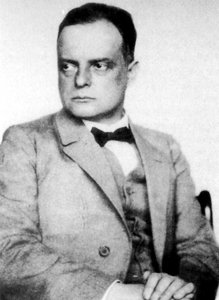
Paul Klee
1879 - 1940 , Suisse
L'essentiel de l'artiste
- Artistes Influents: ['Wassily Kandinsky']
- Date De Décès: 29 juin 1940
- Date De Naissance: 18 décembre 1879
- Lieu De Naissance: Münchenbuchsee, Suisse
- Nationalité: Suisse-Allemande
- Nom Complet: Paul Klee
- Oeuvres Notables:
- À Parnasse
- Rythmes Rougevert et Violet-Jaune
- Nuages sur Bor
- Le Festival des Astres
- Contemplation
- Siblings
- Lettre Fantôme
- Style Artistique: Expressionnisme, Cubisme, Surréalisme
Articles connexes

Neo-Abstract Art Trend Forecast: High-Impact Geometric Compositions for Contemporary Commercial Interiors
Elevate commercial interiors with Neo-Abstract art. Discover how high-impact geometric compositions and custom oil reproductions provide scalable, sophisticated design solutions for hotels, restaurants, and corporate spaces. Expert procurement for large-scale hospitality projects.


