


 Aperçu en situation
 Partager
 Partager
 Détails
 Guide imprimable

 Télécharger
 Articles similaires
 Radiographie
 Voir le diaporama
 Statistiques
Sparse foliage


 Afficher la suite
Reproduction à l'huile faite à la main
Huile sur toile peinte à la main, avec cadre et dimensions personnalisés, réalisée sur commande par nos artistes. ( Passer au format impression Passer au format image numérique)




P118B €10

P118H €10

P118W €10

P438Z €10

P508JH €12

P508YH €12

P805H €10

P805Z €10

P919BZ €10

P919G €10

P919XJ €10

P959ZH €10

P968JZ €12

W106C €8

W218G €10

W218JH €8

W218Y €10

W307PJ €10

W316G €10

W316PJ €8

W316Y €10

W398PJ €8

W4111J €10

W500HY €15

W500JH €15

W692G €12

W849H €8

W940BG €15

W953PJ €8




Choisissez parmi nos formats prédéfinis qui respectent les proportions originales de l’œuvre.

Saisissez la largeur et la hauteur souhaitées, pour s'adapter à votre cadre ou à votre mur. Cette œuvre est peinte à la main ; ainsi, pour un format de forme différente, l'artiste peut peindre un peu plus autour du tableau ou réduire légèrement les bords — c'est vous qui choisissez. Nous vous envoyons une maquette numérique pour approbation avant que la peinture ne commence. L'image présentée sur cette page ne reflète pas le résultat réel — seule la maquette le fait.
Après la commande, l’équipe AllPaintingsStore.com contactera le client par e-mail pour recueillir ses instructions et lui fournira une maquette d’aperçu
Livraison dans le monde entier () en 3 à 4 semaines au lieu des 5 semaines habituelles. (24 octobre). Aucun compromis sur la qualité.

Livraison express gratuite dans le monde entier

Toile de lin de haute qualité

Assurance transport complète

Garantie de remboursement des droits de douane

Garantie de fidélité des couleurs

Garantie de retour de 100 jours (uniquement en cas de défaut)

Garantie de remboursement à 100%

Tarifs dégressifs sur quantité
 L'option verre n'est disponible que pour les dimensions inférieures à 110 cm.

Sparse foliage
Technique de reproduction
Format de la reproduction
-


Prix total final
€ 226
A Symphony of Color and Texture: Exploring Paul Klee’s “Sparse Foliage”
The painting "Sparse Foliage," created in 1934 by Swiss artist Paul Klee, stands as a testament to his masterful ability to distill complex emotions into deceptively simple visual forms. More than just a depiction of a tree—though it undeniably captures the essence of arboreal beauty—this artwork embodies Klee’s signature style: an exuberant blend of abstraction and lyrical color that invites contemplation and rewards repeated viewing. It's a piece that speaks volumes about his artistic philosophy, rooted in the belief that art should transcend mere representation to communicate feeling directly.The Style and Technique – Embracing Geometric Harmony
Klee’s approach to painting was fundamentally shaped by his fascination with musical principles. He famously described painting as “drawing with color,” prioritizing harmony and balance over meticulous realism. "Sparse Foliage" exemplifies this ethos perfectly. The artist employs a technique characterized by tessellated shapes—geometric forms interlocking to create an overall visual unity—a hallmark of Klee’s oeuvre. These shapes aren't rigidly defined; rather, they possess a fluidity that suggests movement and organic growth, mirroring the natural world it portrays. Thickly applied paint creates textural richness, emphasizing the contours of the tree trunk and branches while layering hues of blue, green, pink, yellow, orange, and red to achieve an astonishing vibrancy. The use of encaustic—a mixture of beeswax and resin—further enhances the painting’s luminosity and durability, ensuring its beauty persists across generations.Historical Context – Amidst Surrealist Influences
“Sparse Foliage” emerged during a pivotal period in Klee's artistic career, coinciding with his immersion in Surrealism. Although he resisted labeling himself as a Surrealist, Klee was undeniably influenced by the movement’s exploration of dreamlike imagery and subconscious associations. The seemingly random placement of dots throughout the composition—a technique frequently employed by Surrealists—adds to the painting’s enigmatic quality. These dots aren't merely decorative; they disrupt the geometric order, introducing an element of chance and inviting viewers to consider alternative interpretations. Furthermore, Klee was grappling with anxieties surrounding the looming threat of World War II, reflecting in his art a preoccupation with fragility and resilience – themes subtly conveyed through the depiction of sparse foliage against a backdrop of muted tones.Symbolism – Beyond Representation: A Meditation on Growth and Transformation
The tree itself serves as a potent symbol—a universal emblem of life, growth, and interconnectedness. However, Klee’s deliberate simplification of its form transcends literal representation. The “sparse” foliage suggests vulnerability yet simultaneously conveys an underlying strength, hinting at the ability to endure hardship while retaining beauty. The varied colors – blues representing tranquility and depth, greens symbolizing vitality and renewal, reds signifying passion and energy – contribute to a complex tapestry of emotional resonance. Each hue is carefully considered, aligning with Klee’s belief that color possesses inherent expressive power.Emotional Impact – An Invitation to Quiet Contemplation
Ultimately, “Sparse Foliage” succeeds in capturing a profound sense of serenity and wonder. Its understated palette—dominated by cool blues and greens—creates an atmosphere conducive to introspection. The textured surface invites tactile engagement, encouraging viewers to linger over the painting’s details and allowing them to absorb its subtle nuances. Like much of Klee's work, this piece isn’t designed to provoke immediate astonishment but rather to foster a deeper appreciation for the beauty of nature and the transformative potential of art itself. It remains an enduring reminder that true artistic achievement lies in communicating emotion with grace and precision—a feat accomplished brilliantly by Paul Klee.Questions et réponses
Comment puis-je télécharger l'image de «Sparse foliage» de Paul Klee ?
L'image de «Sparse foliage» de Paul Klee peut être téléchargée depuis la page Télécharger de l'œuvre : un téléchargement d'image numérique haute résolution.
L'image de «Sparse foliage» de Paul Klee peut-elle être librement reproduite ?
Le statut des droits d'auteur pour «Sparse foliage» de Paul Klee : l'œuvre est dans le dans le domaine public - ses droits d'auteur ont expiré. Cela détermine si les reproductions de l'image peuvent être réalisées librement.
Quelle taille de reproduction est suggérée pour «Sparse foliage» de Paul Klee ?
La taille d'impression recommandée pour «Sparse foliage» de Paul Klee est Large.
Œuvres similaires


Biographie de l'artiste
Paul Klee : Une Vie en Couleur et en Forme
Jeunesse et Éducation
- Paul Klee est né le 18 décembre 1879 à Münchenbuchsee, en Suisse.
- Son père était professeur de musique allemand, et sa mère était chanteuse suisse, favorisant ainsi une appréciation précoce pour les arts.
- Klee a initialement poursuivi le dessin mais a finalement abandonné la représentation réaliste au profit de formes plus expressives.
- Il a étudié à l'Académie des Beaux-Arts de Munich entre 1898 et 1901.
Développement Artistique et Influences
- Les premières œuvres de Klee témoignent d'influences de l'Art Nouveau et du Symbolisme, mais il a rapidement commencé à développer son style unique.
- Un voyage déterminant en Tunisie en 1914 a profondément influencé son utilisation de la couleur et de l'abstraction – la lumière et l'atmosphère ont inspiré un passage vers des palettes plus audacieuses.
- Il a été profondément influencé par les mouvements tels que l'Expressionnisme, le Cubisme et le Surréalisme, bien qu'il ne s'aligne jamais pleinement sur l'un d'eux.
- Son intérêt pour la musique a fortement influencé son approche artistique, le comparant souvent à la composition de pièces musicales.
Les Années Bauhaus et Au-Delà
- De 1931 à 1933, Klee enseignait à l'école influente Bauhaus d'art, de conception et d'architecture aux côtés de Wassily Kandinsky.
- Cette période a vu une floraison de son travail abstrait, explorant la théorie des couleurs et les relations formelles.
- Avec la montée du nazisme en Allemagne, Klee a été renvoyé de Bauhaus en 1933 en raison de son « art dégénéré ».
- Il est retourné en Suisse et a continué à peindre, mais sa santé s'est détériorée pendant cette période.
Thèmes Majeurs et Style Artistique
- L'œuvre de Klee se caractérise par une exploration ludique mais profonde de la couleur, de la ligne et de la forme.
- Il employait souvent des images enfantines et des compositions fantaisistes, imprégnées de sens symbolique.
- Des thèmes récurrents incluent les jardins, les paysages, les portraits et les arrangements abstraits.
- Ses « Carnets de Paul Klee », publiés posthume, révèlent ses recherches théoriques approfondies sur la couleur et la conception.
Héritage et Importance Historique
- Paul Klee est décédé le 29 juin 1940 à Muralto, en Suisse.
- Il est considéré comme l'un des artistes les plus importants du XXe siècle, reliant la figurative et l'abstraction.
- Son utilisation innovante de la couleur et ses écrits théoriques continuent d'inspirer les artistes et les designers aujourd'hui.
- L'œuvre de Klee est très recherchée par les collectionneurs et les musées du monde entier, consolidant ainsi sa place en tant que figure emblématique de l'histoire de l'art moderne.
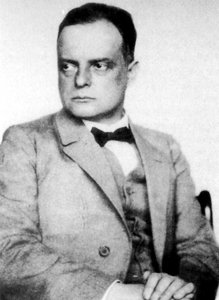
Paul Klee
1879 - 1940 , Suisse
En bref
- Artistes Influents: ['Wassily Kandinsky']
- Date De Décès: 29 juin 1940
- Date De Naissance: 18 décembre 1879
- Lieu De Naissance: Münchenbuchsee, Suisse
- Nationalité: Suisse-Allemande
- Nom Complet: Paul Klee
- Oeuvres Notables:
- À Parnasse
- Rythmes Rougevert et Violet-Jaune
- Nuages sur Bor
- Le Festival des Astres
- Contemplation
- Siblings
- Lettre Fantôme
- Style Artistique: Expressionnisme, Cubisme, Surréalisme
Articles connexes

Expressionist Abstraction: A Procurement Guide to Bold Colors and Emotional Impact for Modern Hotel Interiors
Elevate hospitality spaces with Expressionist Abstraction. A professional procurement guide for hotel designers on sourcing bold, large-scale abstract oil paintings to create impactful, high-end modern interiors through reliable bulk-order art solutions.

Bold Distortion: A Trend Forecast for Impactful Abstract Art in Luxury Commercial and Hotel Interiors
Elevate hospitality design with the Bold Distortion trend. APS provides professional sourcing of large-scale abstract paintings for hotel interiors. Benefit from custom sizing, bulk-order efficiency, and reliable global shipping. High-impact art for high-volume procurement.


