


 Aperçu en situation
 Partager
 Partager
 Détails
 Guide imprimable

 Télécharger
 Articles similaires
 Radiographie
 Voir le diaporama
 Statistiques
Daniel Boardman


 Afficher la suite
Reproduction à l'huile faite à la main
Huile sur toile peinte à la main, avec cadre et dimensions personnalisés, réalisée sur commande par nos artistes. ( Passer au format impression Passer au format image numérique)




P118B €10

P118H €10

P118W €10

P438Z €10

P508JH €12

P508YH €12

P805H €10

P805Z €10

P919BZ €10

P919G €10

P919XJ €10

P959ZH €10

P968JZ €12

W106C €8

W218G €10

W218JH €8

W218Y €10

W307PJ €10

W316G €10

W316PJ €8

W316Y €10

W398PJ €8

W4111J €10

W500HY €15

W500JH €15

W692G €12

W849H €8

W940BG €15

W953PJ €8




Choisissez parmi nos formats prédéfinis qui respectent les proportions originales de l’œuvre.

Saisissez la largeur et la hauteur souhaitées, pour s'adapter à votre cadre ou à votre mur. Cette œuvre est peinte à la main ; ainsi, pour un format de forme différente, l'artiste peut peindre un peu plus autour du tableau ou réduire légèrement les bords — c'est vous qui choisissez. Nous vous envoyons une maquette numérique pour approbation avant que la peinture ne commence. L'image présentée sur cette page ne reflète pas le résultat réel — seule la maquette le fait.
Après la commande, l’équipe AllPaintingsStore.com contactera le client par e-mail pour recueillir ses instructions et lui fournira une maquette d’aperçu
Livraison dans le monde entier () en 3 à 4 semaines au lieu des 5 semaines habituelles. (25 octobre). Aucun compromis sur la qualité.

Livraison express gratuite dans le monde entier

Toile de lin de haute qualité

Assurance transport complète

Garantie de remboursement des droits de douane

Garantie de fidélité des couleurs

Garantie de retour de 100 jours (uniquement en cas de défaut)

Garantie de remboursement à 100%

Tarifs dégressifs sur quantité
 L'option verre n'est disponible que pour les dimensions inférieures à 110 cm.

Daniel Boardman
Technique de reproduction
Format de la reproduction
-


Prix total final
€ 226
The Dignity of Enlightenment Portraiture
To gaze upon Daniel Boardman is to step directly into the gilded drawing rooms and sun-dappled country estates of the late eighteenth century. This portrait, executed around 1789, transcends a mere likeness; it is a carefully constructed tableau of status, refinement, and Enlightenment ideals. The subject commands attention with an air of profound dignity. His posture—upright yet relaxed—speaks volumes about his station in life. Dressed in the impeccable fashion of the era, the dark blue coat, crisp white breeches, and waistcoat speak to a man who understood the visual language of wealth. Every detail, from the powdered wig suggesting adherence to contemporary aristocratic taste, to the ornate buttons catching the light, contributes to an overwhelming sense of cultivated gentlemanly bearing.
A Harmony of Figure and Landscape
What elevates this piece beyond a simple studio portrait is the masterful integration of the figure within a sweeping natural environment. The background unfolds like a pastoral dream—a rolling hillside bisected by a winding river, partially veiled by the deep greens of mature trees. This juxtaposition was highly fashionable among portraitists of the period; it served not only as an aesthetic foil to the sitter’s formality but also carried symbolic weight. The inclusion of such a detailed landscape suggests that the subject's prosperity is rooted not just in commerce or title, but in connection with the enduring beauty and bounty of the land itself. The natural setting breathes life into the otherwise rigid formality of the attire.
Technical Brilliance: Light, Texture, and Atmosphere
The technical execution displayed here is nothing short of masterful. One can almost feel the weight and texture of the fabrics—the crispness of the linen cuffs against the heavier drape of the wool coat. The artist has employed visible brushwork, characteristic of traditional oil painting techniques, allowing the viewer to appreciate the hand of the master craftsman. Furthermore, observe the handling of light: it is natural daylight, subtly modeling the contours of Daniel Boardman’s face and casting believable shadows that give the entire composition a profound sense of three-dimensional depth. The atmospheric perspective used in the background—where distant elements soften into hazy blues and greens—is executed with remarkable skill, pulling the viewer's eye deep into the painted vista.
Symbolism and Enduring Appeal
The symbolism woven throughout this portrait is rich for the discerning collector. The walking stick, an accessory so casually held, functions as a subtle signifier of leisure and authority—the mark of a man who does not need to toil but rather to contemplate. The overall color palette, dominated by muted blues, creamy whites, earthy browns, and deep greens, creates an atmosphere that is simultaneously somber in its seriousness and elegant in its restraint. For the modern admirer, this piece offers more than just decoration; it offers a tangible connection to a bygone era of structured elegance, reminding us of the enduring human desire to project dignity and permanence through art.
Questions et réponses
Où puis-je acheter une image numérique de «Daniel Boardman» de Ralph Earl ?
Pour obtenir un fichier numérique de «Daniel Boardman» de Ralph Earl, commandez un téléchargement d'image numérique haute résolution sur sa page Image numérique.
Dans quelle pièce de la maison une reproduction de « Daniel Boardman » s'intégrerait-elle bien ?
L'espace recommandé pour «Daniel Boardman» de Ralph Earl est un Living Room. Cette suggestion peut bien entendu être adaptée à votre intérieur.
Que représente «Daniel Boardman» de Ralph Earl, et quelle atmosphère s'en dégage ?
«Daniel Boardman» de Ralph Earl représente portrait, 18th century, colonial america, historical figure, formal portraiture, gentleman, rural landscape, oil painting, dans une atmosphère Elegant. Le sujet et l'ambiance définissent ensemble l'œuvre.
Œuvres similaires


Biographie de l'artiste
Un visionnaire colonial : la vie et l'héritage de Ralph Earl
Dans la tapisserie de l'art américain primitif, peu de fils sont aussi vibrants ou possèdent une texture aussi unique que ceux tissés par
Les premières années d'Earl furent marquées par une quête incessante de savoir-faire et un lien profond avec le pouls visuel de son époque. Sans le bénéfice d'une formation académique formelle, il développa un style distinctif caractérisé par une attention méticuleuse aux détails et une certaine vitalité rythmique. L'établissement de son atelier à New Haven, dans le Connecticut, vers 1774, marqua le début d'une période prolifique de portraiture. Ces œuvres étaient bien plus que de simples ressemblances ; elles étaient des symboles soigneusement construits de statut social, de caractère et de l'identité naissante d'un peuple au bord de la révolution. Par son pinceau, les visages de l'ère coloniale furent immortalisés avec un sentiment de permanence et de grâce.
L'art au cœur de la Révolution
L'atmosphère turbulente de la Révolution américaine servit à la fois de toile de fond et de catalyseur à l'évolution créative d'Earl. Alors que les flammes du conflit s'allumaient à Lexington et Concord, Earl ne se contenta pas d'observer en retrait ; il traduisit le chaos de la guerre en de puissantes narrations visuelles. Sa collaboration avec le graveur Amos Doolittle aboutit à une série de scènes de bataille dramatiques qui firent office de propagande percutante pour la cause révolutionnaire. Ces estampes, largement diffusées, démontrèrent la capacité d'Earl à utiliser l'art comme un outil de commentaire social et d'expression politique, mêlant sa prouesse technique à un profond sentiment d'urgence historique.
Cherchant à affiner son talent naissant, Earl entreprit un voyage audacieux et transformateur vers l'Angleterre en 1778. La légende raconte qu'il voyagea sous les traits du serviteur d'un capitaine britannique, témoignage de la débrouillardise et de la détermination qui définissaient son caractère. Cette période d'immersion dans les traditions européennes lui apporta des connaissances inestimables sur les techniques classiques du portrait et du paysage. À son retour sur les rivages américains, son travail commença à manifester une sophistication nouvelle, fusionnant l'honnêteté brute de ses racines américaines avec l'élégance raffinée du Vieux Monde.
L'esprit panoramique et la portée historique
Bien que ses portraits demeurent les piliers de sa carrière, la contribution d'Earl à la tradition du paysage américain est tout simplement monumentale. Il possédait un regard extraordinaire pour le sublime, comme en témoignent ses représentations époustouflantes des chutes du Niagara. Dans ces visions panoramiques, il dépassa la simple documentation pour capturer la puissance écrasante et la majesté spirituelle du monde naturel. Sa capacité à faire passer sa vision des détails intimes du col de dentelle d'un modèle à l'étendue tonnante d'une cascade démontre une polyvalence que peu de ses contemporains pouvaient égaler.
L'importance historique de Ralph Earl réside dans son rôle de pont entre le passé colonial et l'identité américaine émergente. Son œuvre sert d'archive visuelle d'une nation en pleine mutation, documentant les visages, la politique et les paysages qui ont façonné les États-Unis. À travers son travail, nous rencontrons la force tranquille du sujet colonial et la beauté indomptée de la frontière américaine. Aujourd'hui, Earl est commémoré non seulement comme un peintre, mais comme un visionnaire qui a aidé à définir le langage visuel d'une ère nouvelle, laissant derrière lui un héritage qui continue de résonner avec l'esprit de découverte et de résilience.

Ralph Earl
1751 - 1801 , États-Unis
En bref
- Artistic Movement Or Style: Neoclassique
- Artists Or Movements Influenced By This Artist: ['Romanticisme']
- Artists Who Influenced This Artist: ['Benjamin West']
- Date Of Birth: May 11, 1751
- Date Of Death: August 16, 1801
- Full Name: Ralph Earl
- Nationality: Américain
- Notable Artworks:
- Niagara Falls Panorama
- Portrait de Martha Rogers
- Place Of Birth: Shrewsbury, États-Unis
Articles connexes
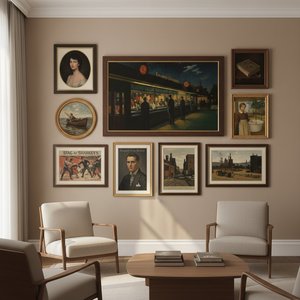
Réalisme Américain : 10 Chefs-d'œuvre Incontournables pour une Déco Inspirée
Plongez au cœur du Réalisme Américain avec 10 chefs-d'œuvre d'Edward Hopper, Andrew Wyeth et plus. Découvrez l'histoire et les techniques de ces artistes emblématiques. Reproductions de tableaux de qualité musée sur AllPaintingsStore.com !
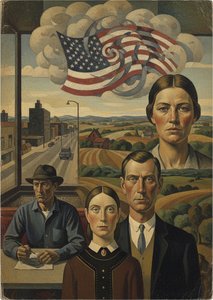
Échos de la terre : Le régionalisme américain et l'identité entre les deux guerres
Explorez le régionalisme américain et le réalisme entre les deux guerres : artistes emblématiques, thèmes clés et l'impact durable de ce mouvement sur l'art. Analyse approfondie par AllPaintingsStore.

Grant Wood & American Regionalism: Identity, Myth & the Rural Landscape
Explore the world of Grant Wood & American Regionalism with AllPaintingsStore. Discover the symbolism behind 'American Gothic', recurring themes, and the movement's lasting impact on art history. High-quality reproductions available.
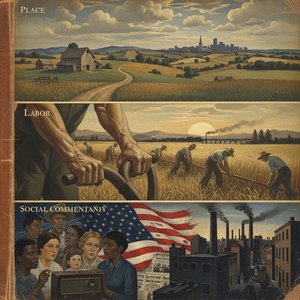
Le Régionalisme Américain : Identité, Espace et Commentaire Social dans la Peinture du XXe Siècle
Explorez le régionalisme américain : un mouvement artistique majeur du XXe siècle capturant l'identité rurale et les réalités sociales de l'Amérique. Analyse approfondie, artistes clés & héritage durable sur AllPaintingsStore.

American Regionalism: The Soul of the Heartland and the Mastery of Grant Wood
Explore the profound history of American Regionalism. Discover how Grant Wood captured the heart of the Midwest through masterpieces like American Gothic. An expert guide to the movement, its cultural impact, and the enduring beauty of American Realism.


