Aperçu en situation
 Partager
 Partager
 Détails
 Guide imprimable

 Télécharger
 Articles similaires
 Radiographie
 Voir le diaporama
 Statistiques
Apollo et Marsyas


 Afficher la suite
Giclées et impressions d'art
Impressions giclées ou sur toile de qualité musée, avec une production rapide et des finitions au choix. ( Acheter la peinture faite à la main Passer au format image numérique)




P118B €10

P118H €10

P118W €10

P438Z €10

P508JH €12

P508YH €12

P805H €10

P805Z €10

P919BZ €10

P919G €10

P919XJ €10

P959ZH €10

P968JZ €12

W106C €8

W218G €10

W218JH €8

W218Y €10

W307PJ €10

W316G €10

W316PJ €8

W316Y €10

W398PJ €8

W4111J €10

W500HY €15

W500JH €15

W692G €12

W849H €8

W940BG €15

W953PJ €8




Choisissez parmi nos formats prédéfinis qui respectent les proportions originales de l’œuvre.

Saisissez la largeur et la hauteur souhaitées pour qu'elles s'adaptent à votre cadre ou à votre mur. Une impression ne peut être que découpée, elle ne peut jamais être agrandie au-delà de l'image originale ; ainsi, un format de forme différente entraînera la perte d'une partie de l'image. Nous vous envoyons une maquette numérique pour approbation avant toute impression. L'image présentée sur cette page ne montre pas le recadrage réel — seule la maquette le permet.
Livraison dans le monde entier () en 2 semaines au lieu des 4/5 semaines habituelles. (25 octobre)

Livraison express gratuite dans le monde entier

Toile de lin de haute qualité

Assurance transport complète

Garantie de remboursement des droits de douane

Garantie de fidélité des couleurs

Garantie de retour de 100 jours (uniquement en cas de défaut)

Garantie de remboursement à 100%

Tarifs dégressifs sur quantité
 L'option verre n'est disponible que pour les dimensions inférieures à 110 cm.

Apollo et Marsyas
Giclées et impressions d'art
Format de la reproduction
-


Prix total final
€ 56
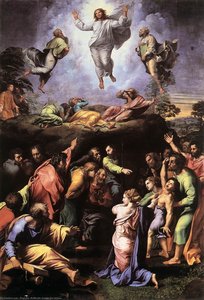
Apollo and Marsyas (ceiling panel)
The Apollo and Marsyas painting, created by the renowned artist Raphael (Raffaello Sanzio Da Urbino), stands as a cornerstone of Renaissance art and embodies the humanist ideals that defined the era. Executed between 1509 and 1511 for the Stanza della Segnatura within the Vatican Palace—commissioned by Pope Julius II to decorate his private chapel—this fresco transcends mere visual representation; it’s an eloquent allegory of cosmic order and human aspiration. Its enduring beauty continues to inspire awe and admiration, cementing Raphael's legacy as one of the greatest painters of all time.Artistic Significance: An Allegory of Harmony
The scene depicts three figures engaged in a dramatic confrontation—Apollo, god of reason and harmony, facing Marsyas, a satyr representing earthly passion and defiance. This narrative draws heavily from Greek mythology, specifically the tale recounted by Apollonius Rhodius, where Apollo challenged Marsyas to a musical contest. Marsyas, boasting of his skill as a flute player, dared to challenge Apollo’s mastery of the lyre—a symbol of divine authority and intellectual contemplation. The outcome was decisive: Apollo prevailed, securing victory for intellect over instinct and upholding the supremacy of cosmic order. Raphael skillfully captures this pivotal moment, conveying not just the physical action but also its profound philosophical implications.Style and Technique: Perfection Embodied
Raphael’s masterful technique is immediately apparent upon observation. He employs a pyramidal composition—a hallmark of Renaissance art—creating stability and grandeur while directing the viewer's gaze towards Apollo at the apex. The artist utilizes sfumato, a subtle blending of colors and tones that softens contours and creates an ethereal atmosphere—characteristic of Leonardo da Vinci’s style—enhancing the painting’s luminosity and conveying a sense of serenity. Raphael’s meticulous attention to detail is evident in every aspect of the artwork: from the drapery folds of Apollo's robe to the intricate patterns adorning Marsyas’s attire, each element contributes to the overall impression of refined beauty and precision. The use of warm hues—gold, ochre, crimson—creates a visual richness that underscores the painting’s symbolic significance.Historical Context: Patronage and Renaissance Ideals
The Stanza della Segnatura represents more than just a decorative space; it embodies the papal ambition to elevate Rome as the center of humanist learning and artistic excellence. Julius II envisioned his chapel as a testament to Christian faith and intellectual inquiry, commissioning Raphael alongside Michelangelo and Titian to create monumental frescoes that would express these ideals. The painting reflects the Renaissance fascination with classical mythology—a deliberate effort to revive pagan traditions and infuse Christian art with grandeur and dignity. Raphael’s work stands as an emblem of the humanist spirit—characterized by reason, observation, and a belief in human potential—values that profoundly shaped European culture during this transformative period.Emotional Impact: Tranquility Amidst Conflict
Despite the dramatic confrontation at its core, Apollo and Marsyas exudes a remarkable sense of tranquility. Raphael achieves this effect through careful orchestration of light and shadow, creating an illusionistic depth that draws the viewer into the scene. The figures are rendered with idealized beauty—reflecting Renaissance artistic conventions—expressing noble dignity and composure. The painting’s harmonious balance conveys a message of moral virtue—affirming the triumph of intellect over passion and highlighting the importance of upholding cosmic order. It remains a timeless masterpiece, captivating audiences centuries after its creation with its exquisite artistry and profound philosophical resonance.For more information on Raphael (Raffaello Sanzio Da Urbino) and his works, visit AllPaintingsStore.com.
Questions et réponses
Quelle atmosphère et quelle émotion se dégagent de « Apollo et Marsyas » ?
«Apollo et Marsyas» de Raphaël dégage un sentiment Romantique au sein d'une atmosphère globalement Élégance classique.
Comment les couleurs de «Apollo et Marsyas» de Raphaël se rapportent-elles à l'émotion qui s'en dégage ?
Dans « Apollo et Marsyas », des couleurs Tons terreux accompagnent une sensation Romantique.
Comment puis-je prévisualiser une reproduction de «Apollo et Marsyas» de Raphaël ?
Pour prévisualiser une reproduction de «Apollo et Marsyas» de Raphaël, ouvrez la page Aperçu de l'œuvre.
Œuvres similaires


![Stanze Vaticane - Le Parnasse (détail) [07] — Raphaël, High Renaissance](/media/artworks/images-thumb/3c/a1/3ca1620e84d3f2fe4e94d9bb954e0eca.jpg)


Biographie de l'artiste
**Jeunesse et formation**
Raphaël (Raffaello Sanzio da Urbino), un peintre et architecte italien renommé, est né entre le 28 mars et le 6 avril 1483, dans la petite mais culturellement significative ville d'Urbino. Son père, Giovanni Santi, était peintre de cour du duc, lui offrant une exposition précoce au monde artistique. Après le décès de son père à l’âge de onze ans, Raphaël a vraisemblablement géré l’atelier familial, consolidant ainsi sa base artistique.**Carrière artistique et influences**
Le parcours artistique de Raphaël peut être divisé en trois phases distinctes, chacune marquée par un style unique :- Premières années à Umbrie : caractérisée par l'influence de son père et l'ambiance culturelle d’Urbino.
- Période florentine (1504-1508) : absorbant les traditions artistiques de Florence, qui a considérablement façonné son style.
- Période romaine (1508-1520) : travaillant pour deux papes et leurs associés, produisant certaines de ses œuvres les plus célèbres, notamment l’école des Athènes dans la stanza della segnatura du Vatican.
**Œuvres notables et héritage**
Certaines des œuvres notables de Raphaël comprennent :- Le jugement de Salomon (voir sur AllPaintingsStore)
- La madone d’Esterházy (voir sur AllPaintingsStore)
- Les Stanze Vaticanes - Vue de la stanza della segnatura (voir sur AllPaintingsStore)
- Saint Sébastien (voir sur AllPaintingsStore)
- La femme voilée (voir sur AllPaintingsStore)
**Influence et héritage**
L'influence de Raphaël sur l'art est profonde, avec son œuvre constituant un pilier du grand Siècle. Son style serein et harmonieux a servi de modèle à la peinture néoclassique, comme le note l’historien d’art Johann Joachim Winckelmann. Malgré l'influence ultérieure du style de Michel-Ange, Raphaël reste l'un des artistes les plus vénérés de l'histoire. Voir le profil de Raphaël sur AllPaintingsStore
Raphaël
1483 - 1520 , Italie
En bref
- Artistes Influents:
- Giovanni Santi
- Pietro Perugino
- Date De Décès: 6 avril 1520
- Date De Naissance: 28 mars 1483
- Influences Artistiques: Peinture néoclassique
- Lieu De Naissance: Urbino, Italie
- Mouvement Artistique: Haute Renaissance
- Nationalité: Italienne
- Nom Complet: Raphaël (Raffaello Sanzio)
- Œuvres Notables:
- L'École d'Athènes
- Madone Esterházy
- La Transfiguration
- Les Stanze Vaticanes
Articles connexes

Fresco Art Guide: Mastering the Timeless Technique of Wall Painting for Luxury Interior Design
Master the art of fresco for luxury hospitality design. Explore technical insights into historical wall painting and discover how professional-grade, large-scale reproductions can elevate hotel interiors with timeless Renaissance elegance.