Envoyer
 Partager
 Détails de l'œuvre
 Guide
Guide

 Télécharger l'image
 Articles similaires
 Diaporama
 Statistiques
Stanze Vaticane - Le Feu du Borgo


 Lire la suite
Giclées et impressions d'art
Impressions giclées ou sur toile de qualité musée, avec une production rapide et des finitions au choix. ( Commander la reproduction peinte à la main Passer au format numérique)




































Choisissez parmi nos formats prédéfinis qui respectent les proportions originales de l’œuvre.

Saisissez la largeur et la hauteur souhaitées pour qu'elles s'adaptent à votre cadre ou à votre mur. Une impression peut être recadrée, mais jamais agrandie au-delà de l'image originale ; ainsi, un format de forme différente entraînera la perte d'une partie de l'image. Nous vous envoyons une maquette numérique pour approbation avant toute impression. L'image présentée sur cette page ne montre pas le recadrage réel — seule la maquette le permet.
Livraison dans le monde entier () en 2 semaines au lieu des 4/5 semaines habituelles. (25 octobre)

Livraison express gratuite dans le monde entier

Toile de lin de qualité supérieure

Assurance transport complète

Garantie de remboursement des droits de douane

Garantie de fidélité des couleurs

Politique de retour de 100 jours (uniquement en cas de défaut)

Garantie de remboursement à 100%

Offre de tarifs dégressifs
 L'option verre n'est disponible que pour les dimensions inférieures à 110 cm.

Stanze Vaticane - Le Feu du Borgo
Giclées et impressions d'art
Format de la reproduction
-


Prix total
€ 56
Stanze Vaticane - The Fire in the Borgo: A Symphony of Faith and Antiquity
Raphael’s *The Fire in the Borgo*, nestled within the Stanze di Raffaello at Vatican Palace, transcends mere depiction; it embodies the spirit of the High Renaissance—a masterful fusion of historical narrative and artistic brilliance. Executed primarily by Raphael’s workshop under his direction – Giulio Romano played a significant role – this monumental fresco commemorates a pivotal event: the devastating fire that ravaged Rome in 847 CE. More than just recording history, it interprets it through the lens of classical allegory, cementing papal authority and celebrating Roman virtues.Historical Roots & Papal Legend
The narrative unfolds from the *Liber Pontificalis*, recounting Pope Leo IV’s miraculous intervention—a fervent blessing that extinguished the flames engulfing the Borgo district. This tale served as potent propaganda, reinforcing the Church's protective role and bolstering papal prestige. The fresco isn’t simply illustrating a disaster; it’s elevating it to a symbol of divine providence – mirroring the grandeur of Virgil’s *Aeneas* and establishing Rome as the inheritor of Troy’s legacy. This deliberate allusion underscores the overarching theme: resilience in the face of adversity, underpinned by unwavering faith.Compositional Brilliance & Renaissance Style
Raphael skillfully crafted a complex composition dominated by diagonal lines that convey dynamism and instability—perfectly mirroring the chaotic energy of the fire itself. The scene unfolds within a courtyard framed by classical columns and statues, creating a sense of contained drama. Figures are arranged in multiple planes, capturing movement and conveying emotion with remarkable precision. This exemplifies *Cinquecento* art’s hallmark – balance, harmony, and idealized representation—a testament to Raphael's artistic vision.Symbolism & Classical Echoes
Beneath the surface of this dramatic portrayal lies a rich tapestry of symbolism. The central figure carrying an elderly man symbolizes Aeneas rescuing his father Anchises from Troy’s inferno – a direct reference to Virgil’s epic poem and a powerful emblem of Roman heritage. Furthermore, the statues adorning the courtyard represent Roman virtues—wisdom, piety, courage—affirming the fresco's connection to antiquity and reinforcing its moral message. The meticulous attention to detail—from the expressive faces of the figures to the realistic depiction of smoke and flame—elevates the artwork beyond mere visual spectacle.Technique & Artistic Mastery
As a fresco, *The Fire in the Borgo* demanded swift execution and unwavering precision. Raphael’s workshop employed the technique of applying pigment directly onto wet plaster, resulting in a matte finish that enhances the grandeur of the Stanze di Raffaello. The masterful manipulation of *chiaroscuro*, achieved through careful shading, adds depth and drama to the scene—drawing the viewer's eye toward key figures and actions. This meticulous craftsmanship speaks volumes about Raphael’s artistic genius and his dedication to upholding Renaissance ideals.- Style: High Renaissance
- Technique: Fresco
- Subject: Historical Event & Papal Legend
- Key Themes: Faith, Resilience, Classical Allusion, Divine Intervention
Questions et réponses
«Stanze Vaticane - Le Feu du Borgo» de Raphaël est-il une peinture, un dessin ou une estampe ?
« Stanze Vaticane - Le Feu du Borgo » est une œuvre de type Objets de décoration.
Quelle taille d'impression est recommandée pour « Stanze Vaticane - Le Feu du Borgo » ?
Une reproduction en Grand format est suggérée pour «Stanze Vaticane - Le Feu du Borgo» de Raphaël. Le format peut être ajusté tout en conservant les proportions.
Qui est l'artiste derrière « Stanze Vaticane - Le Feu du Borgo » ?
« Stanze Vaticane - Le Feu du Borgo » est attribué à Raphaël.
Œuvres similaires
![Stanze Vaticane - Le Feu Du Borgo (détail) [01] — Raphaël, High Renaissance](/media/artworks/images-thumb/76/f6/76f6220ba33c4e1d9790e47ace4c7148.jpg)

![Stanze Vaticane – La Messe De Bolsène (détail) [01] — Raphaël, Renaissance](/media/artworks/images-thumb/8d/99/8d998e18ce3c0281eaf2360a52026685.jpg)


![Stanze Vaticane - La Disputa (detail) [02] — Raphaël, Renaissance](/media/artworks/images-thumb/55/c5/55c5db1a88764a9697fe9eb0ea9d43c9.jpg)
![Stanze Vaticane - Le Parnasse (détail) [07] — Raphaël, High Renaissance](/media/artworks/images-thumb/3c/a1/3ca1620e84d3f2fe4e94d9bb954e0eca.jpg)


Biographie de l'artiste
**Jeunesse et formation**
Raphaël (Raffaello Sanzio da Urbino), un peintre et architecte italien renommé, est né entre le 28 mars et le 6 avril 1483, dans la petite mais culturellement significative ville d'Urbino. Son père, Giovanni Santi, était peintre de cour du duc, lui offrant une exposition précoce au monde artistique. Après le décès de son père à l’âge de onze ans, Raphaël a vraisemblablement géré l’atelier familial, consolidant ainsi sa base artistique.**Carrière artistique et influences**
Le parcours artistique de Raphaël peut être divisé en trois phases distinctes, chacune marquée par un style unique :- Premières années à Umbrie : caractérisée par l'influence de son père et l'ambiance culturelle d’Urbino.
- Période florentine (1504-1508) : absorbant les traditions artistiques de Florence, qui a considérablement façonné son style.
- Période romaine (1508-1520) : travaillant pour deux papes et leurs associés, produisant certaines de ses œuvres les plus célèbres, notamment l’école des Athènes dans la stanza della segnatura du Vatican.
**Œuvres notables et héritage**
Certaines des œuvres notables de Raphaël comprennent :- Le jugement de Salomon (voir sur AllPaintingsStore)
- La madone d’Esterházy (voir sur AllPaintingsStore)
- Les Stanze Vaticanes - Vue de la stanza della segnatura (voir sur AllPaintingsStore)
- Saint Sébastien (voir sur AllPaintingsStore)
- La femme voilée (voir sur AllPaintingsStore)
**Influence et héritage**
L'influence de Raphaël sur l'art est profonde, avec son œuvre constituant un pilier du grand Siècle. Son style serein et harmonieux a servi de modèle à la peinture néoclassique, comme le note l’historien d’art Johann Joachim Winckelmann. Malgré l'influence ultérieure du style de Michel-Ange, Raphaël reste l'un des artistes les plus vénérés de l'histoire. Voir le profil de Raphaël sur AllPaintingsStore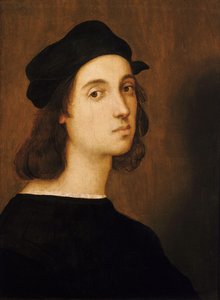
Raphaël
1483 - 1520 , Italie
L'essentiel de l'artiste
- Artistes Influents:
- Giovanni Santi
- Pietro Perugino
- Date De Décès: 6 avril 1520
- Date De Naissance: 28 mars 1483
- Influences Artistiques: Peinture néoclassique
- Lieu De Naissance: Urbino, Italie
- Mouvement Artistique: Haute Renaissance
- Nationalité: Italienne
- Nom Complet: Raphaël (Raffaello Sanzio)
- Œuvres Notables:
- L'École d'Athènes
- Madone Esterházy
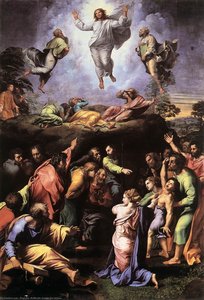
- La Transfiguration
- Les Stanze Vaticanes
Articles connexes

Fresco Art Guide: Mastering the Timeless Technique of Wall Painting for Luxury Interior Design
Master the art of fresco for luxury hospitality design. Explore technical insights into historical wall painting and discover how professional-grade, large-scale reproductions can elevate hotel interiors with timeless Renaissance elegance.