


 Aperçu en situation
 Envoyer
 Partager
 Détails de l'œuvre
 Guide
Guide

 Télécharger l'image
 Articles similaires
 Radiographie
 Diaporama
 Statistiques
Standing Warror with Shield


 Lire la suite
Giclées et impressions d'art
Impressions giclées ou sur toile de qualité musée, avec une production rapide et des finitions au choix. ( Commander la reproduction peinte à la main Passer au format numérique)




P118B €10

P118H €10

P118W €10

P438Z €10

P508JH €12

P508YH €12

P805H €10

P805Z €10

P919BZ €10

P919G €10

P919XJ €10

P959ZH €10

P968JZ €12

W106C €8

W218G €10

W218JH €8

W218Y €10

W307PJ €10

W316G €10

W316PJ €8

W316Y €10

W398PJ €8

W4111J €10

W500HY €15

W500JH €15

W692G €12

W849H €8

W940BG €15

W953PJ €8




Choisissez parmi nos formats prédéfinis qui respectent les proportions originales de l’œuvre.

Saisissez la largeur et la hauteur souhaitées pour qu'elles s'adaptent à votre cadre ou à votre mur. Une impression peut être recadrée, mais jamais agrandie au-delà de l'image originale ; ainsi, un format de forme différente entraînera la perte d'une partie de l'image. Nous vous envoyons une maquette numérique pour approbation avant toute impression. L'image présentée sur cette page ne montre pas le recadrage réel — seule la maquette le permet.
Livraison dans le monde entier () en 2 semaines au lieu des 4/5 semaines habituelles. (27 octobre)

Livraison express gratuite dans le monde entier

Toile de lin de qualité supérieure

Assurance transport complète

Garantie de remboursement des droits de douane

Garantie de fidélité des couleurs

Politique de retour de 100 jours (uniquement en cas de défaut)

Garantie de remboursement à 100%

Offre de tarifs dégressifs
 L'option verre n'est disponible que pour les dimensions inférieures à 110 cm.

Standing Warror with Shield
Giclées et impressions d'art
Format de la reproduction
-


Prix total
€ 56
Salvator Rosa’s Standing Warrior with Shield: A Vision of Baroque Power
Salvator Rosa’s “Standing Warrior with Shield,” completed around 1657, isn't merely a depiction of military prowess; it’s a masterful distillation of the Baroque aesthetic—a visual manifesto reflecting the turbulent spirit of its time and embodying profound philosophical contemplation. Executed in etching on ivory laid paper, this artwork transcends simple representation, inviting viewers into a dramatic tableau that speaks volumes about courage, resilience, and humanity's confrontation with formidable forces.
- Subject Matter: The central figure portrays a warrior poised for action, clad in classical armor—a breastplate and greaves—suggesting both historical grandeur and mythological allusion. His raised arm signifies defiance and readiness, while his gaze directs attention inward, hinting at an internal struggle mirroring the broader anxieties of the era concerning faith and morality.
- Style & Technique: Rosa’s signature style is characterized by a meticulous attention to detail—particularly in capturing the textures of armor and shield—achieved through masterful shading and fine lines. The etching process itself lends an ethereal quality to the image, emphasizing light and shadow as instruments of expressive power. Unlike the polished surfaces favored by earlier Renaissance artists, Rosa deliberately embraced darkness and roughness, mirroring the Baroque preoccupation with sublime landscapes and conveying a sense of unease.
- Historical Context: Created during the reign of Louis XIV—the zenith of French absolutism—the artwork reflects the prevailing intellectual currents of the period. Philosophers like Descartes wrestled with questions of certainty and reason amidst religious upheaval, mirroring the warrior’s internal gaze. Rosa's work aligns with a broader artistic trend toward portraying heroic figures grappling with existential dilemmas.
- Symbolism: The shield itself is laden with symbolic significance—representing protection against external threats but also embodying inner fortitude. Its intricate designs could hark back to heraldry, signifying lineage and authority, yet simultaneously convey a deeper message about confronting adversity with unwavering resolve. Rosa’s use of dark hues amplifies this symbolism, emphasizing the warrior's vulnerability beneath a veneer of strength.
- Emotional Impact: “Standing Warrior with Shield” evokes a palpable sense of drama—a confrontation between man and nature, between courage and fear. The artist’s deliberate manipulation of light and shadow creates an atmosphere of tension and anticipation, inviting viewers to contemplate the complexities of human experience. It's a piece that lingers in the mind long after viewing, prompting reflection on themes of heroism, vulnerability, and the enduring quest for meaning.
This artwork exemplifies Rosa’s ability to synthesize artistic skill with philosophical inquiry—a testament to his enduring legacy as one of the Baroque’s most visionary figures. Its haunting beauty and profound symbolism continue to inspire admiration and intrigue, securing its place as a cornerstone of European art history.
Questions et réponses
À quelle étape de la carrière de Salvator Rosa appartient « Standing Warror with Shield » (1657) ?
Datée de 1657, l'œuvre « Standing Warror with Shield » s'inscrit dans la période Mature Period du développement de Salvator Rosa.
Comment puis-je visionner «Standing Warror with Shield» de Salvator Rosa sous forme de diaporama ?
Un diaporama est disponible : la page Diaporama de «Standing Warror with Shield» de Salvator Rosa.
Comment le style de « Standing Warror with Shield » s'inscrit-il dans l'époque de son créateur ?
«Standing Warror with Shield» de Salvator Rosa s'inscrit dans le mouvement Baroque, au sein de l'époque L'époque moderne de son créateur.
Œuvres similaires


Biographie de l'artiste
La Jeunesse et la Formation
Salvator Rosa, peintre baroque italien, poète et graveur, est né à Arenella, près de Naples, soit le 20 juin, soit le 21 juillet 1615. Sa mère, Giulia Greca Rosa, était issue d'une famille grecque sicilienne. Malgré les aspirations de son père à ce qu’il devienne avocat ou prêtre, Salvator manifesta très tôt une préférence pour les arts.L'Ascension Artistique
La carrière artistique de Salvator Rosa se caractérisa par un style non conventionnel et extravagant qui le distinguait de ses contemporains. Il fut actif à Naples, Rome et Florence, son œuvre étant influencée par le naturalisme de Ribera et le classicisme de Poussin. Cependant, il refusa d'être lié à un style ou un mouvement particulier.- Pythagore émergeant des enfers (Kimbell Art Museum, Fort Worth, États-Unis), l’une de ses œuvres les plus célèbres, illustre son mélange unique de thèmes philosophiques et artistiques.
- Le Baptême de l'eunuque (Chrysler Museum of Art, Norfolk, États-Unis) témoigne de sa capacité à insuffler un drame intense même dans des récits bibliques mineurs.
Influences et Héritage
L’œuvre de Salvator Rosa eut une influence significative sur le développement de l'art baroque. Son impact se retrouve dans les œuvres d'artistes ultérieurs, tels que Luca Giordano, qui continuaient à repousser les limites de l'expression artistique. Liens importants : Profil de Salvator Rosa sur AllPaintingsStore Wikipédia: Salvatore RosaUn Artiste Rebelle et Innovant
Rosa était un artiste profondément rebelle, défiant les conventions artistiques de son époque. Ses paysages sombres et sauvages, souvent peuplés de figures marginales, étaient une rupture avec les vues classiques et idéalisées de Claude Lorrain. Il est considéré comme un précurseur du romantisme, anticipant l'accent mis sur la puissance brute de la nature et l'exploration des émotions intenses. Son œuvre a connu un regain d’intérêt à la fin du XXe siècle, bien qu’il ne soit pas classé parmi les plus grands peintres baroques par les historiens de l'art contemporains, il est reconnu comme un peintre de paysages innovant et un pionnier du mouvement romantique.Conclusion
La vie et l'œuvre de Salvator Rosa continuent de fasciner les amateurs d’art et les historiens. Son style non conventionnel et sa rébellion constante contre les normes de son temps ont consolidé sa place dans l'histoire de l'art baroque. En tant que peintre, poète et graveur, il demeure une figure énigmatique, et son œuvre continue d'inspirer de nouvelles générations d’artistes et d’amateurs d’art. Musées : Kimbell Art Museum, Chrysler Museum of Art
Salvator Rosa
1615 - 1673 , Italie
L'essentiel de l'artiste
- Artistic Movement Or Style: Baroque
- Artists Or Movements Influenced By This Artist:
- Luca Giordano
- Romantisme
- Artists Who Influenced This Artist:
- Ribera
- Poussin
- Date Of Birth: 20 juin ou 21 juillet 1615
- Date Of Death: 15 mars 1673
- Full Name: Salvator Rosa
- Nationality: Italien
- Notable Artworks:
- Pythagore sortant des enfers
- Le baptême de l'eunuque
- Place Of Birth (City And Country): Arénèlle, Italie
Articles connexes

Salvator Rosa: A Baroque Rebel's Vision of Landscape, Allegory & the Human Condition
Explore the captivating world of Salvator Rosa, a rebellious Baroque master. Discover his dramatic landscapes, allegorical paintings & lasting influence on Romanticism. Hand-painted reproductions available at AllPaintingsStore.

L'Eau-Forte : Histoire d'une Technique Gravée dans le Temps et l'Art
Explorez l'histoire fascinante de l'eau-forte : technique, maîtres, et qualités esthétiques uniques. Découvrez ce procédé gravé dans le temps avec AllPaintingsStore.

L'Intricate Monde de la Gravure à l'Eau-Forte : Histoire, Techniques et Impact Artistique Durable
Explorez l'histoire fascinante de la gravure à l'eau-forte : techniques ancestrales, grands maîtres et impact artistique durable. Découvrez les secrets de cet art raffiné avec AllPaintingsStore.

Giclée Prints: Archival Quality & Aesthetic Nuances for the Discerning Collector
Explore the world of giclée prints with AllPaintingsStore. Learn about archival quality, aesthetic nuances & investment potential. Expert guidance for discerning art collectors seeking museum-quality reproductions and lasting value.
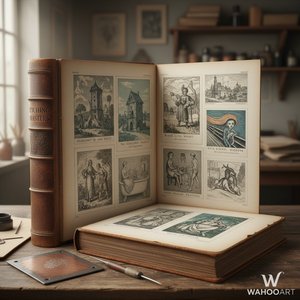
Les 10 plus grandes gravures : Chefs-d'œuvre qui ont révolutionné l'art | AllPaintingsStore
Plongez dans l'univers fascinant des 10 plus grandes gravures de l'histoire ! Découvrez les chefs-d'œuvre de Rembrandt, Goya et Dürer. Inspirez votre décoration intérieure avec AllPaintingsStore : reproductions d'art de qualité muséale en ligne. Explorez la collection sur AllPaintingsStore.com


