


 Aperçu en situation
 Envoyer
 Partager
 Détails de l'œuvre
 Guide
Guide

 Télécharger l'image
 Articles similaires
 Radiographie
 Diaporama
 Statistiques
Autoportrait
 Acrylique sur toile
- Art mural
- Baroque Elegance
 1620
1620 120.0 x 88.0 cm
 Metropolitan Museum of Art
 Lire la suite
Giclées et impressions d'art
Impressions giclées ou sur toile de qualité musée, avec une production rapide et des finitions au choix. ( Commander la reproduction peinte à la main Passer au format numérique)




P118B €10

P118H €10

P118W €10

P438Z €10

P508JH €12

P508YH €12

P805H €10

P805Z €10

P919BZ €10

P919G €10

P919XJ €10

P959ZH €10

P968JZ €12

W106C €8

W218G €10

W218JH €8

W218Y €10

W307PJ €10

W316G €10

W316PJ €8

W316Y €10

W398PJ €8

W4111J €10

W500HY €15

W500JH €15

W692G €12

W849H €8

W940BG €15

W953PJ €8




Choisissez parmi nos formats prédéfinis qui respectent les proportions originales de l’œuvre.

Saisissez la largeur et la hauteur souhaitées pour qu'elles s'adaptent à votre cadre ou à votre mur. Une impression peut être recadrée, mais jamais agrandie au-delà de l'image originale ; ainsi, un format de forme différente entraînera la perte d'une partie de l'image. Nous vous envoyons une maquette numérique pour approbation avant toute impression. L'image présentée sur cette page ne montre pas le recadrage réel — seule la maquette le permet.
Livraison dans le monde entier () en 2 semaines au lieu des 4/5 semaines habituelles. (27 octobre)

Livraison express gratuite dans le monde entier

Toile de lin de qualité supérieure

Assurance transport complète

Garantie de remboursement des droits de douane

Garantie de fidélité des couleurs

Politique de retour de 100 jours (uniquement en cas de défaut)

Garantie de remboursement à 100%

Offre de tarifs dégressifs
 L'option verre n'est disponible que pour les dimensions inférieures à 110 cm.

Autoportrait
Giclées et impressions d'art
Format de la reproduction
-


Prix total
€ 56
Portrait d'un Génie : Anthony van Dyck et son Autoportrait
Sir Anthony van Dyck (1599-1641), maître flamand baroque, est bien plus qu’un simple peintre de portraits ; il était un véritable artisan de l’identité artistique européenne du XVIIe siècle. Son parcours artistique exceptionnel, marqué par des voyages entre les cours européennes et une maîtrise inégalée de la lumière et de la couleur, lui valut une renommée considérable et une influence durable sur ses contemporains. Cet autoportrait, réalisé vers 1620-21 à Rome, témoigne d’une maturité artistique remarquable et offre un aperçu fascinant du jeune homme qui allait devenir l'un des peintres les plus prisés de son temps.- La Composition Élégante : La peinture présente une composition équilibrée où la figure centrale de Van Dyck occupe une place dominante, tout en laissant apparaître un arrière-plan riche et complexe comprenant une architecture et une fenêtre. Cette disposition permet d’apprécier pleinement l'atmosphère et le contexte historique du tableau.
- La Technique Raffinée : Utilisant la peinture à huile sur toile, Van Dyck adopte une approche classique qui privilégie une étude minutieuse de la lumière naturelle pour créer des effets dramatiques et une profondeur impressionnante. Ses coups de pinceau sont précis et maîtrisés, offrant une remarquable finesse dans le rendu des détails et des textures.
- Le Style Baroque : L’œuvre incarne les caractéristiques essentielles du baroque : une recherche constante de mouvement et d’énergie, une couleur vibrante et expressive, ainsi qu'une attention particulière à la mise en scène pour susciter l’émotion chez le spectateur. Cette esthétique reflète la grandeur et la richesse des cours européennes où Van Dyck exerça son talent.
- Les Symboles de Prestige : Les éléments présents dans le tableau – notamment le magnifique robe noire, les mains posées avec assurance et le collier précieux – sont autant de signes de statut social élevé et d’élégance raffinée. Ils témoignent également de l'importance accordée à la présentation personnelle chez les artistes de cette époque.
- Un Portrait Intime : Malgré son statut prestigieux, Van Dyck parvient à capturer une certaine mélancolie dans le regard du peintre, invitant le spectateur à une réflexion sur la beauté et la fragilité de l'existence humaine. Cet autoportrait est bien plus qu’une simple représentation physique ; il est une œuvre d’art pleine de sensibilité et d’émotion.
Contexte Historique : Les Cours Européennes et l’Époque Baroque
La création de cet autoportrait intervient dans un contexte historique majeur : celui des cours européennes au XVIIe siècle, où les artistes étaient sollicités pour célébrer la puissance et la richesse des souverains. Van Dyck travailla notamment pour Charles Ier d'Angleterre, dont le portrait qu’il réalisa est considéré comme une œuvre emblématique de l’époque baroque anglaise. Cette période fut marquée par une esthétique grandiose et théâtrale, où les peintres cherchaient à exprimer la beauté idéale et à renforcer l'autorité royale.L’Influence Durable : Van Dyck et les Artistes Successifs
L’œuvre de Van Dyck exerça une influence considérable sur les artistes qui suivirent lui, notamment Rembrandt et Rubens. Ses techniques innovantes et son style élégant furent imités et adaptés par plusieurs générations de peintres, contribuant ainsi à façonner l'histoire de la peinture européenne. Cet autoportrait demeure aujourd’hui un témoignage précieux de cette époque et une source d'inspiration pour les artistes contemporains.Une Reproduction Exceptionnelle : Capturer la Lumière et l'Émotion
Une reproduction haute qualité de cet autoportrait permet de découvrir pleinement la beauté et la richesse de cette œuvre emblématique. Grâce aux avancées technologiques modernes, il est désormais possible d’obtenir une copie fidèle au tableau original, offrant une expérience esthétique incomparable aux amateurs d’art et aux passionnés de décoration intérieure. AllPaintingsStore vous propose une sélection soigneusement choisie de reproductions disponibles en différentes tailles pour répondre à tous vos besoins et vos goûts.Questions et réponses
Quelle atmosphère «Autoportrait» de Sir Anthony van Dyck apporte-t-il à un intérieur ?
Avec son atmosphère Élégance classique, « Autoportrait » est idéal pour une Salon.
Les couleurs de "Autoportrait" sont-elles vives ou plutôt atténuées ?
La couleur de « Autoportrait » présente une saturation de Atténué et une intensité de Monochromatique.
À quelle étape de la carrière de Sir Anthony van Dyck appartient « Autoportrait » (1620) ?
Datée de 1620, l'œuvre « Autoportrait » appartient à la période Mature Baroque de Sir Anthony van Dyck.
Œuvres similaires


Biographie de l'artiste
A Flemish Master at the Courts of Europe
Sir Anthony van Dyck, born in Antwerp in 1599, emerged as one of the most celebrated and influential portraitists of the Baroque era. His life, though tragically cut short at just forty-two years old, was a whirlwind of artistic exploration and prestigious commissions that took him from his native Flanders to Italy and ultimately to the heart of the English court. From an early age, van Dyck displayed remarkable talent, entering Hendrick van Balen’s workshop as a young apprentice and quickly absorbing the prevailing styles of the time. However, it was his association with Peter Paul Rubens – not merely as a student but as a collaborator – that truly shaped his artistic foundation. He learned from Rubens' dynamic compositions, rich color palettes, and masterful handling of light and shadow, yet van Dyck soon began to forge his own distinct path, one characterized by an elegance and refinement that would become his signature.Italian Sojourns and the Birth of a Style
The years van Dyck spent in Italy, beginning around 1621, proved pivotal in his artistic development. He resided primarily in Genoa, where he found favor among the city’s aristocratic families. It was here that he began to cultivate the sophisticated style for which he would become renowned – a style marked by graceful poses, luxurious fabrics, and an almost palpable sense of nobility. Unlike the robust energy often found in Rubens' work, van Dyck’s Italian portraits exude a refined composure, capturing not just physical likeness but also the inner character and social standing of his sitters. During this period, he also embarked on his *Iconography*, a series of meticulously rendered portrait etchings featuring prominent figures of his time – artists, scholars, and rulers alike. This project showcased his exceptional technical skill and established him as a leading printmaker. These etchings weren’t simply records; they were carefully constructed images designed to immortalize the subjects and convey their status and intellect. He studied Titian’s techniques, particularly his use of color and light, which profoundly influenced his own artistic vision.The King's Painter: Van Dyck in England
In 1632, van Dyck received an invitation that would forever alter his career trajectory – a summons from Charles I of England to become the court painter. This appointment marked a turning point, not only for van Dyck but also for English portraiture. He arrived in London with a considerable reputation and quickly became indispensable to the king, tasked with creating images that projected an aura of power, majesty, and divine right. Van Dyck’s portraits of Charles I are particularly noteworthy; he moved away from the stiff, formal representations favored by earlier artists, instead portraying the king as a dynamic, charismatic leader. He employed innovative techniques – dramatic lighting, sweeping gestures, and carefully chosen backgrounds – to create images that were both visually stunning and politically charged. His influence extended beyond the royal family, shaping the visual culture of the English aristocracy for generations to come. He revolutionized portrait painting by introducing a new level of psychological realism and capturing the subtleties of emotion—a departure from the idealized depictions prevalent before his time.Legacy and Enduring Influence
Van Dyck’s untimely death in 1641 robbed the art world of a prodigious talent, but his legacy endures to this day. His impact on English portraiture is immeasurable; he established a standard of elegance and sophistication that subsequent artists would strive to emulate. He was recognized as one of the foremost painters of his era, admired for his mastery of technique and his ability to convey profound emotion in his works. His influence can still be seen today in fashion, photography, and contemporary portraiture—a testament to the timeless appeal of his art. His portraits continue to fascinate audiences with their beauty, elegance, and enduring psychological depth. He remains one of the most celebrated artists of the Baroque period, remembered for his contribution to artistic innovation and his role as a pivotal figure in shaping European visual culture.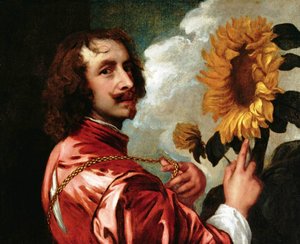
Sir Anthony van Dyck
1599 - 1641 , Belgique
L'essentiel de l'artiste
- Artistic Movement Or Style: Baroque
- Artists Who Influenced This Artist: ['Peter Paul Rubens']
- Date Of Birth: March 22, 1599
- Full Name: Sir Anthony van Dyck
- Nationality: Flemish
- Notable Artworks:
- Portrait of a Woman
- Charles I in Three Positions
- Place Of Birth: Antwerp, Belgium
Articles connexes

Sir Anthony van Dyck: Courtly Portraiture & the Shaping of Baroque Identity
Explore the life & legacy of Sir Anthony van Dyck, the leading court painter of his era. Discover his innovative portraiture, Baroque masterpieces, and investment potential for discerning collectors. Learn more at AllPaintingsStore.
Rembrandt van Rijn : Les 25 Œuvres Maîtresses à Redécouvrir | AllPaintingsStore
Plongez dans l'univers de Rembrandt van Rijn avec les 25 œuvres incontournables du maître baroque. Découvrez l'histoire, la technique et l'émotion derrière ses portraits célèbres et 'La Ronde de Nuit'. Reproductions tableaux haute qualité sur AllPaintingsStore.com
Les 10 Chefs-d'œuvre du Baroque Néerlandais : Artistes et Décor Intemporels
Plongez au cœur du Baroque néerlandais avec les 10 œuvres incontournables de Rembrandt, Vermeer et autres maîtres hollandais. Découvrez l'histoire, la lumière et les couleurs qui ont façonné ce mouvement artistique. Reproductions d'art de qualité muséale sur AllPaintingsStore.com

Cornelis van Poelenburch: Bridging Mannerism & the Dutch Baroque Landscape
Discover Cornelis van Poelenburch, a pivotal Dutch Baroque landscape painter bridging Mannerism & Italianate styles. Explore his life, key works, and lasting influence on 17th-century art with AllPaintingsStore.

Chiaroscuro and Character: A Definitive Guide to Light and Shadow in the Dutch Baroque Era
Explore the dramatic mastery of the Dutch Baroque era. Discover how masters like Rembrandt used chiaroscuro to transform everyday life into timeless art. An expert guide for collectors and enthusiasts seeking to understand the profound interplay of light and shadow.


