


 Aperçu en situation
 Partager
 Partager
 Détails
 Guide
Guide

 Télécharger
 Articles similaires
 Radiographie
 Voir le diaporama
 Statistiques
Orpheus
 Acrylique sur toile
- Décoration murale
- High Renaissance
 1515
1515 67.0 x 101.0 cm
 Afficher la suite
Reproduction à l'huile faite à la main
Huile sur toile peinte à la main, avec cadre et dimensions personnalisés, réalisée sur commande par nos artistes. ( Passer au format impression Passer au format image numérique)




P118B $10

P118H $10

P118W $10

P438Z $10

P508JH $12

P508YH $12

P805H $10

P805Z $10

P919BZ $10

P919G $10

P919XJ $10

P959ZH $10

P968JZ $12

W106C $8

W218G $10

W218JH $8

W218Y $10

W307PJ $10

W316G $10

W316PJ $8

W316Y $10

W398PJ $8

W4111J $10

W500HY $15

W500JH $15

W692G $12

W849H $8

W940BG $15

W953PJ $8




Choisissez parmi nos formats prédéfinis qui respectent les proportions originales de l’œuvre.

Vous pouvez saisir vos propres dimensions pour l'adapter à un cadre ou à un espace spécifique. Si la taille sélectionnée ne correspond pas aux proportions de l'image d'origine, nous recadrerons l'œuvre ou prolongerons la peinture avec des éléments peints à la main supplémentaires. Une maquette numérique vous sera envoyée pour approbation avant le début de la production.
Veuillez noter que l'aperçu à l'écran ne reflète pas le recadrage ou l'extension réels. Seule la maquette montrera fidèlement la composition finale.
Bien que des tailles personnalisées soient disponibles, nous vous recommandons de sélectionner une dimension dans la liste prédéfinie afin de préserver les proportions d'origine.
Après la commande, l’équipe AllPaintingsStore.com contactera le client par e-mail pour recueillir ses instructions et lui fournira une maquette d’aperçu
Livraison dans le monde entier () en 3 à 4 semaines au lieu des 5 semaines habituelles. (21 septembre). Aucun compromis sur la qualité.

Livraison express gratuite dans le monde entier

Toile de lin de haute qualité

Assurance transport complète

Garantie de remboursement des droits de douane

Garantie de fidélité des couleurs

Garantie de retour de 100 jours (uniquement en cas de défaut)

Garantie de remboursement à 100%

Tarifs dégressifs sur quantité
 L'option verre n'est disponible que pour les dimensions inférieures à 110 cm.

Orpheus
Technique de reproduction
Format de la reproduction
-


Prix total final
$ 258
A Symphony of Light and Loss: Unveiling Titian Ramsay Peale II’s “Orpheus”
Titian Ramsay Peale II's "Orpheus," painted in 1515, isn’t merely a depiction of the legendary musician; it’s a profound meditation on beauty, grief, and the enduring power of art. This captivating work transcends its historical context to resonate with viewers today through its masterful use of light, color, and an arresting sense of human emotion. Peale, a key figure in American art history bridging the Renaissance ideals of Venice with the burgeoning artistic landscape of the New World, imbued this piece with a distinctly Romantic sensibility – a focus on feeling and subjective experience that would become increasingly prominent in subsequent generations.
The scene unfolds within a richly textured interior, bathed in a dramatic interplay of light and shadow. Orpheus, rendered with meticulous detail, dominates the composition, his posture conveying both intense concentration and palpable sorrow. His flowing robes, rendered in deep blues and purples, contrast sharply with the vibrant hues of the surrounding women – a deliberate choice that highlights his isolation amidst a scene of apparent revelry. The figures are not simply arranged; they’re carefully positioned to create a dynamic visual narrative, drawing the eye through the painting's layers.
The Mythic Core: Orpheus and Eurydice
At its heart, “Orpheus” is rooted in the timeless Greek myth of Orpheus and Eurydice. The story, as recounted by Apollodorus and later Virgil, tells of Orpheus’s profound love for his wife, Eurydice, who tragically dies after being bitten by a snake. Driven by grief, Orpheus descends into the underworld, using his lyre to charm Hades and Persephone, ultimately securing permission to escort Eurydice back to the world of the living – only under the condition that he not turn back to look at her until they both reached the sunlight. Tragically, his overwhelming despair leads him to succumb to temptation and glance backward, causing Eurydice to vanish forever.
Peale masterfully captures this poignant moment of loss and regret. The women surrounding Orpheus are not passive observers; they seem lost in their own enjoyment of the music, oblivious to the depth of his sorrow. This juxtaposition underscores the isolating nature of grief – a private torment experienced within a world seemingly untouched by pain. The inclusion of birds—a common motif in depictions of Orpheus—adds another layer of symbolism, representing both beauty and fleeting joy, reminders of what has been lost.
Technique and Artistic Influence
Peale’s technique is characterized by a remarkable attention to detail and a masterful command of color. He employs sfumato – a subtle blurring of lines and edges – to create an atmosphere of ethereal beauty, particularly in the rendering of Orpheus's face and the drapery of his robes. His use of chiaroscuro—the dramatic contrast between light and dark—further enhances the painting’s emotional impact, emphasizing the figures’ forms and creating a sense of depth and drama. Peale was deeply influenced by the Venetian Renaissance masters, particularly Titian, evident in his rich color palette and his ability to capture fleeting moments of emotion.
Furthermore, Peale's background as a naturalist profoundly shaped his artistic practice. He meticulously studied anatomy and perspective, ensuring that each figure is rendered with anatomical accuracy. This commitment to realism, combined with his expressive use of light and color, elevates “Orpheus” beyond a simple mythological scene into a powerful exploration of human emotion and the enduring legacy of loss.
A Timeless Resonance: Symbolism and Interpretation
Beyond its narrative content, "Orpheus" offers a wealth of symbolic interpretation. The painting can be seen as an allegory for the universal experience of grief and the struggle to reconcile beauty with sorrow. Orpheus’s music represents the power of art to transcend suffering, yet his ultimate failure highlights the limitations of human agency in the face of fate. The women surrounding him symbolize the distractions and superficial pleasures that often mask our deepest emotions. The duck, a seemingly incongruous element, might represent fleeting joy or simply serve as a reminder of the natural world amidst the mythological drama.
Today, “Orpheus” continues to captivate viewers with its emotional intensity and artistic sophistication. Reproductions of this iconic work offer a window into the artistic sensibilities of 19th-century America and provide a poignant reflection on the enduring themes of love, loss, and the transformative power of art.
Œuvres similaires


Biographie de l'artiste
**Jeunesse et débuts artistiques**
Titian Ramsey Peale II, un nom qui résonne dans les annales de l'histoire de l'art, mais enveloppé d'un mystère. Né en 1799, la jeunesse de Peale II est marquée par une passion inébranlable pour les arts, qui allait finalement le conduire à devenir un peintre habile.**Contributions artistiques et style**
L’œuvre de Peale II, caractérisée par son élégance de la Renaissance italienne, met en valeur sa maîtrise de la peinture à l'huile sur panneau et toile. Les œuvres notables comprennent :- Autel avec quatre saints (125 x 72 cm, peinture à l'huile sur panneau), un témoignage de sa dévotion à l’art sacré.
- Adoration des bergers (Palais Pitti, Florence, Italie, Renaissance italienne, peinture à l'huile sur toile), reflétant sa capacité à capturer des moments poignants.
- La beauté (89 x 76 cm, Palais Pitti, Florence, Italie, Renaissance italienne, peinture à l'huile sur toile), un portrait qui dégage élégance et raffinement.
**Influences et héritage**
Bien que sa vie ne soit pas aussi bien documentée que celle de certains de ses contemporains, l’œuvre de Peale II est indubitablement influencée par la Renaissance italienne, avec des touches de colorisme vénitien. Son héritage, bien qu'il n'ait pas été largement reconnu à son époque, a été redécouvert et réévalué à travers le prisme de la critique d’art moderne.**Où trouver l’œuvre de Peale II**
Pour ceux qui souhaitent approfondir leur connaissance de l’œuvre de Peale II, Titian Ramsey Peale II : Autel avec quatre saints peut être trouvé sur AllPaintingsStore, ainsi que d’autres œuvres notables. La Galerie des Offices (Florence, Italie) et le Palais Pitti (Florence, Italie) présentent également ses œuvres, offrant un aperçu du monde de l’artiste.**Conclusion**
Titian Ramsey Peale II, figure énigmatique dans le monde de l'art, laisse derrière lui une série de chefs-d'œuvre qui continuent d'intriguer et d'inspirer. Grâce à AllPaintingsStore et autres ressources, son œuvre est aujourd’hui plus accessible que jamais, invitant une nouvelle génération d'amateurs d'art à découvrir et apprécier ses contributions au mouvement de la Renaissance italienne.- Explorez davantage les œuvres de Peale II sur AllPaintingsStore.
- Apprenez-en davantage sur d'autres artistes influents comme Giulio Clavio, connu pour ses manuscrits enluminés.
- Découvrez le Société des Beaux-Arts (Royaume-Uni, une institution de premier plan pour la promotion du patrimoine artistique, sur AllPaintingsStore.
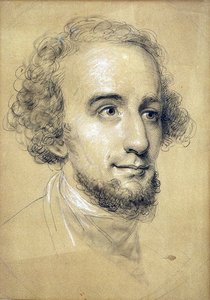
Titian Ramsay Peale II
1799 - 1885 , États-Unis
En bref
- Artistes Influents:
- Titian
- Maîtres vénitiens
- Date De Décès: 1885
- Date De Naissance: 1799
- Mouvement Artistique: Renaissance italienne
- Nationalité: Américain
- Nom Complet: Titian Ramsay Peale II
- Œuvres Notables:
- Autel avec quatre saints
- Adoration des bergers
- La Beauté
Articles similaires

Charles Willson Peale: Portraiture, Enlightenment Ideals & Shaping American Identity
Explore the life & art of Charles Willson Peale – Revolutionary portraitist, scientist, and founder of America’s first museum. Discover his iconic paintings of Washington & the Enlightenment ideals that shaped a nation.

Echoes of Olympus: Mythological Narratives in Western Art Through the Ages
Explore the captivating history of mythological narratives in Western art! From ancient Greece to modern masterpieces, discover iconic artworks & symbolism. Expert analysis and high-quality reproductions at AllPaintingsStore.

Titian : Innovation, Technique et la Tradition du Portrait Vénitien à la Renaissance
Explorez l'univers de Titien et la révolution du 'colorito' vénitien. Découvrez sa technique unique, son influence sur les maîtres européens et l'histoire fascinante du portrait à Venise. Expertise art & collectionneurs.

Harmonies on Canvas: Exploring the Visual Representation of Music in Art History
Explore the fascinating history of music's visual representation in art! From ancient symbolism to modern abstraction, discover how artists have captured sound and emotion on canvas. Expert insights & stunning examples.

Titian Ramsay Peale II: A Legacy of Botanical Precision & Artistic Innovation
Explore the life & art of Titian Ramsay Peale II, a master of botanical precision and wildlife painting. Discover his legacy bridging art & natural history at AllPaintingsStore.


