


 Aperçu en situation
 Partager
 Partager
 Détails

 Télécharger l'image
 Articles similaires
 Radiographie
 Voir le diaporama
Mourning


 Afficher la suite
Giclées et impressions d'art
Impressions giclées ou sur toile de qualité musée, avec une production rapide et des finitions au choix. ( Acheter la peinture faite à la main Acheter l'image)




P118B $10

P118H $10

P118W $10

P438Z $10

P508JH $12

P508YH $12

P805H $10

P805Z $10

P919BZ $10

P919G $10

P919XJ $10

P959ZH $10

P968JZ $12

W106C $8

W218G $10

W218JH $8

W218Y $10

W307PJ $10

W316G $10

W316PJ $8

W316Y $10

W398PJ $8

W4111J $10

W500HY $15

W500JH $15

W692G $12

W849H $8

W940BG $15

W953PJ $8




Choisissez parmi nos formats prédéfinis qui respectent les proportions originales de l’œuvre.

Vous pouvez saisir vos propres dimensions pour vous adapter à un cadre ou à un espace spécifique. Si la taille sélectionnée ne correspond pas aux proportions de l'image originale, nous recadrerons l'œuvre ou étendrons l'image avec une bordure en miroir ou une couleur unie. Une maquette numérique vous sera envoyée pour approbation avant le début de la production.
Veuillez noter que l'aperçu à l'écran ne reflète pas le recadrage ou l'extension réelle. Seule la maquette montrera avec précision la composition finale.
Bien que des tailles personnalisées soient disponibles, nous vous recommandons de choisir une dimension dans la liste prédéfinie afin de préserver les proportions originales.
Livraison dans le monde entier () en 2 semaines au lieu des 4/5 semaines habituelles. (22 août)

Livraison express gratuite dans le monde entier

Toile de lin de haute qualité

Assurance transport complète

Garantie de remboursement des droits de douane

Garantie de fidélité des couleurs

Politique de retour de 60 jours (uniquement en cas de défaut)

Garantie de remboursement à 100%

Tarifs dégressifs sur quantité
 L'option verre n'est disponible que pour les dimensions inférieures à 110 cm.

Mourning
Giclées et impressions d'art
Format de la reproduction
-


Prix total final
$ 64
Description de la pièce
Umberto Boccioni’s ‘Mourning’: A Futurist Lament
Umberto Boccioni's 1910 painting, “Mourning,” is not simply a depiction of grief; it’s a visceral embodiment of the Futurist movement’s radical rejection of traditional artistic representation. This stark black and white image, featuring three central figures amidst a field of delicate flowers, immediately confronts the viewer with an unsettling tableau – a scene saturated with loss and rendered with a deliberate, almost violent energy. The photograph captures a moment frozen in time, yet vibrates with the dynamism that defined Boccioni’s artistic vision. The composition itself is deliberately fractured, mirroring the shattered emotional state of those depicted, and reflecting the Futurist desire to capture not just appearances but the *feeling* of movement and disruption.
Subject Matter and Composition
- Central Figures: Three individuals dominate the scene. One raises their hands to their face in a gesture of profound sorrow, while another holds what appears to be a deceased body – a poignant symbol of death and loss. The third figure mirrors this action, further intensifying the sense of mourning.
- Peripheral Figures: Two additional individuals are subtly placed at the edges, adding to the overall feeling of isolation and suggesting that grief is often experienced within a larger context of shared suffering.
- Floral Backdrop: The inclusion of flowers provides a jarring juxtaposition against the somber subject matter. This deliberate contrast elevates the work beyond a straightforward depiction of mourning, hinting at themes of beauty persisting even in the face of devastation – a common Futurist preoccupation with finding new forms of expression amidst chaos.
Technique and Style: The Language of Futurism
Boccioni’s technique is characterized by bold, fragmented brushstrokes and a flattened perspective— hallmarks of the Futurist style. He sought to represent not a static image but rather the *impression* of movement and disruption. Lines are deliberately broken and overlapping, creating a sense of instability and conveying the raw emotion of the scene. The monochromatic palette further amplifies this effect, stripping away any distractions and focusing attention on the stark forms and dramatic gestures. This approach reflects the Futurist fascination with speed, technology, and the dynamism of modern life – themes powerfully expressed through the distortion of form and space.
Historical Context and Symbolism
Created in 1910, “Mourning” emerged during a period of intense social and political upheaval in Italy. The Futurist movement was born out of a desire to break free from the perceived stagnation of traditional art and embrace the energy of the industrial age. Boccioni’s work reflects this broader cultural shift, using themes of death and loss as a means of exploring larger questions about modernity, progress, and humanity's place in a rapidly changing world. The act of holding the deceased bodies can be interpreted as a symbolic representation of confronting mortality – a central concern for many artists during this era.
Emotional Impact and Artistic Significance
"Mourning" is more than just a historical artifact; it’s a profoundly moving work that continues to resonate with viewers today. Boccioni's masterful manipulation of form, space, and emotion creates a powerful and unsettling experience. This painting stands as a testament to the Futurist movement's revolutionary spirit and its enduring influence on 20th-century art. A hand-painted reproduction offers an unparalleled opportunity to bring this iconic work into your home or office, allowing you to contemplate its complex themes and appreciate Boccioni’s groundbreaking artistic vision.
Œuvres similaires


Biographie de l'artiste
enfance et formation
umberto boccioni, un peintre et sculpteur italien clé, est né le 19 octobre 1882 à Réggio Calabria, en Italie. Le travail de son père dans la fonction publique a entraîné des déménagements fréquents à travers l'Italie, influençant la vie de Boccioni au début. À 15 ans, il s’est installé à Catane, en Sicile, où il a terminé sa scolarité. Il a ensuite déménagé à Rome pour étudier à l’Accademia di Belle Arti di Roma, à la scuola libera del nudo et sous la direction de Giovanni Mataloni, un artiste de affiches à style liberty.Le mouvement futuriste
L’approche innovante de Boccioni en matière de forme et de déconstruction de la masse a eu un impact significatif sur le monde de l'art. Il est devenu le principal théoriste du mouvement futuriste, signant le Manifeste dei Pittori Futuristi ("Manifeste des peintres futuristes") en 1910. Ses œuvres sont conservées dans de nombreux musées d'art publics, notamment une rétrospective importante au Metropolitan Museum of Art à New York en 1988.Œuvres notables et héritage
- Dynamisme d'un corps humain (futurisme, huile sur toile), une peinture présentant le style unique de Boccioni.
- Formes dimensionnelles d'un cheval (40 x 40 cm, futurisme, huile sur toile), une autre illustration de son approche innovante de la forme.
- Formes uniques de continuité dans l'espace (futurisme, bronze), une sculpture démontrant sa déconstruction de la masse solide.
Liens pertinents depuis AllPaintingsStore.com
- Peinture par 'umberto boccioni' | umberto boccioni:dynamisme d'un corps humain (futurisme,huile sur toile,)
- Peinture par 'umberto boccioni' | umberto boccioni:formes dimensionnelles d'un cheval (40 x 40 cm,futurisme,huile sur toile,)
- Peinture par 'umberto boccioni' | umberto boccioni:lanceurs (futurisme,huile sur toile,)
Wikipédia : umberto boccioni
umberto boccioni, un peintre et sculpteur italien influent. Il a contribué à façonner l'esthétique révolutionnaire du mouvement futuriste en tant que l'un de ses principaux figures. Note : cet article est une traduction de l'italien, mais pour des fins d'analyse, il a été traduit en anglais. La question originale était en italien.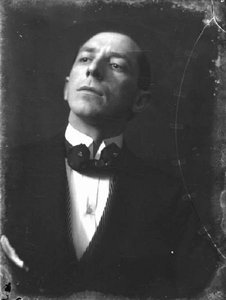
Umberto Boccioni
1882 - 1916 , Italie
En bref
- Artistes Influents:
- Giovanni Mataloni
- Giacomo Balla
- Date De Décès: 1916
- Date De Naissance: 19 octobre 1882
- Influences Artistiques:
- Constructivisme
- Expressionnisme abstrait
- Lieu De Naissance: Reggio Calabria, Italie
- Mouvement Artistique: Futurisme
- Nationalité: Italienne
- Nom Complet: Umberto Boccioni
- Oeuvres Notables:
- Dynamisme d'un corps humain
- Formes uniques dans l'espace
- La Ville qui s'élève
- Dynamisme d'un cycliste
Articles similaires

Timeless Contrast: A Professional Guide to Black and White Photography for Large-Scale Hotel Decor
A professional guide for hotel designers on utilizing black and white photography for large-scale decor. Learn to master scale, texture, and monochrome contrast to create impactful, high-end hospitality environments through efficient, bulk art procurement solutions.


