


 Aperçu en situation
 Envoyer
 Partager
 Détails de l'œuvre
 Guide
Guide

 Télécharger l'image
 Articles similaires
 Radiographie
 Diaporama
 Statistiques
Emperor


 Lire la suite
Giclées et impressions d'art
Impressions giclées ou sur toile de qualité musée, avec une production rapide et des finitions au choix. ( Commander la reproduction peinte à la main Passer au format numérique)




P118B €10

P118H €10

P118W €10

P438Z €10

P508JH €12

P508YH €12

P805H €10

P805Z €10

P919BZ €10

P919G €10

P919XJ €10

P959ZH €10

P968JZ €12

W106C €8

W218G €10

W218JH €8

W218Y €10

W307PJ €10

W316G €10

W316PJ €8

W316Y €10

W398PJ €8

W4111J €10

W500HY €15

W500JH €15

W692G €12

W849H €8

W940BG €15

W953PJ €8




Choisissez parmi nos formats prédéfinis qui respectent les proportions originales de l’œuvre.

Saisissez la largeur et la hauteur souhaitées pour qu'elles s'adaptent à votre cadre ou à votre mur. Une impression peut être recadrée, mais jamais agrandie au-delà de l'image originale ; ainsi, un format de forme différente entraînera la perte d'une partie de l'image. Nous vous envoyons une maquette numérique pour approbation avant toute impression. L'image présentée sur cette page ne montre pas le recadrage réel — seule la maquette le permet.
Livraison dans le monde entier () en 2 semaines au lieu des 4/5 semaines habituelles. (26 octobre)

Livraison express gratuite dans le monde entier

Toile de lin de qualité supérieure

Assurance transport complète

Garantie de remboursement des droits de douane

Garantie de fidélité des couleurs

Politique de retour de 100 jours (uniquement en cas de défaut)

Garantie de remboursement à 100%

Offre de tarifs dégressifs
 L'option verre n'est disponible que pour les dimensions inférieures à 110 cm.

Emperor
Giclées et impressions d'art
Format de la reproduction
-


Prix total
€ 56
A Grand Procession in Wood and Ink
In the delicate interplay of line and pigment, Watanabe Nobukazu’s "Emperor" emerges as a breathtaking window into the ceremonial splendor of Meiji-era Japan. This large-scale Ukiyo-e woodblock print captures a moment of profound historical gravity, presenting an imperial procession that feels both monumental and intimate. Through four meticulously arranged panels, the viewer is invited to witness a choreographed display of power and tradition. The composition is masterfully balanced; while the figures are ensconced within ornate interiors and stately outdoor settings, a central, unifying tree and wandering birds act as silent witnesses to the unfolding event. This structural harmony guides the eye across the landscape of the print, creating a sense of continuous movement that mimics the very procession it depicts.
The technique employed by Nobukazu is a testament to the enduring mastery of the woodblock medium. Each stroke is defined by expressive, precise lines that delineate the intricate patterns of ceremonial robes and the architectural grandeur of the setting. The color palette is a sophisticated arrangement of warm, earthy tones—muted ochres, deep browns, and soft creams—which lends the artwork a dignified, antique atmosphere. This subdued tonality avoids the garishness often found in later prints, opting instead for a refined aesthetic that emphasizes texture and depth through the careful layering of pigments on paper. For the discerning collector or interior designer, this print offers a subtle yet commanding presence, capable of anchoring a room with its historical weight and tonal elegance.
Symbolism and the Spirit of an Era
Beyond its visual splendor, "Emperor" is rich with the symbolic language of Japanese tradition. Every element within the frame serves to reinforce themes of longevity, prosperity, and the divine authority of the Imperial line. The prominent tree, standing as a sentinel across the panels, is not merely a landscape feature but a potent symbol of endurance and the deep roots of the nation. Similarly, the inclusion of birds introduces an element of good fortune, weaving a narrative of peace and auspicious beginnings into the formal state ceremony. The elaborate attire of the figures—detailed with painstaking precision—serves as a visual shorthand for social hierarchy and the meticulous preservation of cultural identity during a period of rapid modernization.
To possess or display a reproduction of this work is to engage with a pivotal moment in art history. As a student of the legendary Yōshū Chikanobu, Watanabe Nobukazu possessed the unique ability to document the shifting tides of the Sino-Japanese and Russo-Japanese Wars while maintaining the classical beauty of the Ukiyo-e tradition. "Emperor" captures this duality perfectly: it is a piece that feels deeply rooted in the past yet vibrates with the energy of a nation stepping onto the global stage. The emotional impact is one of profound respect and quiet awe, making it an ideal centerpiece for those who seek art that tells a story of resilience, dignity, and the timeless beauty of Japanese heritage.
Questions et réponses
Quelle est la place de «Emperor» de Watanabe Nobukazu dans l'histoire de l'art ?
«Emperor» de Watanabe Nobukazu appartient au mouvement Ukiyo-e, durant la période 19th Century.
Quel âge avait Watanabe Nobukazu lors de la création de « Emperor » ?
Watanabe Nobukazu a réalisé « Emperor » à l'âge de 28. L'artiste est né en 1872 et l'œuvre date de 1900.
Comment la composition chromatique de «Emperor» de Watanabe Nobukazu est-elle construite ?
La composition chromatique de «Emperor» de Watanabe Nobukazu allie un contraste Gentle à une harmonie Softly Mixed Palette.
Œuvres similaires


Articles connexes

Mastering the Woodblock Print: A Definitive Guide to the Timeless Art of Ukiyo-e and Beyond
Explore the profound artistry of woodblock printing. From Ukiyo-e masters like Kuniyoshi to modern techniques, discover the intricate history, carving processes, and enduring legacy of this timeless printmaking tradition.

Ukiyo-e: The Art of the Floating World and the Legacy of Japanese Woodblock Masters
Explore the profound history of Ukiyo-e, from Hokusai's iconic waves to the vibrant culture of Edo Japan. Discover the intricate craft of woodblock printing and the enduring legacy of these Japanese masterpieces through our expert art history guide.
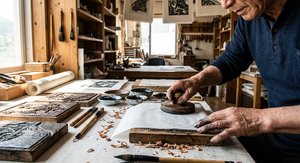
The Enduring Legacy of Woodblock Printmaking: Technique, History & Artistic Expression
Explore the rich history of woodblock printmaking – from ancient techniques to Ukiyo-e masterpieces. Discover expert insights on collecting, preserving & appreciating this enduring art form.

Hokusai : Les 25 Œuvres Maîtresses d'un Génie Japonais | AllPaintingsStore
Plongez dans l'univers de Katsushika Hokusai avec les 25 œuvres incontournables du maître japonais. Découvrez l'histoire, les techniques d'ukiyo-e et la beauté intemporelle de 'La Grande Vague'. Reproductions tableaux de qualité muséale sur AllPaintingsStore.com.

Ukiyo-e : Exploration du Monde Flottant et de l'Héritage Artistique Durable du Japon
Explorez l'univers fascinant de l'ukiyo-e, l'art japonais de l'époque d'Edo. Découvrez les maîtres (Hokusai, Hiroshige) et son influence durable sur le monde de l'art. Guide expert pour collectionneurs.

