A Titan of Antiquity: Claudio Ptolemy and the Shaping of Western Thought
Claudio Ptolemy, born around AD 100 in Canopus, Egypt—a location steeped in ancient Egyptian lore—was more than just a mathematician; he was arguably the most influential scientist of his era. Living during the Roman Empire’s twilight years, Ptolemy stands as a monumental figure whose groundbreaking contributions irrevocably altered our understanding of the cosmos and laid the foundation for centuries of scientific inquiry. His legacy extends far beyond dusty textbooks, resonating powerfully in modern art and inspiring reproductions that strive to recapture the grandeur of his intellectual achievements.The Architect of Observation: Mathematical Models & Celestial Harmony
Ptolemy’s brilliance shone most brightly in mathematics, specifically his development of a geocentric model of the universe—a concept that placed Earth at the center of everything. This audacious assertion wasn't merely philosophical; it was underpinned by meticulous observation and sophisticated calculations. His magnum opus, *Almagest*, meticulously charted planetary movements using geometric principles, establishing a framework for astronomical prediction that remained dominant for over 1,500 years. The precision with which Ptolemy modeled celestial orbits—incorporating epicycles and deferents to account for retrograde motion—demonstrates an unparalleled grasp of mathematical complexity and foreshadowed the scientific revolution centuries later. This meticulous approach directly influenced Renaissance artists who sought to depict the heavens with accuracy and beauty. They painstakingly recreated constellations and planetary positions, reflecting Ptolemy’s unwavering belief in the power of observation as a path to unlocking cosmic secrets.Geography Beyond Imagination: Mapping the Known World
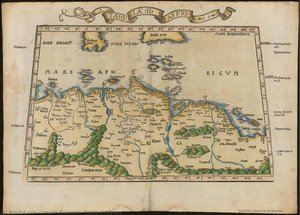
Beyond astronomy, Ptolemy revolutionized geography with his *Geographia*, a monumental atlas that consolidated knowledge gleaned from Greek, Egyptian, Roman, and Persian sources. Unlike previous maps which often relied on mythical narratives, Ptolemy’s work utilized mathematical projections to represent continents and oceans with unprecedented realism. His meticulous measurements of distances and latitudes—though occasionally inaccurate by modern standards—established Alexandria as the epicenter of cartographic innovation. Reproductions of Ptolemy's maps continue to fascinate collectors and scholars alike, serving as tangible reminders of the ambition and intellectual rigor that characterized the classical world. The detailed depictions of coastlines and settlements found in his atlas profoundly impacted artistic representations of landscapes during the Renaissance. Artists incorporated Ptolemaic projections into their canvases, striving for a sense of spatial harmony and conveying the vastness of the inhabited Earth.A Polymathic Legacy: Music, Optics & Beyond
Ptolemy’s influence wasn't confined to science; he was also a prolific musician and philosopher. His *Harmonics* provided the most comprehensive treatise on music theory for its time, exploring acoustics and musical proportions with remarkable insight. Similarly, his *Optics* tackled questions of light and vision with groundbreaking experiments—challenging Aristotle’s theories about optics and advocating for observation as a path to understanding nature. These diverse pursuits underscore Ptolemy's holistic worldview – a conviction that all disciplines are interconnected and contribute to a deeper comprehension of reality. Artists studying the cosmos often drew inspiration from his philosophical explorations, seeking to imbue their works with intellectual depth and symbolic resonance.Historical Significance: Shaping Renaissance Art & Scientific Thought
Ptolemy’s legacy endured through the Middle Ages and profoundly impacted the artistic sensibilities of the Renaissance. Artists like Leonardo da Vinci and Michelangelo meticulously studied Ptolemy's astronomical observations and mathematical models, striving to recreate the grandeur of the cosmos in their paintings and sculptures. The rediscovery of *Almagest* spurred renewed interest in scientific inquiry and fueled debates about the nature of reality—a debate that continues to shape our understanding of the universe today. Reproductions of Ptolemy’s maps and celestial charts serve as powerful symbols of intellectual curiosity and represent a pivotal moment in Western history, reminding us of the enduring power of observation and mathematical reasoning. They stand as testament to the brilliance of a mind that dared to challenge accepted dogma and championed the pursuit of knowledge—a legacy that continues to inspire artists and thinkers across generations.Questions et réponses
Existe-t-il une chronologie de la carrière de Claudio Ptolemy ?
Retrouvez l'itinéraire chronologique de l'œuvre de Claudio Ptolemy sur la page Parcours de carrière de l'artiste, où les œuvres se succèdent par périodes de création, chapitre par chapitre.
Dans quel pays Claudio Ptolemy est-il né ?
Claudio Ptolemy est né(e) en Égypte.
Où puis-je trouver des statistiques sur les œuvres de Claudio Ptolemy ?
Les statistiques relatives aux œuvres de Claudio Ptolemy sont disponibles sur la page Statistiques de l'artiste.