Un Visionnaire Victorien : La Vie et l'Héritage de John Duvall
Les toiles de John Duvall (1815–1892) transportent le spectateur vers une époque révolue, un monde imprégné de romantisme et doté d'un profond sens du récit. Figure éminente de la scène artistique anglaise du XIXe siècle, Duvall était bien plus qu'un simple chroniqueur de scènes ; il était un narrateur méticuleux qui utilisait l'huile et le pinceau pour façonner des aperçus intimes de la vie rurale, des récits bibliques rendus avec un réalisme saisissant, et des portraits capturant non seulement la ressemblance, mais aussi le caractère et l'émotion. Né à Margate, dans le Kent, ses premières années ont posé les fondations d'une carrière qui allait finalement faire de lui une pierre angulaire de l'École de Suffolk. Bien que ses racines soient dans le Kent, son installation à Ipswich vers 1852 a marqué un chapitre charnière de sa vie, où il établit un atelier dans le Butter Market et devint une figure centrale de la communauté artistique locale, occupant même le rôle de premier président de l'Ipswich Fine Art Club.
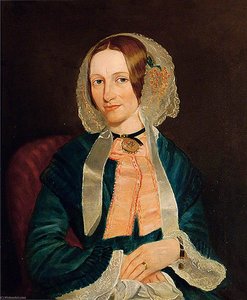
Le parcours artistique de Duvall fut marqué par une évolution et une adaptabilité remarquables. Initialement, il connut le succès en tant que portraitiste, capturant la dignité et l'essence de ses sujets avec une précision académique. Cependant, à mesure que le milieu du XIXe siècle progressait, la propagation rapide de la photographie commença à réduire la demande pour les commandes de portraits traditionnels. Plutôt que de se retirer face aux mutations de l'histoire de l'art, Duvall a su pivoter avec grâce, réorientant son immense talent vers les paysages, les sujets équestres et les scènes champêtres. Cette transition lui permit d'explorer le mouvement romantique naissant à travers un prisme typiquement britannique. Son œuvre commença à refléter une fascination profonde pour le monde naturel, particulièrement pour la beauté sereine et atmosphérique de la campagne du Suffolk, où il maîtrisa l'art de rendre la lumière et la couleur avec une précision époustouflante.
Maîtrise du Récit et de la Nature
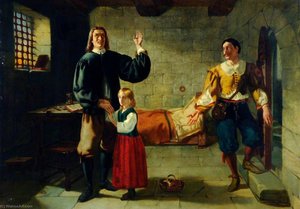
La véritable brillance de l'œuvre de Duvall réside dans sa capacité à fusionner le spirituel et le terrestre. Il entretenait un engagement profond avec les thèmes religieux, revisitant fréquemment les récits bibliques pour créer des œuvres d'une grande résonance émotionnelle. L'un de ses sujets les plus célèbres consistait à recréer des scènes du Chemin de Perse, comme sa représentation poignante de « John Bunyan dans la prison de Bedford ». Dans ces compositions, Duvall utilisait la technique du clair-obscur — ce jeu dramatique entre l'ombre et la lumière — pour intensifier la complexité psychologique de ses personnages. Ces peintures n'étaient pas de simples illustrations ; elles étaient des méditations morales conçues pour provoquer une contemplation spirituelle chez le spectateur, reflétant l'obsession victorienne pour l'éthique et la foi.
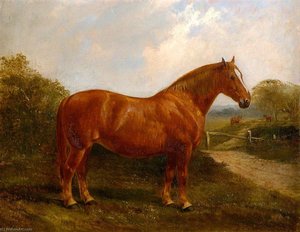
Parallèlement à ses drames religieux, sa maîtrise célébrée du portrait animalier et du paysage s'est imposée. Duvall éprouvait une affinité particulière pour les chevaux, une passion qui l'a conduit à illustrer le Stud Book de la Suffolk Horse Society. Ses œuvres équestres, telles que « La jument de Hungerford » et « Leiston », témoignent d'une attention incroyable aux détails anatomiques et aux textures, utilisant des techniques d'impasto pour donner vie au brillant d'une robe baie ou à la force d'une crinière sombre. En peignant des paysages, il employait la perspective atmosphérique pour créer une illusion de profondeur convaincante, permettant au spectateur de déambuler à travers les étendues brumeuses et tranquilles de Stoke Park. Sa capacité à capturer les nuances subtiles de la lumière — la façon dont elle filtre à travers les arbres ou se pose sur le sol d'une écurie — transformait ses paysages en entités vivantes et vibrantes.
Importance Historique et Influence Artistique
Bien qu'une grande partie de son travail ait été ignorée par le marché de l'art international durant sa vie, la contribution de John Duvall à l'art britannique demeure significative. Il se trouvait à l'intersection de plusieurs mouvements majeurs : le réalisme méticuleux du début du XIXe siècle et l'approche plus expressive et chargée d'émotion de l'ère victorienne tardive. Son influence est perceptible dans sa manière de combler le fossé entre le récit religieux conceptuel et la beauté accessible et ancrée de la vie rurale. Son héritage est préservé à travers ses expositions dans des institutions prestigieuses telles que :
- The Royal Academy
- The British Institution
- The Royal Society of British Artists
Aujourd'hui, Duvall est commémoré comme un peintre capable de trouver l'extraordinaire dans l'ordinaire. Qu'il capturait la dignité tranquille d'un gentleman ou la puissance brute d'un cheval de trait, son travail demeure un témoignage de la force durable de l'art narratif. Il a transformé les paysages du Suffolk et les récits de la Bible en un langage visuel cohérent qui continue de captiver ceux qui cherchent à toucher l'âme de l'âge victorien.
Questions et réponses
Où trouver les œuvres de John Duvall classées par couleur ?
La page Par couleur organise les œuvres de John Duvall par couleur.
Où peut-on trouver les œuvres de John Duvall regroupées par mouvement artistique ?
La page Tous les mouvements artistiques regroupe les œuvres de John Duvall par mouvement artistique.
Où et en quelle année John Duvall est-il né ?
John Duvall est né à Margate en 1815.