


 पूर्वावलोकन देखें
 भेजें
भेजें साझा करें
 विवरण देखें
 मार्गदर्शिका

 डाउनलोड करें
 समान वस्तुएं
 एक्स-रे
 स्लाइड शो देखें
 Q&A
Q&A आंकड़े
Italian Scene Composition


 और पढ़ें
गिक्ली / आर्ट प्रिंट
तेज़ उत्पादन और विभिन्न फिनिश विकल्पों के साथ म्यूजियम-क्वालिटी गिकली (giclée) या कैनवस प्रिंट। ( हाथ से बनी पेंटिंग खरीदें डिजिटल इमेज पर जाएँ)




P118B ₹10

P118H ₹10

P118W ₹10

P438Z ₹10

P508JH ₹12

P508YH ₹12

P805H ₹10

P805Z ₹10

P919BZ ₹10

P919G ₹10

P919XJ ₹10

P959ZH ₹10

P968JZ ₹12

W106C ₹8

W218G ₹10

W218JH ₹8

W218Y ₹10

W307PJ ₹10

W316G ₹10

W316PJ ₹8

W316Y ₹10

W398PJ ₹8

W4111J ₹10

W500HY ₹15

W500JH ₹15

W692G ₹12

W849H ₹8

W940BG ₹15

W953PJ ₹8




कलाकृति के मूल अनुपात से मेल खाने वाले हमारे पूर्व निर्धारित आकारों में से चुनें।

अपने फ्रेम या अपनी दीवार के अनुसार आवश्यक चौड़ाई और ऊंचाई दर्ज करें। प्रिंट को केवल काटा जा सकता है, चित्र से बड़ा कभी नहीं बनाया जा सकता, इसलिए अलग आकार का साइज चित्र का एक हिस्सा खो देता है। किसी भी चीज़ को प्रिंट करने से पहले हम आपकी स्वीकृति के लिए आपको एक डिजिटल मॉकअप भेजते हैं। इस पृष्ठ पर दिखाया गया चित्र वास्तविक कटिंग नहीं दिखाता है — केवल मॉकअप ही इसे दर्शाता है।
विश्वव्यापी डिलीवरी (), मानक 4/5 सप्ताह के बजाय मात्र 2 सप्ताह में। (31 अक्टूबर)

दुनिया भर में मुफ़्त एक्सप्रेस शिपिंग

प्रीमियम ग्रेड लिनेन कैनवास

पूर्ण शिपिंग बीमा

सीमा शुल्क और आयात कर वापसी की गारंटी

सटीक रंग मिलान की गारंटी

100 दिनों की वापसी नीति (केवल निर्माण दोष होने पर)

100% पैसे वापसी की गारंटी

थोक छूट का अवसर
 ग्लास का विकल्प केवल 110 सेमी से कम आकार में ही उपलब्ध है।

Italian Scene Composition
गिक्ली / आर्ट प्रिंट
प्रतिकृति का आकार
-


कुल मूल्य
₹ 6168
The Sublime Embrace of Nature: Exploring Thomas Cole's Italian Scene Composition
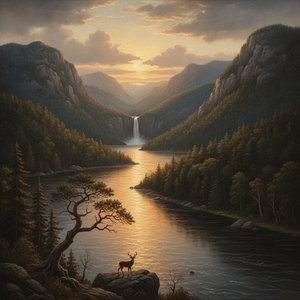
To gaze upon Thomas Cole’s Italian Scene Composition is to step across the threshold of time and into a pastoral dreamscape, rendered with the profound reverence characteristic of Romanticism. This breathtaking oil on canvas, painted in 1833, is far more than a mere depiction of Italian scenery; it is an eloquent meditation on humanity's enduring relationship with the grandeur of the natural world. Cole, a pivotal figure in the nascent American landscape tradition and a key member of the Hudson River School movement, imbued his canvases with a spiritual resonance that elevated mere observation into profound allegory. The scene unfolds with an almost palpable sense of peace, inviting the viewer to breathe deeply the imagined air scented with pine and distant earth.
A Masterpiece of Romantic Vision
The stylistic hallmarks of Cole’s work are immediately apparent here: a deep commitment to the sublime. For the Romantics, nature was not simply a backdrop; it was a living entity, a mirror reflecting the deepest currents of human emotion and spirit. In Italian Scene Composition, this philosophy manifests through the majestic sweep of the mountainous background, which dwarfs the foreground elements just enough to inspire awe without inducing terror. The composition guides the eye effortlessly from the immediate intimacy of the pine-laden tree in the foreground, past the scattered figures enjoying a moment of respite, and finally out toward the hazy, monumental peaks. This careful orchestration of scale—from the delicate human presence to the overwhelming might of the mountains—is what gives the painting its enduring emotional pull.
Technique and Tranquility: The Artistry of Light
Cole’s technical skill in handling light and atmosphere is nothing short of masterful. The use of color throughout the piece creates a pervasive sense of warmth and deep tranquility. Observe how the light seems to filter through the foliage, catching the greens of the foreground tree while bathing the distant landscape in a soft, golden glow. This careful modulation of light suggests both the passage of time and an eternal, gentle illumination upon the scene. The oil paint itself allows for such rich depth; one can almost feel the texture of the bark on the pine and the cool mist rising from the valleys below. It is this technical brilliance that makes reproductions so valuable—they aim to capture not just the image, but the very *feeling* of Cole’s brushwork.
Symbolism: Man Within the Grand Design
The inclusion of figures scattered throughout the landscape adds a crucial layer of narrative depth. These people are not merely decorative accents; they symbolize humanity's yearning for connection and solace found away from the clamor of civilization. They appear engaged in quiet contemplation or simple enjoyment, suggesting that true fulfillment lies in communion with nature. The Italian setting itself often carried connotations of classical ideals and timeless beauty, allowing Cole to weave together themes of enduring culture with the raw, untamed power of the wilderness—a dialogue central to American artistic identity during his time.
Bringing the Sublime Home
For the collector or designer seeking an anchor piece for a grand hall or a contemplative study, Italian Scene Composition offers unparalleled depth. Owning a high-quality reproduction allows one to integrate this powerful narrative into modern life. It serves as a constant, beautiful reminder of the sublime—that moments of profound peace can be found when we pause, look up, and allow ourselves to be enveloped by something far greater than ourselves. It is an invitation to wonder, rendered in timeless pigment.
प्रश्न और उत्तर
"Italian Scene Composition" किस चीज़ से बना है?
थॉमस कोल द्वारा "Italian Scene Composition" की माध्यम Oil On Canvas है। पुनरुत्पादन (reproductions) का उद्देश्य इस तकनीक के स्वरूप को जीवंत रूप में प्रस्तुत करना है।
थॉमस कोल द्वारा "Italian Scene Composition" किस आंदोलन और किस युग से संबंधित है?
थॉमस कोल द्वारा "Italian Scene Composition" में, Romanticism आंदोलन और 19वीं शताब्दी युग का संगम होता है।
क्या मैं "Italian Scene Composition" की ऑयल रिप्रोडक्शन (तेल चित्रकला प्रतिलिपि) ऑर्डर कर सकता हूँ?
थॉमस कोल द्वारा "Italian Scene Composition" की हाथ से पेंट की गई प्रतियां यह वेबसाइट पर बिक्री के लिए उपलब्ध हैं: लिनन कैनवास पर हाथ से पेंट किया गया एक ऑयल रिप्रोडक्शन, जिन्हें इसके हाथ से पेंट की गई प्रतिकृति पेज से ऑर्डर किया जा सकता है।
समान कलाकृतियाँ


कलाकार का परिचय
A Pioneer of American Landscape Painting
Thomas Cole, a name synonymous with the birth of distinctly American art, stands as a pivotal figure in 19th-century painting. Born on February 1, 1801, in Bolton le Moors, Lancashire, England, his early life offered little indication of the profound impact he would have on the artistic landscape. Emigrating to the United States in 1818 with his family and settling in Ohio, Cole’s journey was one of self-discovery and artistic awakening. Initially working as an itinerant portrait painter—a common trade at the time—he soon found himself captivated by the untamed beauty of the American wilderness. This shift wasn't merely a change in subject matter; it represented a fundamental divergence from European artistic traditions, which often prioritized historical or mythological narratives. Cole’s landscapes weren’t simply depictions of scenery; they were imbued with a spiritual and allegorical depth that resonated deeply with a nation forging its own identity. His move to Catskill, New York, in 1825 proved transformative, providing him with both inspiration and a permanent base from which to explore the surrounding Hudson River Valley—a region that would become inextricably linked with his artistic legacy.- Early Influences: Cole’s formative years were marked by exposure to Romantic art in England, particularly the works of Claude Lorrain and J.M.W. Turner. These artists championed dramatic landscapes as expressions of sublime emotion—a stylistic approach that profoundly shaped Cole's artistic sensibilities.
- The Hudson River School Emerges: Recognizing the potential for a uniquely American aesthetic, Cole established Catskill Hollow in 1825 and began to cultivate a distinctive style. He skillfully blended European Romantic techniques with observations of the Hudson Valley’s natural grandeur—creating paintings that captured both visual splendor and spiritual contemplation.
- Notable Paintings: Cole's oeuvre encompasses iconic landscapes such as “The Oxbow” (1836), which juxtaposes the serene Catskill Mountains with the industrious Farmlands of the Hudson Valley, symbolizing the tension between wilderness and civilization. Similarly, "The Course of Empire" (1833-1836) presents a monumental allegory charting the cyclical history of human society—from its primordial origins to its inevitable decline.
- Mentorship & Legacy: Cole’s influence extended far beyond his own artistic output. He served as a guiding force for Frederic Edwin Church, who would become one of the most celebrated painters of the Hudson River School—solidifying Cole's position as a cornerstone of American art history.
Hudson River Romanticism: Style and Symbolism
Cole’s artistic style was characterized by meticulous detail and an unwavering commitment to capturing the essence of nature. He employed techniques honed in Europe—such as atmospheric perspective and chiaroscuro—to convey depth and luminosity within his landscapes. However, Cole's approach transcended mere technical proficiency; he infused his paintings with symbolic meaning—drawing upon biblical narratives and philosophical concepts to explore themes of morality, spirituality, and the human condition. He believed that art should serve as a conduit for moral instruction—inspiring viewers to contemplate their responsibilities toward both themselves and the natural world.- Atmospheric Perspective: Cole skillfully utilized atmospheric perspective—a technique pioneered by Turner—to create illusions of depth and distance within his canvases. This involved subtly modulating color intensity and tonal value—mimicking how air scatters light—resulting in landscapes that appear remarkably realistic.
- Chiaroscuro: Employing chiaroscuro—the dramatic interplay of light and shadow—Cole heightened the emotional impact of his paintings. He meticulously sculpted forms with tonal variations—creating a sense of volume and texture that conveyed both grandeur and intimacy.
- Symbolic Imagery: Cole’s landscapes were replete with symbolic imagery—drawing upon biblical references and mythological motifs to convey profound philosophical ideas. For instance, “The Oxbow” incorporates elements from Genesis—representing the creation narrative and humanity's dominion over God's realm.
The Course of Empire: An Allegory of Civilization
Cole’s magnum opus, "The Course of Empire," stands as a testament to his artistic ambition and intellectual prowess. This monumental series—consisting of five canvases—traces the cyclical history of human civilization from its primordial origins to its inevitable decline. Cole meticulously researched historical precedents—drawing inspiration from Roman mythology and biblical narratives—to craft an allegorical tale that served as both aesthetic masterpiece and moral commentary.- Historical Inspiration: Cole’s fascination with Roman history fueled his conceptual framework for “The Course of Empire.” He drew parallels between Rome's ascent to power and the subsequent decay of its imperial grandeur—reflecting anxieties about societal progress and vulnerability.
- Narrative Structure: The series unfolds in five distinct stages—each depicting a pivotal moment in human history. From "Savage State"—representing humanity’s initial innocence—to “Destruction”—symbolizing the final collapse of civilization—Cole meticulously crafted a narrative arc that captivated audiences and provoked contemplation.
- Visual Symbolism: Each canvas is laden with visual symbolism—employing color palettes, compositional arrangements, and sculptural forms to convey complex philosophical ideas. The use of fiery reds and oranges in “Consummation”—representing divine judgment—underscores Cole’s conviction that art should inspire moral reflection.
Cole's Enduring Influence
Thomas Cole’s legacy extends far beyond his own artistic output. He profoundly shaped the trajectory of American landscape painting—inspiring generations of artists to embrace observation from nature and infuse their work with symbolic meaning. His unwavering commitment to aesthetic excellence and moral contemplation continues to resonate today—affirming Cole's position as a cornerstone of American art history.- Hudson River School Legacy: Cole’s influence permeated the Hudson River School—solidifying his role as its founding father and shaping the stylistic conventions of subsequent painters.
- Contemporary Artists: Artists throughout the 19th century—including Frederic Edwin Church and Asher B. Durand—acknowledged Cole's mentorship and adopted his artistic principles—demonstrating the enduring impact of his vision.
- Museum Exhibitions & Recognition: Cole’s paintings remain prominently displayed in major museums across the United States—attesting to their aesthetic merit and historical significance.

थॉमस कोल
1801 - 1848 , यूनाइटेड किंगडम
संक्षिप्त जानकारी
- Artistic Movement Or Style: हडसन नदी स्कूल
- Artists Or Movements Influenced By This Artist: ['अशेर बी. डुरैंड']
- Date Of Birth: फरवरी 1, 1801
- Full Name: थॉमस कोल
- Nationality: अमेरिकी
- Notable Artworks:
- ऑक्सबोव
- कोर्स ऑफ एम्पायर
- Place Of Birth: बोलटन, यूके
संबंधित लेखों की सूची

रोमांटिक कला: 10 उत्कृष्ट लैंडस्केप कृतियाँ जो परिभाषित करती हैं | AllPaintingsStore
रोमांटिक लैंडस्केप पेंटिंग की 10 उत्कृष्ट कृतियाँ! जानें कैस्पर डेविड फ्रेडरिक, टर्नर जैसे कलाकारों के बारे में और कला के इतिहास को समझें। AllPaintingsStore.com पर उच्च गुणवत्ता वाले आर्ट रिप्रोडक्शन और सजावट के विचार खोजें।
Epic Landscapes & Wild Nature: The Power of the Hudson River School's Sublime Artistry
Explore the breathtaking power of the Hudson River School. Journey through epic American landscapes, from Thomas Cole's sublime vistas to Luminist light, and discover how these timeless masterpieces continue to inspire modern collectors and art lovers worldwide.

हडसन रिवर स्कूल: शीर्ष 10 कलाकृतियाँ जो सौंदर्य और प्रकृति को परिभाषित करती हैं | AllPaintingsStore
हडसन रिवर स्कूल की 10 उत्कृष्ट कृतियाँ! थॉमस कोल से लेकर चर्च तक, अमेरिकी कला के इस आंदोलन की सुंदरता जानें। प्राकृतिक दृश्यों और रोमांटिक रंगों का अनुभव करें। AllPaintingsStore.com पर संग्रहालय-गुणवत्ता वाले प्रिंट खोजें!

The Sublime Landscape: Exploring the Hudson River School Movement
Explore the captivating world of the Hudson River School! Discover the history, artists, and defining characteristics of this iconic American art movement. Learn about Romanticism's influence & find inspiration for your collection.

Robert Spencer: Luminism, Narrative & the American Landscape Tradition
Explore the captivating world of Luminism & the Hudson River School with our expert analysis. Discover the history, artists, and enduring beauty of 19th-century American landscape painting. Find museum-quality reproductions at AllPaintingsStore.


