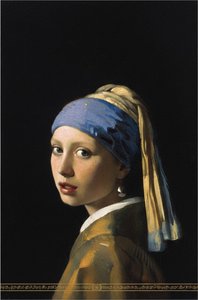
The Precision of a Dutch Academic
To look at the work of Gerard Hoet is to see the calculated intersection of myth and reality. He did not merely paint stories; he constructed them using a technical vocabulary inherited from a family of glass painters. This early exposure to the clarity of light through glass shaped his approach to the canvas, favoring a meticulousness that defined his decades-long career. His output was prolific, yet it never lacked the structural discipline required by the Dutch Italianate style.
His training was far from accidental. Under the guidance of his father, Moses Hoet, and Warnard van Rijsen—a student of Cornelis van Poelenburgh—Hoet absorbed the mechanics of the classical landscape. This lineage brought with it a specific way of handling light and shadow, often utilizing chiaroscuro to sculpt figures within lush, sun-dappled environments. He mastered the ability to ground mythological or biblical subjects in landscapes that felt physically present rather than purely imaginary.
A Career of Movement and Ambition
Hoet’s life was marked by a restless movement across the European artistic centers of the late seventeenth century. From his beginnings in Zaltbommel, he moved to The Hague in 1672, but his professional reach extended much further. His travels took him through Paris, where he spent over a year absorbing the French academic tradition, and into Brussels, where he worked for eight months. These shifts were not mere wanderings; they were strategic engagements with the most pressing artistic developments of his era.
His professional network was as expansive as his travels. He secured patronage from figures such as the Count of Salis and Frederick Nassau de Zuylestein, 1st Earl of Rochford. These connections allowed him to move between small-scale cabinet paintings and large-scale decorative commissions for aristocratic residences, including the castles of Slangenborg and Voorst. His ability to scale his technique from intimate religious scenes to massive wall decorations demonstrates a high level of technical versatility.
The Academic Legacy
Beyond the brush, Hoet contributed to the formalization of art education. In 1697, alongside Hendrik Schoock, he co-founded the Utrecht Drawing Academy. This was an institutional effort to standardize talent and advance the study of drawing within the region. He also codified his technical knowledge in print, publishing a book on the art of drawing in 1712 titled Ontslote deure der tekenkunst.
His influence extended into the very documentation of his contemporaries. His engravings provided essential visual data for Houbraken’s Schouburg, a biographical dictionary that remains a primary source for studying Dutch artists. Even in his later years, when he operated as an art dealer in The Hague, his presence in the art market was felt. He left behind a legacy defined by structural rigor, academic discipline, and a refusal to let the boundaries of myth remain unanchored from the physical world.
प्रश्न और उत्तर
Gerard Hoet की कलाकृतियाँ रंगों के आधार पर कहाँ व्यवस्थित हैं?
स्पेक्ट्रल इंडेक्स पेज Gerard Hoet की कलाकृतियों को रंगों के आधार पर व्यवस्थित करता है।
क्या मैं Gerard Hoet की कलाकृतियों को मूड (भाव) के अनुसार देख सकता हूँ?
Gerard Hoet की कलाकृतियों को उनके मूड के अनुसार कलाकार के मनोभाव कक्ष पेज पर देखा जा सकता है, जहाँ कलाकृतियों को उनके निर्धारित मूड के आधार पर व्यवस्थित किया गया है।
क्या Gerard Hoet की कलाकृतियों का कोई 3D वर्चुअल टूर उपलब्ध है?
Gerard Hoet का 3D संग्रहालय एक ऐसा पेज है जो कलाकार की कलाकृतियों को एक वर्चुअल थ्री-डायमेंशनल गैलरी में प्रदर्शित करता है।