


 Pregledaj u stvarnoj veličini
 Podijeli
 Podijeli
 Detalji
 Vodič
Vodič

 Preuzmi datoteku
 Slični predmeti
 Rentgenska snimka
 Slide show
 Statistika
Crucifix
 Tempera On Panel
- WallArt
- Italian Renaissance
 1268
1268- Late Medieval
 336.0 x 267.0 cm
 San Domenico
 Pročitajte više
Giclée / Umjetnički otisak
Giclée tisak muzejske kvalitete ili otisak na platnu uz brzu proizvodnju i fleksibilne opcije završne obrade. ( Naručite ručno oslikano reprodukciju Prebacite na digitalnu prodaju slika)




P118B €10

P118H €10

P118W €10

P438Z €10

P508JH €12

P508YH €12

P805H €10

P805Z €10

P919BZ €10

P919G €10

P919XJ €10

P959ZH €10

P968JZ €12

W106C €8

W218G €10

W218JH €8

W218Y €10

W307PJ €10

W316G €10

W316PJ €8

W316Y €10

W398PJ €8

W4111J €10

W500HY €15

W500JH €15

W692G €12

W849H €8

W940BG €15

W953PJ €8




Odaberite jednu od naših unaprijed definiranih veličina koje odgovaraju izvornim proporcijama umjetničkog djela.

Unesite širinu i visinu koja vam je potrebna, kako bi odgovarali vašem okviru ili zidu. Print se može samo izrezati, nikada ne može biti veći od slike, stoga veličina s drugačijim oblikom gubi dio slike. Šaljemo vam digitalni prikaz (mockup) na odobrenje prije bilo kakve štampe. Slika prikazana na ovoj stranici ne prikazuje stvarni rez — to čini samo digitalni prikaz.
Dostava širom svijeta () u roku od 2 tjedna umjesto standardnih 4/5 tjedana. (26 Listopad)

Besplatna ekspresna dostava širom svijeta

Visokokvalitetno laneno platno

Potpuno osiguranje transporta

Jamstvo povrata carine i uvoznih poreza

Jamstvo vjernosti boja

Politika povrata u roku od 100 dana (samo u slučaju nedostataka)

Jamstvo povrata 100% novca

Popust na više proizvoda
 Opcija stakla dostupna je samo za dimenzije manje od 110 cm

Crucifix
Giclée / Umjetnički otisak
Veličina reprodukcije
-


Ukupna cijena
€ 56
A Bridge Between Byzantium and Renaissance Brilliance
In the heart of Italian art history, Giovanni Cimabue stands as a monumental figure, a master who skillfully navigated the artistic currents flowing from the rigid grandeur of the Byzantine Empire toward the burgeoning innovations of the early Renaissance. His Crucifix is not merely a religious icon; it is a profound testament to a period of transformative change. Painted with an unwavering determination that earned him the nickname “bull-ed,” Cimabue dared to subtly challenge established conventions, laying the essential groundwork for the humanistic ideals that would later be championed by masters like Giotto. This work embodies a deliberate shift in sensibility, moving away from the stylized, flattened iconography of the past toward a more naturalistic and emotionally resonant representation of the divine.
The composition is dominated by the central figure of Christ, whose presence is both physically imposing and deeply moving. Through a masterful blend of Byzantine influence and emerging realism, Cimabue employs tempera paint on wood to achieve a remarkable luminosity. The technique involves the careful layering of translucent glazes, a hallmark of the Byzantine tradition, which allows light to dance across the surface, lending a celestial quality to the scene. While the gilding and the monumental scale of the cross link the piece to sacred tradition, the expressive musculature and the fluid drapery of the figures suggest a newfound commitment to anatomical fidelity and volume.
Symbolism and the Emotional Landscape
Beyond its technical brilliance, the Crucifix serves as a powerful vessel for spiritual narrative. Flanked by the poignant figures of Mary and John, the painting captures the profound sorrow of the crucifixion with an unprecedented sense of pathos. The artist’s attention to detail is particularly striking in the intricate designs adorning the central beam of the cross; these patterns reflect Byzantine decorative motifs but are executed with a dynamic textural richness that signals the dawn of Renaissance principles. Above the scene, a starry sky serves as a backdrop, evoking biblical narratives of divine providence and enveloping the tragedy in a sense of cosmic significance.
For the discerning collector or interior designer, a museum-quality reproduction of this masterpiece offers more than just decoration; it provides an opportunity to invite a piece of history into a contemporary space. The work’s ability to evoke both awe and introspection makes it a captivating focal point for any curated collection. It remains an enduring symbol of faith and artistic courage, capturing a pivotal moment when art began to reflect the depth of human emotion and the beauty of the natural world. To possess such a piece is to hold a window into the very moment Western art began its journey toward the light of the Renaissance.
Pitanja i odgovori
Od čega je izrađeno "Crucifix" i u kojem je stilu?
"Crucifix" autora Cimabue spaja tehniku Tempera On Panel sa stilom Italian Renaissance. Tehnika i pokret opisuju način izrade i stil djela.
Odakle dolaze posjetitelji djela "Crucifix" autora Cimabue?
Statistike o djelu "Crucifix" autora Cimabue možete pronaći na stranici Statistika tog umjetničkog djela: mjesečni posjeti umjetničkom djelu, posjete umjetnikovim radovima te pregled nedavnih posjetitelja prema državi i jeziku.
Za koju je prostoriju preporučeno djelo "Crucifix" autora Cimabue?
Preporučeni prostor za "Crucifix" autora Cimabue je Living Room. Ovaj prijedlog se, naravno, može prilagoditi vašem interijeru.
Srodna umjetnička djela


Biografija umjetnika
Giovanni Cimabue (c. 1240–1302): Pioneer of Italian Painting
Cimabue, or Cenni di Pepo (circa 1240 – after 1302), stands as a monumental figure—a bridge between the established artistic traditions of the Byzantine world and the burgeoning innovations that would define the Italian Renaissance. His life, though partially obscured by time and romanticized accounts – most notably those penned by Giorgio Vasari centuries later – marks an undeniable turning point in Western art history. Cimabue wasn’t simply a painter; he was a courageous innovator who dared to subtly challenge artistic conventions, laying the groundwork for the revolutionary changes that would soon sweep across Italy. Even his nickname, believed to mean “bull-headed,” hints at a strong will and perhaps a rebellious spirit—qualities demonstrably present in his willingness to experiment with form and expression. He represents a crucial moment where art began to shift from being solely devotional imagery towards something more humanistic and emotionally resonant.Early Influences and Artistic Development
Initially immersed in the Italo-Byzantine style prevalent throughout Florence, Cimabue’s early work adhered closely to established aesthetic principles: flattened figures adorned with shimmering gold leaf, symbolic rather than realistic depictions of space, and a profound focus on religious iconography. However, even within these constraints, a nascent desire for naturalism began to emerge. He wasn't content merely replicating existing forms; he sought to imbue his paintings with a greater sense of life and emotional depth. While the precise nature of his early training remains debated, it’s likely he honed his skills within Florentine workshops, absorbing the techniques and influences of the time while simultaneously developing his own unique artistic voice. The Byzantine style, characterized by its formality and spiritual focus, provided him with a solid foundation, but Cimabue began to subtly introduce elements that would foreshadow the coming Renaissance—a greater attention to volume, more expressive facial features, and a nascent understanding of spatial relationships. This wasn’t a sudden break from tradition, but rather a gradual evolution, a delicate balancing act between honoring the past and embracing new possibilities.The Maestro's Vision: Giotto and Beyond
Vasari famously recounted the tale of Cimabue playfully painting a fly on Giotto’s face—a gesture that encapsulates the dynamic between master and pupil and underscores Cimabue’s profound influence on his successor. Giotto, recognizing Cimabue’s genius as a teacher, elevated him to the forefront of Florentine art history. Cimabue's legacy extends far beyond Giotto’s achievements; he fostered an artistic spirit that permeated numerous other artists of the period. He challenged the artistic norms of his time, demonstrating that art could be more than just religious symbolism; it could also reflect human emotion and experience. His willingness to experiment with form, proportion, and expression paved the way for the innovations of the Renaissance, establishing him as a crucial transitional figure in the history of Western painting. Cimabue’s artistic vision—characterized by its subtle yet decisive departure from Byzantine conventions—became the cornerstone upon which Giotto built his groundbreaking style.Notable Artworks: A Reflection of Innovation
Cimabue's oeuvre is marked by masterpieces that exemplify his evolving stylistic sensibilities and underscore his pioneering role in shaping Italian art history. The *Maestà*, commissioned for the Church of San Francesco in Pisa, stands as one of his most celebrated achievements—a monumental altarpiece that embodies Cimabue’s mastery of composition and color while simultaneously hinting at a move away from rigid Byzantine formalism. The figures, though retaining a degree of Byzantine influence, exhibit newfound volume and presence—a testament to Cimabue's gradual embrace of naturalistic principles. Similarly, the *Crucifixion*, executed around 1270 for San Domenico in Arezzo, represents an early demonstration of Cimabue’s departure from strict Byzantine conventions. The depiction of Christ’s body is rendered with shading on the legs, torso, arms, and underarms—creating a palpable sense of flesh-like plasticity and conveying to the viewer the agony of his crucifixion. Furthermore, Cimabue's contribution to the decoration of the Baptistery of Florence—specifically the apse mosaic depicting Saint John the Evangelist—demonstrates his exceptional skill as a mosaicist and underscores his role in establishing Florentine art as a beacon of innovation.A Legacy Enduring Through Time
Cimabue passed away after 1302, leaving behind a body of work that continues to captivate and inspire scholars and artists alike. Despite the scarcity of biographical details surrounding his later life—a regrettable consequence of historical records—his artistic legacy resonates powerfully through the works of his students and the subsequent evolution of Italian art. Cimabue’s paintings are not merely relics of a bygone era; they are windows into a pivotal moment in artistic history—a time when artists began to question established norms and explore new horizons. He was a pioneer, a visionary who dared to challenge the status quo and lay the foundations for the artistic brilliance that would define the Renaissance. Cimabue’s enduring significance lies not only in his groundbreaking innovations but also in his unwavering commitment to artistic excellence—a testament to his genius as a painter and mosaicist and a cornerstone of Florentine art history.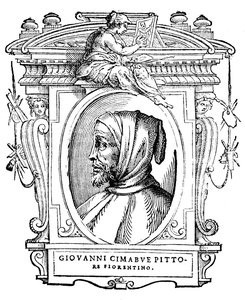
Cimabue
1240 - 1302 , Italija
Brzi pregled
- Artistic Movement Or Style: Byzantine & Renaissance
- Artists Who Influenced This Artist:
- Nicolo Pisano
- Giunta Pisano
- Date Of Birth: c. 1240
- Date Of Death: 1302
- Full Name: Giovanni Cimabue
- Nationality: Italian
- Notable Artworks:
- Maestà
- Crucifixion
- Flagellation of Christ
- Place Of Birth: Florence, Italy
Povezani članci

Transform Your Walls: Top Trending Mural Styles from Botanical Jungles to Gold Leaf Geometry
Elevate your hospitality projects with our expert trend forecast on luxury mural styles. From biophilic botanical jungles to sophisticated gold leaf geometry, discover how bespoke architectural art transforms hotel interiors into immersive, high-end experiences.

Tempera on Panel: A Procurement Guide to Durable, High-Quality Art for Large-Scale Hospitality Projects
A professional procurement guide for hotel designers on the durability and prestige of tempera on panel. Discover how these high-quality, large-scale artworks offer unmatched longevity and architectural impact for premium hospitality projects and commercial interiors.


