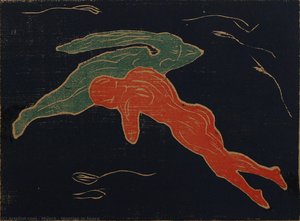
1903. Acrylic On Canvas.

§ 1Katalogski podaci


§ 2Apstraktno
 Prikaži više
Biografija umjetnika
Otkrijte Edvarda Muncha (1863-1944), norveškog slikara i pionirom ekspresionizma! Istražite 'Krik' i djela koja istražuju anksioznost, smrt, ljubav i psihološke teme. Ključna figura moderne umjetnosti.
§ 3Komentar
The Painting
Eken, a painting by Edvard Munch, is a striking representation of a tree with branches that extend outwards in various directions. The tree appears to be barren, with no leaves on its branches. The tree's trunk is large and prominent, taking up a significant portion of the image.Symbolism and Composition
In addition to the main tree, there are several smaller trees visible in the background, adding depth and dimension to the scene. A bird can also be seen perched atop one of the branches, further enhancing the natural atmosphere of the painting. The overall composition is striking and captivating, with a sense of tranquility and serenity emanating from the image.Artistic Style
The painting is classified under the Symbolism style, which was popular during the late 19th and early 20th centuries. Symbolist artists often used natural elements to convey deeper meanings and emotions. In this case, the barren tree may symbolize a sense of desolation or isolation.Artist's Background
Edvard Munch was a Norwegian artist known for his bold and expressive works. He is famous for his iconic painting The Scream, which is widely regarded as an icon of existential angst. Munch's work often explored themes of anxiety, death, and the human condition.Relevance to Art Movements
The Catholic Art Movement, also known as the Sacred Art Movement, was an art movement that emerged in the late 19th and early 20th centuries. It aimed to revive the tradition of religious art in the Catholic Church, which had been in decline since the Protestant Reformation. While Munch's work does not directly align with this movement, his use of symbolism reflects a broader interest in exploring deeper meanings through art.Conclusion
Eken by Edvard Munch is a powerful and thought-provoking painting that invites the viewer to contemplate the symbolism and emotions it evokes. For those interested in Symbolism and the works of Edvard Munch, this painting offers a unique insight into his artistic vision.Pitanja i odgovori
Kako se "Eken" uklapa u teme i stil umjetnika Edvard Munch?
U cjelokupnom stvaralaštvu umjetnika Edvard Munch, djelo "Eken" pripada stilu Symbolism, uz teme koje prožimaju expressionist roots, existential angst, mortality concerns, psychological depth, symbolic representation, iconic munch piece, exploring inner turmoil.
Koji su datum nastanka i stil djela "Eken" autora Edvard Munch?
"Eken" nastalo je 1903. godine kao djelo Symbolism pokreta. Datum i umjetnički pravac čine temelj ovog djela u povijesti umjetnosti.
Postoji li informativna stranica o "Eken" autora Edvard Munch za studente?
Stranica Vodič za učenike za djelo "Eken" autora Edvard Munch nudi ispisivenu informativnu letak u dvije stranice: prikaz umjetničkog djela s tablicom identiteta, vremensku traku koja ga smješta u životni vijek umjetnika, druga djela istog autora, izmjerenu paletu boja te citate spremne za kopiranje u četiri stila.


 Prebacite na printove


 Za umjetnička djela ili reprodukcije veće od 105 cm (približno 41 inč) na bilo kojoj strani, okvir će biti isporučen u obliku rastavljenog seta za montažu. Ovaj način osigurava sigurnu dostavu i sprječava oštećenja tijekom transporta.