1893. Oil On Canvas, 109.0 x 121.0 cm.

§ 1Catalogue data
 Oil On Canvas
- WallArt
- Expressionism
 1893
1893- 19th Century
 109.0 x 121.0 cm
§ 2Abstract
Opis kolekcionarskog predmeta
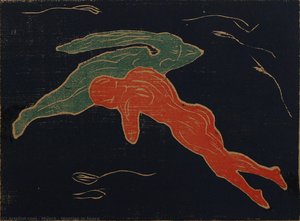
A swirling celestial expanse of vibrant blues and yellows captures the profound psychological turmoil in Edvard Munch's 1893 Expressionist masterpiece Starry Night, inviting you to explore this hauntingly beautiful vision.
 Prikaži više
Biografija umjetnika
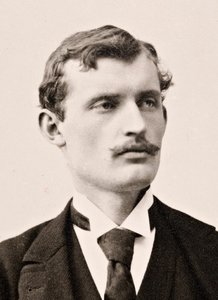
Otkrijte Edvarda Muncha (1863-1944), norveškog slikara i pionirom ekspresionizma! Istražite 'Krik' i djela koja istražuju anksioznost, smrt, ljubav i psihološke teme. Ključna figura moderne umjetnosti.
§ 3Commentary
A Window Into Inner Turmoil: Edvard Munch’s Starry Night
Edvard Munch’s “Starry Night,” completed in 1893, transcends mere depiction; it embodies the very essence of Expressionism and stands as a haunting testament to the artist's profound engagement with psychological landscapes. Painted during his stay at Saint Elisabeth Hospital in Oslo—a period marked by personal struggles and fueled by anxieties surrounding his sister’s illness—the canvas pulsates with an energy that captures not just the visual splendor of the Provençal night sky but also the turbulent currents of Munch’s inner world.
- Subject Matter: The painting portrays a panoramic view from Munch's bedroom window overlooking Saint Elisabeth Hospital, dominated by a swirling celestial expanse punctuated by luminous stars and a crescent moon. Below, a stylized cypress tree rises dramatically against the horizon, anchoring the composition while simultaneously symbolizing death and mourning – motifs recurrent throughout Munch’s oeuvre.
- Style & Technique: Munch employed thick impasto brushstrokes—a hallmark of Expressionism—to imbue the canvas with palpable texture and movement. The vibrant blues and yellows dominate the palette, creating a dramatic contrast that amplifies the emotional intensity of the scene. Linear contours are deliberately distorted, conveying unease and instability rather than striving for photographic realism.
Historical Context: Impressionism’s Legacy & The Birth of Expressionism
“Starry Night” emerged from a pivotal moment in art history—the waning years of Impressionism and the burgeoning arrival of Expressionism. While Impressionists sought to capture fleeting moments of sensory experience, Munch deliberately rejected this approach, prioritizing emotional truth over objective observation. Influenced by Symbolist ideas – particularly Nietzsche’s philosophy – Munch aimed to express inner feelings and psychological states directly, bypassing rational thought.
- Impressionism's Influence: Munch acknowledged the impact of Impressionistic techniques on his own work, notably in the use of color and light. However, he decisively distanced himself from Impressionist concerns about capturing external reality, opting instead for an inward gaze.
- Symbolic Resonance: The cypress tree’s upward thrust represents aspiration towards transcendence but also foreshadows mortality—a central preoccupation in Munch's artistic vision. Similarly, the swirling sky embodies anxiety and emotional upheaval, mirroring the artist’s own psychological state during its creation.
Emotional Impact & Artistic Significance
"Starry Night" continues to resonate powerfully with viewers today due to its ability to evoke profound feelings of melancholy, fear, and wonder. Munch's masterful manipulation of color and brushstroke creates a visceral experience that transcends mere visual representation. It’s more than just a depiction of a landscape; it’s an exploration of the human condition—a confrontation with existential anxieties and a yearning for beauty amidst darkness.
- Psychological Depth: Munch's intention was to convey not what he *saw*, but what he *felt*. The painting serves as a conduit for expressing inner turmoil, capturing the artist’s preoccupation with themes of illness, loss, and spiritual yearning.
- Enduring Legacy: “Starry Night” solidified Munch’s position as one of the most influential artists of the late 19th century and remains an iconic image of Expressionism. Its enduring appeal lies in its uncompromising honesty—a willingness to confront uncomfortable truths about human experience and to transform them into breathtaking artistic beauty.
Pitanja i odgovori
O kakvom se umjetničkom djelu radi kod "Starry Night"?
"Starry Night" je WallArt djelo.
Koja su tehnika i datum nastanka djela "Starry Night" autora Edvard Munch?
Tehnika djela "Starry Night" autora Edvard Munch je Oil On Canvas, a rad je datiran u 1893.
Je li dostupna datoteka za preuzimanje za "Starry Night"?
"Starry Night" autora Edvard Munch možete preuzeti na stranici Preuzimanje digitalne slike za ovo umjetničko djelo, kao preuzimanje digitalne slike visoke rezolucije.


 Prebacite na printove


 Za umjetnička djela ili reprodukcije veće od 105 cm (približno 41 inč) na bilo kojoj strani, okvir će biti isporučen u obliku rastavljenog seta za montažu. Ovaj način osigurava sigurnu dostavu i sprječava oštećenja tijekom transporta.