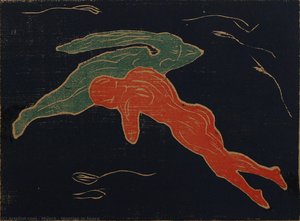
1903. Ulje na platnu, 82.0 x 81.0 cm.

§ 1Katalogski podaci

- 82.0 x 81.0 cm


§ 2Apstraktno
Opis kolekcionarskog predmeta
Doživite mir uz Šumu Edvarda Muncha. Ovo ekspresionističko remek-djelo iz 1903. godine slika bit prirode. Posjedujte povijest umjetnosti!
 Prikaži više
Biografija umjetnika
Otkrijte Edvarda Muncha (1863-1944), norveškog slikara i pionirom ekspresionizma! Istražite 'Krik' i djela koja istražuju anksioznost, smrt, ljubav i psihološke teme. Ključna figura moderne umjetnosti.
§ 3Komentar
Edvard Munch's "Forest": A Study in Tranquility and Expressionism
Edvard Munch, a renowned Norwegian artist celebrated for his pivotal role in the Expressionist movement, created “Forest” in 1903. This evocative work transcends a simple depiction of nature; it’s an exploration of human connection to the environment, rendered with a profound sense of tranquility and emotional depth characteristic of Munch's artistic vision.
Composition and Artistic Technique
“Forest,” measuring 82 x 81 cm, is executed in oil on canvas. The composition centers around three prominent trees in the foreground, their lush green leaves conveying a feeling of vitality and health. These are contrasted by the presence of pine trees receding into the background, creating depth and perspective within the scene. Above, a blue sky dotted with clouds enhances the atmospheric quality of the forest. A solitary figure stands near the painting's center, seemingly observing or appreciating the natural beauty surrounding them. This inclusion subtly introduces a human element, emphasizing the interplay between humanity and nature.
Munch’s technique in “Forest” is notable for its expressive use of color and brushwork. While rooted in observation, the colors are heightened and intensified to convey emotional resonance rather than strict realism – a hallmark of Expressionism. The application of paint isn't smooth or blended; instead, visible brushstrokes contribute to the painting’s dynamic energy and sense of immediacy.
Expressionist Influences and Symbolism
“Forest” exemplifies Munch’s commitment to Expressionism, an artistic movement that prioritized subjective emotional experience over objective representation. The vibrant colors and emotive depiction of nature are central to this style. Unlike Impressionists who sought to capture fleeting moments of light, Munch aimed to portray the inner world of feeling. The forest itself can be interpreted symbolically – representing a sanctuary, a place of introspection, or even a reflection of the artist’s own psychological state.
Munch's other works, such as Four girls in Arsgardstrand and The Ladies on the Bridge, further demonstrate his mastery of conveying emotional depth through color and expressive brushwork, solidifying his place as a leading figure in Expressionism.
Historical Context and Legacy
Created during a period of significant artistic innovation, “Forest” reflects the broader cultural shifts occurring at the turn of the 20th century. The rise of industrialization and urbanization led to a growing sense of alienation and anxiety, which found expression in art movements like Expressionism. Munch’s work resonated with this mood, offering a powerful visual language for exploring complex emotions.
While “Forest” may not be permanently housed within the Österreichische Galerie Belvedere in Vienna, it aligns with the gallery's focus on modern Austrian art and the broader trends of the Expressionist movement. For further exploration of Edvard Munch’s life and artistic contributions, resources such as Hanns Skolle and the comprehensive history of painting at History of Painting provide valuable insights.
Emotional Impact and Enduring Appeal
“Forest” invites viewers to contemplate their own relationship with nature and find solace in its serenity. The painting’s ability to evoke a sense of calm and harmony, coupled with its striking visual style, ensures its enduring appeal as a significant contribution to the world of Expressionism. It serves not only as a beautiful work of art but also as a poignant reflection on the human condition and our connection to the natural world.
Pitanja i odgovori
Odgovara li datum 1903. godine za "Šuma" kojoj fazi karijere Edvard Munch pripada?
S obzirom na datum nastanka iz 1903., djelo "Šuma" pripada Zrelo razdoblje periodu umjetnika Edvard Munch.
Koje su dimenzije izvornog djela "Šuma" autora Edvard Munch?
Dimenzije djela "Šuma" autora Edvard Munch iznose 82 x 81 cm. Reprodukcije se mogu naručiti u drugim dimenzijama uz zadržavanje istih proporcija.
Gdje mogu kupiti digitalnu sliku djela "Šuma" autora Edvard Munch?
Digitalnu sliku djela "Šuma" autora Edvard Munch možete kupiti na njegovoj stranici za Digitalna umjetnina: preuzimanje digitalne slike visoke rezolucije.


 Prebacite na printove


 Za umjetnička djela ili reprodukcije veće od 105 cm (približno 41 inč) na bilo kojoj strani, okvir će biti isporučen u obliku rastavljenog seta za montažu. Ovaj način osigurava sigurnu dostavu i sprječava oštećenja tijekom transporta.