Bergwald
Acrylic On Canvas.
§ 1Catalogue data
§ 2Abstract
Opis kolekcionarskog predmeta
Biografija umjetnika
Ernst Ludwig Kirchner (1880-1938): Osnivač Die Brücke i ključni ekspresionista! Otkrijte njegove izražajne slike urbanog života, nagih figura i krajolika – snažan glas ranog 20. stoljeća.
§ 3Commentary
A Vision of Turbulent Beauty – Ernst Ludwig Kirchner’s Bergwald
Ernst Ludwig Kirchner’s “Bergwald,” or Mountain Forest, stands as a cornerstone of German Expressionism, encapsulating the movement's core tenets: subjective emotion rendered through distorted form and vibrant color. Painted in 1913, before the looming shadow of World War I cast its pall over Europe, this monumental canvas isn’t merely a depiction of a forest; it’s an embodiment of anxiety, isolation, and a primal confrontation with nature's overwhelming force.
- Composition & Perspective: The artwork employs a vertical format prioritizing upward movement—a deliberate tactic mirroring the towering pines dominating the scene. A winding path draws the viewer inward, creating a sense of claustrophobia despite the expansive vista. Kirchner abandons traditional perspective, flattening space and emphasizing visual dynamism over realistic representation.
- Color Palette & Brushwork: Dominated by shades of emerald green punctuated with violet, azure, ochre, and white—colors far removed from naturalistic hues—the palette serves to amplify emotional intensity. Kirchner’s loose brushstrokes, particularly impasto in certain areas, contribute to a palpable textural quality, conveying the urgency and immediacy of his artistic impulse.
- Formal Elements: Bold angular lines define the trees and foliage, reflecting the Expressionist preoccupation with dynamism and unease. Simplified geometric shapes—triangles and rectangles—are utilized to construct the composition, emphasizing abstraction over detailed observation.
Historical Context & Artistic Influences
Kirchner’s “Bergwald” emerged during a period of profound intellectual ferment in Germany. The Expressionist movement reacted against the prevailing academic conventions of its time, rejecting idealized beauty for raw emotion and psychological truth. Kirchner drew inspiration from artists like Albrecht Dürer, whose meticulous detail contrasted sharply with the expressive distortions characteristic of Expressionism. However, he also absorbed influences from Cubism and Futurism, experimenting with fragmented forms and dynamic spatial relationships.
Symbolic Resonance & Emotional Impact
The dense foliage and winding path symbolize not only the physical landscape but also the psychological journey undertaken by the viewer—a confrontation with the unknown and a surrender to the forces of nature. Kirchner’s deliberate use of unsettling colors and distorted perspective aims to evoke feelings of anxiety and disorientation, mirroring the anxieties prevalent in German society at the time. The painting compels us to contemplate our relationship with the natural world and to acknowledge its capacity for both awe and terror.
Technique & Material Considerations
Kirchner executed “Bergwald” on canvas using oil paints—a medium favored by Expressionists for its ability to achieve rich color saturation and textural depth. His technique involved layering colors rapidly, prioritizing feeling over precise accuracy. This impulsive approach resulted in a surface marked by visible brushstrokes that capture the artist’s energetic engagement with his subject matter.
Pitanja i odgovori
Tko prodaje ručno oslikane kopije djela "Bergwald" autora Ernst Ludwig Kirchner?
Ručno oslikane kopije djela "Bergwald" autora Ernst Ludwig Kirchner dostupne su na stranici ovaj web-mjesto: ručno oslikana uljana reprodukcija na lanenom platnu, a mogu se naručiti putem njihove stranice Ručno oslikana reprodukcija.
Što prikazuje "Bergwald" autora Ernst Ludwig Kirchner i kakvu atmosferu odiše?
"Bergwald" autora Ernst Ludwig Kirchner spaja forest landscape, mountain peaks, bold colors, expressionism, texture, diagonal lines, psychological depth s Dramatic atmosferom.
Za koji prostor preporučujemo "Bergwald" autora Ernst Ludwig Kirchner?
"Bergwald" autora Ernst Ludwig Kirchner preporučuje se za Living Room. Ovaj prijedlog temelji se na temi, bojama i atmosferi djela.
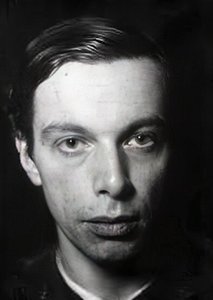
§ 4The artist
Ernst Ludwig Kirchner
1880 - 1938, Njemačka
Osnovne informacije
- Artistic Movement Or Style: Ekspresionizam
- Artists Or Movements Influenced By This Artist: ['Die Brücke']
- Artists Who Influenced This Artist:
- Albrecht Dürer
- Vincent van Gogh
- Edvard Munch
- Date Of Birth: 6 svibnja 1880.
- Date Of Death: 15 lipnja 1938.
- Full Name: Ernst Ludwig Kirchner
- Nationality: Njemački
- Notable Artworks:
- The Street (1908)
- Leaping Dancer (1912)
- Self-Portrait (1910)
- Place Of Birth: Aschaffenburg, Njemačka
Biografija umjetnika
Ernst Ludwig Kirchner (1880-1938): A Life Forged in Expression
Ernst Ludwig Kirchner, a name synonymous with the raw emotional power of German Expressionism, was born into a world poised on the brink of dramatic change. His arrival in Aschaffenburg, Bavaria, in 1880, marked the beginning of a life deeply intertwined with artistic innovation and personal turmoil. The shifting landscapes of his childhood – dictated by his father’s profession – instilled within him a sense of displacement that would later become central to his oeuvre. From Frankfurt to Perlen, and finally settling in Chemnitz, young Kirchner absorbed the burgeoning anxieties of a rapidly modernizing Germany. Though initially steered towards architecture at the Königliche Technische Hochschule in Dresden, it was the profound pull of painting – fueled by an admiration for masters like Albrecht Dürer and a growing dissatisfaction with academic convention – that ultimately defined his artistic trajectory. He found kinship with fellow rebels – Fritz Bleyl, Karl Schmidt-Rottluff, and Erich Heckel – forging bonds that would irrevocably alter the course of 20th-century art.Early Life and Artistic Beginnings
Kirchner’s formative years were shaped by a family rooted in Prussian tradition but experiencing considerable mobility due to his father's occupation as a paper scientist. This itinerant upbringing instilled within him an acute awareness of change and instability, themes that would permeate his artistic vision throughout his life. He demonstrated exceptional talent from a young age, meticulously observing the world around him – the bustling train station opposite his childhood home in Frankfurt, the architectural details of Dresden’s cityscape – capturing these impressions with unwavering precision on paper. His early artistic explorations were influenced by the stylistic sensibilities of Dürer and Munch, artists who championed expressive technique alongside intellectual rigor. He embraced the challenge posed by academic painting's idealized representations of beauty, rejecting them in favor of distortion and jarring color palettes that conveyed the psychological complexities of modern experience. This rebellious spirit would characterize his entire artistic career.Die Brücke: A Collective Pursuit of Expression
In 1905, Kirchner joined forces with Fritz Bleyl, Karl Schmidt-Rottluff, and Erich Heckel to establish *Die Brücke* (“The Bridge”), an artistic collective dedicated to forging a new path for German art. This wasn’t merely a stylistic decision; it represented a fundamental philosophical stance—a rejection of bourgeois complacency and a fervent desire to reconnect with primal energies. The group drew inspiration from sources often overlooked by the mainstream art world – primitive art from Africa and Oceania, the bold chromatic explorations of Vincent van Gogh, and Edvard Munch's haunting depictions of psychological torment. They deliberately eschewed academic conventions, prioritizing expressive brushwork and distorted forms to convey the anxieties and alienation inherent in the burgeoning industrial age. Kirchner’s early paintings epitomized this collective ethos, pulsating with a restless energy that reflected their shared conviction: art must confront uncomfortable truths and capture the essence of human experience. The studio became a crucible for experimentation, where social norms were questioned alongside artistic innovations—a space mirroring the broader cultural upheavals of the era.Style and Technique: Embracing Distortion and Color
Kirchner’s distinctive artistic style is immediately recognizable for its uncompromising commitment to emotional expression. He rejected the illusionistic techniques favored by Impressionism, prioritizing instead a subjective rendering of reality—one informed by psychological insight rather than optical observation. His brushstrokes were bold and visible, conveying movement and dynamism while simultaneously capturing the texture of surfaces. Recurring motifs included figures rendered in distorted poses, often depicted in urban landscapes or solitary interiors—images that conveyed feelings of isolation and unease. Kirchner’s masterful use of color was equally transformative. He eschewed naturalistic hues, opting instead for vibrant shades that heightened emotional intensity and created a palpable sense of atmosphere. Influenced profoundly by Henri Matisse and Edvard Munch, he embraced Fauvist principles—applying flat areas of unbroken color to create striking visual impact. The deliberate inclusion of white spaces within his compositions served as a counterpoint to the dense chromatic layering, emphasizing textural contrasts and contributing to the overall feeling of immediacy.Legacy and Recognition
Kirchner’s artistic output was tragically curtailed by World War I, during which he volunteered for military service but suffered a debilitating mental breakdown—a formative experience that profoundly shaped his worldview. Following the war, he retreated to Davos, Switzerland, seeking solace from illness and pursuing a contemplative lifestyle rooted in the Lebensreform movement. Despite facing persecution under Nazi rule—over 600 of his works were confiscated and deemed “degenerate”—Kirchner remained steadfast in his artistic convictions. His unwavering dedication to truthfulness and emotional resonance cemented his place as one of the most influential figures of German Expressionism, inspiring generations of artists who followed him. Today, Ernst Ludwig Kirchner’s paintings continue to captivate audiences worldwide—serving as enduring symbols of artistic rebellion and a testament to the transformative power of confronting existential anxieties. His legacy resides not only in his groundbreaking stylistic innovations but also in his courageous assertion of human dignity amidst societal pressures—a message that resonates powerfully across time.§ 5Comparanda
Srodna umjetnička djela
§ 6Questions
§ 7Further reading
Cite this entry
AllPaintingsStore.com, “Ernst Ludwig Kirchner, Bergwald”, https://allpaintingsstore.com/hr/art/ernst-ludwig-kirchner-bergwald-8LHTKJ-en/ArtistReproduction/ (accessed 1 Listopad 2026).
§ 8The reproduction
Ručno rađena uljana reprodukcija
Ručno oslikano uljanim bojama na platnu u dimenzijama i okviru po vašem izboru, izrađeno po narudžbi od strane naših umjetnika. ( Prebacite na printove
Prebacite na digitalnu sliku)
It is specified on the order sheet in the margin; the present state of that sheet reads as follows.
Bergwald
Tehnika reprodukcije
Veličina reprodukcije
-
Odabrani vrhunski umjetnik
Više detalja, profinjenosti i dodatnog vremena za izradu
-
Okvir za reprodukciju
-
-
Za umjetnička djela ili reprodukcije veće od 105 cm (približno 41 inč) na bilo kojoj strani, okvir će biti isporučen u obliku rastavljenog seta za montažu. Ovaj način osigurava sigurnu dostavu i sprječava oštećenja tijekom transporta.
Potrebna je profesionalna montaža – ovo nije proizvod za samostalnu izradu.
Set mora sastaviti i platno zategnuti iskusni profesionalni uokvirivač, koristeći drvno ljepilo (nije uključeno u set), kljeste za zatezanje platna i stege kako bi se održao pravilan kut letvica dok se ljepilo suši. Nepravilna montaža ili neravnomjerno zategnuto platno mogu trajno oštetiti umjetničko djelo, a takva oštećenja nisu pokrivena našim jamstvom.
Sve letvice od punog drveta su uključene, precizno izrezane po mjeri.
Montira se pomoću priloženih vijaka, uz dodatak ljepila za drvo za spojeve u kutovima, koje nije uključeno u set i koje vaš okviraš mora vlastito nabaviti.
Potrebni su profesionalni alati koji nisu uključeni: škripc za zatezanje platna (zatezač) i stezaljke za održavanje pravokonačnosti letvica tijekom sušenja ljepila.
Važno:
Za spojeve u kutovima potrebno je ljepilo za drvo, letvice se moraju pričvrstiti stezgama dok se ljepilo potpuno ne osuši, a za zatezanje platna na sastavljenom okviru potreban je alat za zatezanje platna. Nijedan od ovih alata nije uključen u set. Molimo vas da prije narudžbe ove veličine osigurate uslugu iskusnog profesionalnog uokvirivača.
Natpisna pločica
-
-
Zaštitni lak
Sjajni lak (pojačava intenzitet boja, štiti od svjetlosti i vlage)
-
Prilagodite svoje umjetničko djelo
Primjeri mogućnosti prilagodbe: Zamijenite lice fotografijom kupca; Dodajte ljubimca (npr. zamijenite mačku psom); Uključite skrivenu poruku u pozadinu; Promijenite pejzaž ili elemente pozadine.
-
Hitna dostava
Globalna dostava () u roku od 3-4 tjedna umjesto standardnih 5 tjedana. (29 Listopad). Bez kompromisa u kvaliteti.
-
Brza dostava
Dostava širom svijeta () u roku od 5 tjedana. (5 Studeni).
Uključeno u cijenu
Ukupna cijena
€ 227
Included with every order
- Besplatna ekspresna dostava širom svijeta
- Visokokvalitetno laneno platno
- Potpuno osiguranje dostave
- Jamstvo povrata carine i uvoznih poreza
- Jamstvo vjernosti boja
- Politika povrata u roku od 100 dana (samo u slučaju nedostataka)
- Jamstvo povrata 100% novca
- Popust na više proizvoda


Za umjetnička djela ili reprodukcije veće od 105 cm (približno 41 inč) na bilo kojoj strani, okvir će biti isporučen u obliku rastavljenog seta za montažu. Ovaj način osigurava sigurnu dostavu i sprječava oštećenja tijekom transporta.


