


 Pregledaj u realnoj veličini
 Pošalji
 Podijeli
 Detalji o umjetničkom djelu
 Vodič
Vodič

 Preuzmi umjetničko djelo
 Slični predmeti
 Rentgenska snimka
 Slide show
 Q&A
Q&A Statistika
Mrs Siddons

- 75.0 x 65.0 cm


 Prikaži više
Giclée / Umjetnički otisak
Giclée tisak muzejske kvalitete ili otisak na platnu uz brzu izradu i raznolike opcije završne obrade. ( Kupi ručno oslikano djelo Prebacite na digitalnu sliku)




P118B €10

P118H €10

P118W €10

P438Z €10

P508JH €12

P508YH €12

P805H €10

P805Z €10

P919BZ €10

P919G €10

P919XJ €10

P959ZH €10

P968JZ €12

W106C €8

W218G €10

W218JH €8

W218Y €10

W307PJ €10

W316G €10

W316PJ €8

W316Y €10

W398PJ €8

W4111J €10

W500HY €15

W500JH €15

W692G €12

W849H €8

W940BG €15

W953PJ €8




Odaberite jednu od naših unaprijed definiranih veličina koje odgovaraju izvornim proporcijama umjetničkog djela.

Unesite potrebnu širinu i visinu kako bi odgovarali vašem okviru ili zidu. Print se može samo izrezati, nikada ne može biti veći od slike, stoga format s drugačijim omjerom stranica uzrokuje gubitak dijela slike. Prije bilo kakve štampe šaljemo vam digitalni prikaz (mockup) na odobrenje. Slika prikazana na ovoj stranici ne prikazuje stvarni rez — to prikazuje isključivo digitalni prikaz.
Dostava širom svijeta () u roku od 2 tjedna umjesto standardnih 4/5 tjedana. (2 Studeni)

Besplatna ekspresna dostava širom svijeta

Visokokvalitetno laneno platno

Potpuno osiguranje dostave

Jamstvo povrata carine i uvoznih poreza

Jamstvo vjernosti boja

Politika povrata u roku od 100 dana (samo u slučaju nedostataka)

Jamstvo povrata 100% novca

Popust na više proizvoda
 Opcija stakla dostupna je samo za dimenzije manje od 110 cm

Mrs Siddons
Giclée / Umjetnički otisak
Veličina reprodukcije
-


Ukupna cijena
€ 57
A Vision of Romantic Elegance
In the quiet depths of George Romney’s 1784 masterpiece, Mrs Siddons, one encounters more than a mere likeness; one meets a soul captured in a moment of profound contemplation. This portrait stands as a breathtaking testament to the burgeoning Romantic movement, an era that sought to move beyond the rigid formalities of the past to embrace the raw, psychological depth of the human experience. As the viewer gazebes upon the subject, there is an immediate sense of being drawn into her private world. Romney does not simply present a face; he presents an essence, capturing the intangible grace of Eliza Siddons, one of Britain’s most celebrated actresses, with a sensitivity that borders on the poetic.
The composition is masterfully centered, focusing our attention on the subject's face and upper torso against a muted, indistinct brown background. This deliberate use of negative space serves a singular purpose: to strip away all worldly distractions, ensuring that the viewer’s eye is anchored solely by her gaze. There is a subtle, melancholic beauty in this isolation, a sense of quietude that invites the observer to linger on the delicate nuances of her expression. The lighting, diffused and soft, illuminates her features with a gentle touch, casting subtle shadows that define the contours of her face and lend a three-dimensional vitality to the portrait.
The Mastery of Brush and Texture
Technically, Mrs Siddons is a triumph of expressive brushwork and textural complexity. Romney, moving away from the stiff precision of Neoclassical traditions, embraced a more fluid and spontaneous approach. His use of loose, impressionistic strokes creates a palpable surface quality that breathes life into the canvas. One can almost feel the weight and softness of the flowing drapery of her gown, which moves with a rhythmic grace mirroring the dynamism of a theatrical performance. The artist’s meticulous attention to detail is most evident in the rendering of her hair and veil, where layers of oil paint build up a tactile richness that catches the light in unexpected ways.
This interplay of light and shadow—the chiaroscuro effect—is central to the painting's emotional impact. The way the light dances across the textures of silk and skin creates a sense of movement within a static image. For the collector or interior designer, this piece offers a sophisticated balance of classical structure and modern energy. It possesses a rhythmic quality that can anchor a room, providing a focal point that is both intellectually stimulating and visually soothing. The organic shapes found in the curves of her profile and the cascading fabric contribute to a soft, flowing aesthetic that complements a wide variety of refined interior settings.
Symbolism and Lasting Impression
Beyond its technical brilliance, the portrait is rich with symbolic resonance. The veil, draped delicately around her, may be interpreted as a symbol of modesty or perhaps a hint at the theatrical concealment inherent in her profession. Her profile, captured in a moment of stillness, suggests a depth of character and an inner life that remains partially veiled from the world. This sense of mystery is what elevates the work from a standard portrait to a piece of enduring art; it leaves much to the imagination, allowing each viewer to project their own narratives onto her silent, elegant form.
To possess a reproduction of Mrs Siddons is to bring a fragment of eighteenth-century British elegance into the contemporary space. It is an invitation to contemplate the intersection of realism and emotion, and to appreciate the enduring power of the Romantic spirit. Whether placed in a sunlit study or a more formal gallery setting, the painting radiates a sense of historical weight and artistic sophistication, making it an incomparable choice for those who seek art that speaks to both the eye and the heart.
Pitanja i odgovori
Kakvu atmosferu unosi "Mrs Siddons" autora George Romney u interijer?
Romantic atmosfera djela "Mrs Siddons" autora George Romney savršeno odgovara preporučenom prostoru: Living Room.
Kakvu atmosferu odiše "Mrs Siddons"?
"Mrs Siddons" odiše Romantic atmosferom.
Kada i od kojih je materijala izrađeno "Mrs Siddons"?
Tehnika djela "Mrs Siddons" autora George Romney je Oil On Canvas, a rad je datiran u 1784.
Srodna umjetnička djela


Biografija umjetnika
A Life in Portraiture: The World of George Romney
Born in the picturesque landscape of Dalton-in-Furness, Lancashire, on December 15th, 1734, George Romney ascended to become one of the most sought-after portrait painters of his era. His journey from a cabinet maker’s son to the favored artist of British high society is a compelling narrative of innate talent and unwavering ambition. Early life offered little indication of the artistic path he would forge; initially apprenticed to his father, it was an inherent inclination towards drawing and craftsmanship that led him to Christopher Steele, a local portraitist who had studied in Paris. This apprenticeship proved pivotal, providing Romney with foundational skills and an introduction to European artistic traditions. He quickly surpassed his master, however, demonstrating a precocious talent demanding further cultivation. A brief, unhappy marriage and subsequent separation propelled him towards London in 1762, a city brimming with opportunity but also fierce competition.Establishing a Reputation: Style and Technique
London proved to be a crucible for Romney’s artistic development. He swiftly established himself as a formidable portraitist, challenging the dominance of artists like Thomas Gainsborough and Sir Joshua Reynolds. While he never sought membership in the Royal Academy – a decision that perhaps limited his access to certain patronage – his success was undeniable. Romney's style evolved over time, initially reflecting the influence of Steele and his Parisian training, but soon blossomed into something distinctly his own. He possessed an exceptional ability to capture not merely the likeness, but also the personality and social standing of his sitters. His portraits are characterized by elegant poses, a refined use of light and shadow, and a subtle psychological insight that set him apart. Romney’s technique was marked by a delicate touch and a preference for flowing lines, often drawing inspiration from classical sculpture. He skillfully employed color to convey texture and depth, creating portraits that were both visually striking and emotionally resonant. His ability to flatter his subjects while maintaining artistic integrity earned him the loyalty of an elite clientele. He understood the power of suggestion, hinting at character rather than explicitly defining it, a quality that appealed to those who valued discretion and refinement. Romney’s meticulous attention to detail—the subtle folds of fabric, the delicate rendering of skin tones—demonstrated his mastery of observation and artistic execution.The Muse and Her Influence: Emma Hamilton
Romney’s life took a dramatic turn with his encounter with Emma Hart, later known as Lady Hamilton, in 1782. She became not only his most celebrated model but also his muse, profoundly influencing his artistic output. Emma's beauty, intelligence, and theatrical flair captivated Romney, inspiring a series of portraits that explored themes of classical mythology, dramatic narrative, and feminine grace. He depicted her in various roles – as a spinner, as the tragic Miranda from Shakespeare’s *The Tempest*, and in numerous allegorical scenes that showcased her expressive range. These works demonstrate Romney's willingness to experiment with composition and symbolism, moving beyond conventional portraiture into more imaginative territory. The Tempest series, in particular, reveals a Romantic sensibility at play, anticipating the emotional intensity of later artists. The relationship was intense and all-consuming for Romney, though ultimately unfulfilled romantically; Emma eventually became the mistress of Lord Nelson, a union that cemented her place in history. Nevertheless, their artistic collaboration left an indelible mark on both their lives and produced some of Romney’s most enduring masterpieces. He painted over 80 portraits of her, each revealing a different facet of her captivating personality. The dynamism captured in these images—Emma's animated gaze, the movement of her drapery—contrasted sharply with the static formality often found in earlier portraiture.Notable Works and Artistic Legacy
Romney’s oeuvre encompasses a remarkable range of subjects, from family portraits to landscapes and mythological scenes. Among his most celebrated works are *Peter and James Romney*, capturing the affectionate bond between father and son; *Portrait of G. Cowper*, showcasing the dignified countenance of a prominent literary figure; *The Death of General Wolfe*, an ambitious historical painting that exemplifies Romney’s dramatic flair; and *Mrs. Carwardine & Son*, demonstrating his ability to convey emotion through subtle gestures and expressions. These paintings stand as monuments to Romney's artistic skill and contribute significantly to the broader narrative of British Romanticism. His influence extended beyond his own time, inspiring subsequent generations of artists who admired his stylistic innovations and psychological insight. Romney’s legacy resides not only in the beauty of his artworks but also in their enduring relevance as representations of human experience—a testament to his ability to capture the essence of his subjects and convey profound emotional truths. He remains a significant figure in the history of art, a master portraitist who shaped the aesthetic sensibilities of an era and left behind a body of work that continues to captivate and inspire. ## Historical Significance George Romney’s contribution to British art is undeniable. He helped establish a distinctive visual language characterized by elegance, psychological depth, and artistic innovation—a style that distinguishes him from his contemporaries and secures his place among the most influential portrait painters of the eighteenth century. His portraits serve as invaluable documents of social life and cultural values during his time, offering glimpses into the aristocratic circles of London and reflecting the prevailing ideals of beauty and refinement. Romney’s enduring fame rests upon his ability to transform mere likeness into compelling narratives—a skill that cemented his reputation as a visionary artist who elevated portraiture beyond its traditional conventions. His work continues to be studied and admired for its technical brilliance and emotional resonance, ensuring that George Romney's artistic legacy will endure for centuries to come.
George Romney
1734 - 1802 , Velika Britanija
Osnovne informacije
- Artistic Movement Or Style: Portretiranje, Romantizam
- Artists Or Movements Influenced By This Artist: ['Britanski portreti']
- Artists Who Influenced This Artist:
- Christopher Steele
- Carle Vanloo
- Rafael
- Date Of Birth: 15. prosinca 1734.
- Date Of Death: 15. novembra 1802.
- Full Name: George Romney
- Nationality: Britanski
- Notable Artworks:
- Peter Romney
- Portret G. Cowpera
- Smrt generala Wolfea
- Place Of Birth: Dalton-in-Furness, UK
Srodni članci

George Romney: Portraiture, Patronage & the Shaping of Georgian Society
Explore the life & art of George Romney, leading portraitist of Georgian England. Discover his style, famous patrons like Emma Hamilton, and legacy in British society. Expert insights for collectors.

Georges Seurat: 25 Remek-djela Pointilizma za Uljepšanje Vašeg Prostora | AllPaintingsStore
Uronite u svijet Georges Seurata i njegovih 25 remek-djela pointilizma! Otkrijte priče iza ikonskih slika, tehniku chromoluminarizma i inspiraciju za vaš dom. Reprodukcije vrhunske kvalitete dostupne na AllPaintingsStore.com.

Georges Braque: 25 Remek-djela Kubizma i Modernog Umjetnosti za Vaš Dom
Uronite u svijet Georges Braquea! Otkrijte 25 remek-djela kubizma i moderne umjetnosti. Saznajte priče iza slika, tehnike i inspiraciju ovog francuskog slikara. Kupite reprodukcije vrhunske kvalitete za vaš dom na AllPaintingsStore.com
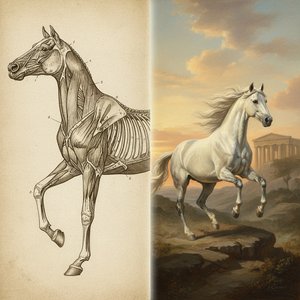
George Stubbs: Anatomical Precision & Romantic Vision in 18th-Century British Art
Explore the captivating world of George Stubbs, the 18th-century master renowned for his anatomical precision & Romantic animal paintings. Discover his legacy and investment potential.

18th Century Masters: 10 Artworks That Define an Era | AllPaintingsStore
Journey through 18th century art! Explore 10 iconic paintings – from Rococo elegance to Neoclassical grandeur. Discover Fragonard, David & more. Find museum-quality reproductions and elevate your home decor on AllPaintingsStore.com.


