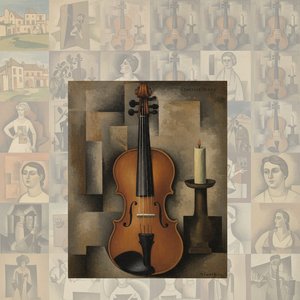
1949. Oil On Canvas, 144.0 x 174.0 cm.

§ 1Catalogue data
 Oil On Canvas
- WallArt
- Cubist Still Life
 1949
1949- Modern
 144.0 x 174.0 cm
Ovo djelo je zaštićeno autorskim pravima
Djelo prikazano na ovoj stranici zaštićeno je autorskim pravima, što znači da zakonski ne možemo izraditi niti prodati identičnu reprodukciju. Ova se zaštita provodi u skladu s međunarodnim sporazumima kao što su Bernska konvencija i nacionalnim zakonima, uključujući i one koji su utvrđeni u Američki zakon o autorskom pravu – Title 17.
Kao poštovana i legalna alternativa, nudimo prilagođena, ručno oslikana umjetnička djela inspirirana originalom. Naši vješti i profesionalni umjetnici pažljivo proučavaju stil, raspoloženje i umjetničku bit originala kako bi stvorili novo, jedinstveno djelo koje izaziva isti osjećaj – ostajući pritom vlastito, originalno stvaralaštvo.
Ova metoda u potpunosti je usklađena s autorskim pravima jer ne uključuje kopiranje ili dupliciranje zaštićenih umjetničkih djela. Umjesto toga, riječ je o kreativnoj reinterpretaciji – novoj slici koja je dobila utjecaj na izvornik, ali nije identična njemu.
 Pročitajte više
§ 2Abstract
Opis kolekcionarskog predmeta
Georges Braque’s "The Studio (III)" presents a fragmented Cubist vision of an artist's workspace, showcasing geometric planes and muted tones from 1949. Explore this iconic artwork by the influential modern master and bring its innovative spirit into your collection.
Biografija umjetnika
Meta Description: Georges Braque (1882-1963): Kubizam revolucionirao umjetnost! Poznati djela uključuju pejzaže L'Estaque i inovativne kolaže koji su promijenili način prikazivanja stvarnosti.
§ 3Commentary
A Fragmented Workspace
The painting The Studio (III), executed by Georges Braque in 1949, presents a room viewed through a fractured lens. The composition is built from geometric planes, primarily rectangular and angular shapes that overlap to reconstruct the interior of an artist's workspace. Within this space, several objects are discernible: a chair, a table, a window, knives, and a clock. These elements do not appear as unified, continuous forms but are instead dissected into intersecting fragments. The palette is restrained, consisting largely of browns, ochres, and creams. This choice of color emphasizes the materiality of the scene. A person is positioned within the room, appearing to observe or interact with the surrounding objects.
The technique utilizes the principles of Cubism to reject traditional illusionistic perspective. Instead of a single, static viewpoint, the artist employs multiple perspectives simultaneously. The window and the furniture are broken into shapes that create spatial ambiguity. This method focuses on the underlying structure of the subject matter rather than its surface appearance. The light in the studio is subdued, contributing to a sense of quietude within the composition.
Symbolism and Historical Context
The objects placed throughout the studio carry specific weight within the 1949 composition. The scattered knives represent the tools used in the process of creation and destruction. A clock hangs near the center of the painting, marking the passage of time and the persistence of the creative process. These items are integrated into the geometric structure to define the atmosphere of focused observation. The stillness of the still life setting allows for a contemplation of the act of making art.
This work emerged from a period of significant artistic development in Paris. Braque's approach in this mature period reflects his earlier involvement with Fauvism and his subsequent development of both Analytical and Synthetic Cubism alongside Pablo Picasso. While his earlier collaborations focused on flattening planes and monochromatic tones, this 1949 work demonstrates a refined use of form. The painting captures the tension between the physical reality of the studio tools and the intellectual experimentation of the artist's vision.
Pitanja i odgovori
Kolika je luminancija djela "The Studio (III)" autora Georges Braque?
Zabilježena luminancija za "The Studio (III)" autora Georges Braque iznosi Soft Shadow.
Kada i od kojih je materijala izrađeno "The Studio (III)"?
"The Studio (III)" nastalo je 1949. godine, u tehnici Oil On Canvas.
Na koji način se preporučuje tisak djela "The Studio (III)" – koja je preporučena veličina i orijentacija?
Za "The Studio (III)", preporučena veličina za print je Large i Landscape orijentacija.


 Prebacite na printove


 Za umjetnička djela ili reprodukcije veće od 105 cm (približno 41 inč) na bilo kojoj strani, okvir će biti isporučen u obliku rastavljenog seta za montažu. Ovaj način osigurava sigurnu dostavu i sprječava oštećenja tijekom transporta.