Kupi otisak Kupi digitalnu sliku
 Pošalji
 Podijeli
 Detalji o umjetničkom djelu
 Dodaj u omiljene

 Preuzmi
 Slični predmeti
 Rentgenska snimka
 Automatska prezentacija
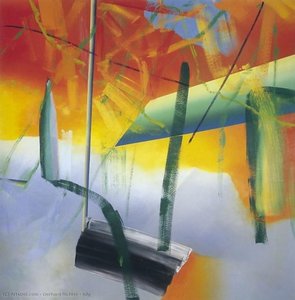
Fuji


 Prikaži više
Ručno rađena uljana reprodukcija
Ručno oslikano uljanim bojama na platnu u dimenzijama i okviru po vašem izboru, izrađeno po narudžbi od strane naših umjetnika.




P118B $10

P118H $10

P118W $10

P438Z $10

P508JH $12

P508YH $12

P805H $10

P805Z $10

P919BZ $10

P919G $10

P919XJ $10

P959ZH $10

P968JZ $12

W106C $8

W218G $10

W218JH $8

W218Y $10

W307PJ $10

W316G $10

W316PJ $8

W316Y $10

W398PJ $8

W4111J $10

W500HY $15

W500JH $15

W692G $12

W849H $8

W940BG $15

W953PJ $8




Odaberite jednu od naših unaprijed definiranih veličina koje odgovaraju izvornim proporcijama umjetničkog djela.

Možete unijeti vlastite dimenzije kako bi odgovarale određenom okviru ili prostoru. Ako odabrana veličina ne odgovara proporcijama izvorne slike, izrezat ćemo umjetničko djelo ili proširiti sliku dodatnim ručno oslikanim elementima. Digitalni nacrt bit će vam poslan na odobrenje prije početka proizvodnje.
Imajte na umu da pregled na ekranu ne prikazuje stvarno izrezivanje ili proširivanje. Samo će nacrt točno prikazati konačni sastav.
Iako su dostupne prilagođene veličine, preporučujemo odabir dimenzije s preddefiniranog popisa kako bismo očuvali izvorne proporcije.
Nakon narudžbe, tim AllPaintingsStore.com kontaktirat će klijenta putem e-pošte radi dobivanja uputa te dostaviti probni prikaz (mockup).
Isporuka širom svijeta () u roku od 3-4 tjedna umjesto standardnih 5 tjedana. (16 Srpanj). Bez kompromisa u kvaliteti.

Besplatna ekspresna dostava širom svijeta

Visokokvalitetno laneno platno

Potpuno osiguranje dostave

Jamstvo povrata carine i uvoznih poreza

Garancija vjernog podudaranja boja

Politika povrata u roku od 60 dana (samo u slučaju nedostataka)

Jamstvo povrata 100% novca

Popust na više proizvoda
 Opcija stakla dostupna je samo za dimenzije manje od 110 cm

Fuji
Tehnika reprodukcije
Veličina reprodukcije
-


Ukupna cijena
-
Opis umjetničkog djela
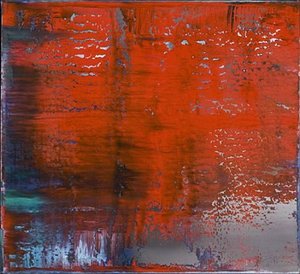
The Enigmatic Landscape: An Introduction to Gerhard Richter's "Fuji"
Gerhard Richter’s “Fuji,” a work that exists primarily as meticulously rendered reproductions, isn’t merely a depiction of the iconic Japanese mountain; it’s an exploration of memory, perception, and the elusive nature of reality itself. Painted in 2013, this piece embodies a core element of Richter's oeuvre – his masterful manipulation of photographic source material. Rather than striving for immediate representation, he employs a technique that deliberately obscures, inviting viewers to contemplate the process of seeing and the inherent subjectivity involved in translating an image into paint.
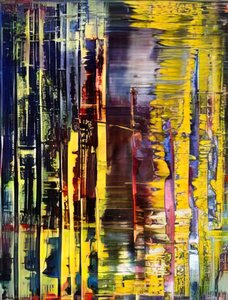
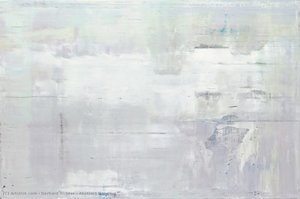
The painting’s palette is deceptively simple: primarily shades of red, orange, and blue, arranged within a complex network of layered brushstrokes. These aren't vibrant, assertive colors; instead, they are muted, almost melancholic, suggesting a faded memory or a dreamlike state. The composition itself is deliberately ambiguous. While the central form undeniably evokes Mount Fuji’s recognizable silhouette – its distinctive conical shape rising above a hazy backdrop – it’s rendered with an unsettling softness, as if viewed through a veil of mist or watercolor. This deliberate blurring creates a sense of detachment, pulling us away from a literal representation and into a realm of emotional resonance.
Richter's Method: Appropriation and the Illusion of Reality
Richter’s approach to painting is famously rooted in appropriation – he frequently utilizes photographs as his starting point. “Fuji” exemplifies this practice perfectly. He doesn’t attempt to recreate a photograph directly; instead, he builds upon it, adding layers of paint, manipulating textures, and subtly altering the image's tonal values. This process isn’t about deception, but rather about revealing the inherent limitations of representation. As Richter himself has stated, his goal is not to create an accurate likeness, but to capture a feeling or mood associated with the original photograph.
The technique employed in “Fuji” is particularly noteworthy. Richter utilizes a layering method, applying thin washes of color over previous layers, creating a sense of depth and translucency. The brushstrokes are often loose and gestural, suggesting movement and spontaneity – a deliberate contrast to the seemingly static nature of the subject matter. This interplay between control and chance contributes significantly to the painting’s captivating quality.
Symbolism and the Weight of History
Mount Fuji holds profound cultural significance in Japan, representing beauty, spirituality, and resilience. It's a symbol deeply intertwined with Japanese history and mythology, frequently depicted in art and literature as a sacred mountain. Richter’s choice to focus on this iconic subject is therefore laden with meaning. Considering the artist’s own background – born in Dresden during a period of immense political upheaval in Germany – “Fuji” can be interpreted as a meditation on memory, displacement, and the enduring power of nature to transcend historical trauma.
The muted color palette and the painting's overall sense of ambiguity also evoke feelings of nostalgia and loss. It’s possible that Richter is drawing upon his own experiences of displacement and uncertainty, translating them into a visual language that speaks to the broader human condition. The mountain itself, standing as a silent witness to centuries of change, becomes a potent symbol of continuity and endurance.
Collecting “Fuji”: A Window into Richter’s World
Reproductions of Gerhard Richter's "Fuji" offer an accessible entry point into the artist’s complex and rewarding body of work. AllPaintingsStore.com provides meticulously crafted, hand-painted reproductions that capture the essence of Richter’s unique style. These aren’t simply prints; they are faithful interpretations of his layered brushwork and subtle color shifts, allowing you to experience the painting's emotional depth and intellectual richness in your own space.
Whether displayed as a statement piece in a contemporary interior or studied for its artistic merits, “Fuji” remains a compelling testament to Richter’s mastery of abstraction and his profound engagement with the complexities of perception and memory. It is an artwork that invites contemplation, sparking dialogue about art, history, and the enduring power of visual representation.


Biografija umjetnika
A Life Shaped by Division: The Early Years and Artistic Formation of Gerhard Richter
Gerhard Richter’s story is inextricably linked to the fractured history of 20th-century Germany. Born in Dresden in 1932, his childhood unfolded under the shadow of a rising National Socialist regime. This formative period, marked by displacement – his family moved several times during the war years – instilled within him a profound sense of uncertainty and a questioning spirit that would permeate his artistic practice for decades to come. The idyllic landscapes of his early upbringing in Reichenau and Waltersdorf were soon disrupted by conflict, leaving an indelible mark on his psyche. His father, though not a fervent supporter of the Nazi party, navigated the complexities of life under authoritarian rule as a schoolteacher, while his mother fostered a love for literature and music within the family. This duality – a pragmatic acceptance of circumstance alongside a yearning for cultural expression – became a defining characteristic of Richter’s own artistic approach. He began formal training at the Dresden Academy of Fine Arts in 1951, initially immersed in the tradition of socialist realism demanded by the East German state. However, even within this constrained environment, a desire for artistic freedom simmered beneath the surface, fueled by growing dissatisfaction with ideological constraints and a longing to explore more expansive creative possibilities.Exploring Artistic Horizons: Düsseldorf and the Birth of Photorealism
The decisive turning point arrived in 1961 when Richter, alongside Marianne Eufinger, bravely abandoned East Germany for Düsseldorf – a city brimming with artistic energy and intellectual ferment. This relocation represented a radical departure from his formative years, liberating him from the confines of socialist dogma and propelling him toward groundbreaking experimentation. Düsseldorf became Richter’s crucible where he dismantled the stylistic conventions of socialist realism, embracing techniques that would reshape the landscape of contemporary art. He swiftly adopted photorealism, meticulously reproducing photographic images with astonishing precision—a method that interrogated the very nature of visual perception and challenged accepted notions of artistic representation. Simultaneously, Richter wrestled with abstraction, generating canvases layered with vibrant hues and dynamic brushstrokes—often utilizing a revolutionary squeegee technique to manipulate paint in unpredictable ways. This embrace of chance and spontaneity underscored his conviction that artistic innovation resided not merely in mastering technical skills but also in relinquishing control and welcoming unforeseen outcomes. His collaboration with Sigmar Polke yielded the provocative term ‘Capitalist Realism,’ encapsulating their shared skepticism toward established artistic norms and their appropriation of imagery from advertising and mass media—a conceptual gesture that continues to resonate today.The Language of Color and Texture: Expanding Artistic Vocabulary
Richter’s artistic vocabulary expanded throughout the 1960s and onward, encompassing a remarkable spectrum of methods and thematic concerns. His photorealistic paintings weren't simply reproductions; they were investigations into how we perceive reality—a process Richter dissected with meticulous detail while simultaneously questioning its veracity. He countered this approach by delving into abstraction, generating canvases infused with bold colors and expressive brushstrokes—often employing the squeegee technique to introduce an element of serendipity into his creative process. This method deliberately disrupted conventional artistic conventions, prioritizing spontaneity over calculated precision. Furthermore, Richter’s ‘Color Charts,’ systematic arrangements of colored squares, served as a conceptual challenge—a deliberate dismantling of traditional painting practices and a questioning of what constituted “painting” itself. These works weren't about stylistic preferences but rather about exploring the fundamental properties of color and its organizational potential—a testament to Richter’s unwavering commitment to artistic exploration.Influence and Legacy: Shaping Contemporary Art
Gerhard Richter’s influence on contemporary art is undeniable. His willingness to defy categorization, his relentless pursuit of innovation, and his profound engagement with historical and political themes have cemented his position as one of the most significant artists of our time—a figure who continues to inspire generations of creatives. He resisted easy stylistic definitions, prioritizing conceptual rigor alongside technical virtuosity—a combination that earned him widespread critical acclaim and commercial success. Richter’s art speaks to the anxieties and uncertainties inherent in modern existence—grappling with issues of memory, identity, and the elusive quest for meaning amidst fragmentation. His refusal to offer definitive answers prompted viewers to confront their own assumptions and engage in critical reflection—a characteristic that distinguishes his work from many others produced during his era. His legacy transcends mere artistic achievement; it resides in his unwavering conviction that art should provoke thought and challenge conventional perspectives. Richter’s enduring influence can be discerned in the oeuvre of countless artists who have adopted his experimental techniques and embraced his philosophical stance—a testament to his transformative contribution to the visual arts. Richter's impact extends far beyond the confines of his own artistic practice—he remains a pivotal voice in contemporary art, inspiring ongoing dialogue and fostering a deeper understanding of the complexities of our time.
Gerhard Richter
1932 - , Njemačka
Osnovne informacije
- Artistic Movement Or Style:
- Fotorealizam
- Abstrakcija
- Artists Or Movements Influenced By This Artist: ['Sigmar Polke']
- Artists Who Influenced This Artist:
- Pablo Picasso
- Jean Arp
- Date Of Birth: 9. veljače 1932.
- Full Name: Gerhard Richter
- Nationality: Njemački
- Notable Artworks:
- Život u kvadratima
- Gilbert
- S. s Dijetevim
- Place Of Birth: Dresden, Njemačka
Srodni članci

Morris Louis: Pioneering Color Field Painting & Abstract Expressionism's Legacy
Explore the groundbreaking abstract expressionism of Morris Louis, a pioneer of Color Field painting. Discover his innovative techniques, influential series & lasting legacy in post-war American art. Learn more at AllPaintingsStore.

Jacob Kainen: A Pioneer of American Color Field Painting & Abstract Expressionism
Explore the life & work of Jacob Kainen, a pivotal figure in American Abstract Expressionism and Color Field painting. Discover his journey from Social Realism to vibrant abstraction and lasting influence on 20th-century art.
Beatrice Parsons: A Study in Abstract Expressionism & the Poetics of Color Field Painting
Explore the captivating world of Beatrice Parsons, a pioneering British abstract expressionist. Discover her journey from garden watercolors to evocative color field paintings and learn about her place within art history.

Carl Newman: Exploring Abstraction's Spiritual Resonance Through Color Field Painting
Explore the profound spiritual resonance of Color Field Painting with insights into Rothko, Newman & Still. Discover the techniques & legacy of this influential abstract art movement.

Gerhard Richter: A Retrospective on Abstraction, Memory & the Photographic Source
Explore the profound world of Gerhard Richter's abstract paintings. Discover his techniques, influences, and lasting impact on contemporary art – a guide for discerning collectors.