Jamstvo povrata novca u roku od 100 dana Besplatna dostava širom svijeta
449.582umjetnička djela 30.618umjetnici 4.705muzeji 32jezici
Valuta
    Jezik
      Atelje · Osnovano 2015. · Pariz, Francuska
      AllPaintingsStore
      allpaintingsstore.com
      Pregledaj u stvarnoj veličini Isprobaj u AR-u Prebacite na prodaju printova Prebacite na digitalnu prodaju slika Podijeli
      Detalji Vodič Dodaj u omiljene Preuzmi datoteku Slični predmeti Rentgenska snimka Slide show Statistika

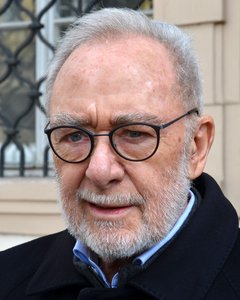
      Self-portrait

      Explore Gerhard Richter's haunting 1996 self-portrait – a blurred, introspective study of identity and uncertainty. This oil on canvas captures the artist’s quiet contemplation, reflecting his complex life and artistic legacy.

      Gerhard Richter je njemački slikar koji je poznat po svojim inovativnim slikama koje kombiniraju fotorealizam i abstrakciju te istražuju pitanja identiteta i istorije. Njegovo umetničko delo ima veliki značaj u savremenoj kulturi i kontinuirano inspiriše druge umetnike širom sveta.

      Djelo prikazano na ovoj stranici zaštićeno je autorskim pravima, što znači da zakonski ne možemo izraditi niti prodati identičnu reprodukciju. Ova se zaštita provodi u skladu s međunarodnim sporazumima kao što su Bernska konvencija i nacionalnim zakonima, uključujući i one koji su utvrđeni u Američki zakon o autorskom pravu – Title 17.

      Kao poštovana i legalna alternativa, nudimo prilagođena, ručno oslikana umjetnička djela inspirirana originalom. Naši vješti i profesionalni umjetnici pažljivo proučavaju stil, raspoloženje i umjetničku bit originala kako bi stvorili novo, jedinstveno djelo koje izaziva isti osjećaj – ostajući pritom vlastito, originalno stvaralaštvo.

      Ova metoda u potpunosti je usklađena s autorskim pravima jer ne uključuje kopiranje ili dupliciranje zaštićenih umjetničkih djela. Umjesto toga, riječ je o kreativnoj reinterpretaciji – novoj slici koja je dobila utjecaj na izvornik, ali nije identična njemu.

      Ručno rađena uljana reprodukcija

      Ručno oslikano uljanim bojama na platnu u dimenzijama i okviru po vašem izboru, izrađeno po narudžbi od strane naših umjetnika. ( Prebacite na prodaju printova Prebacite na digitalnu prodaju slika)

      Corner sample of the P118B picture frame: moulded polystyrene, 5 cm wide and 3 cm thick
      P118B 10
      Corner sample of the P118H picture frame: moulded polystyrene, 5 cm wide and 3 cm thick
      P118H 10
      Corner sample of the P118W picture frame: moulded polystyrene, 5 cm wide and 3 cm thick
      P118W 10
      Corner sample of the P438Z picture frame: moulded polystyrene, 5.5 cm wide and 3.5 cm thick
      P438Z 10
      Corner sample of the P508JH picture frame: moulded polystyrene, 7 cm wide and 3.5 cm thick
      P508JH 12
      Corner sample of the P508YH picture frame: moulded polystyrene, 7 cm wide and 3.5 cm thick
      P508YH 12
      Corner sample of the P805H picture frame: moulded polystyrene, 5 cm wide and 3.5 cm thick
      P805H 10
      Corner sample of the P805Z picture frame: moulded polystyrene, 5 cm wide and 3.5 cm thick
      P805Z 10
      Corner sample of the P919BZ picture frame: moulded polystyrene, 7 cm wide and 3.5 cm thick
      P919BZ 10
      Corner sample of the P919G picture frame: moulded polystyrene, 7 cm wide and 3.5 cm thick
      P919G 10
      Corner sample of the P919XJ picture frame: moulded polystyrene, 7 cm wide and 3.5 cm thick
      P919XJ 10
      Corner sample of the P959ZH picture frame: moulded polystyrene, 5 cm wide and 3 cm thick
      P959ZH 10
      Corner sample of the P968JZ picture frame: moulded polystyrene, 6 cm wide and 4 cm thick
      P968JZ 12
      Corner sample of the W106C picture frame: solid wood, 5 cm wide and 3 cm thick
      W106C 8
      Corner sample of the W218G picture frame: solid wood, 5 cm wide and 3 cm thick
      W218G 10
      Corner sample of the W218JH picture frame: solid wood, 5 cm wide and 3 cm thick
      W218JH 8
      Corner sample of the W218Y picture frame: solid wood, 5 cm wide and 3 cm thick
      W218Y 10
      Corner sample of the W307PJ picture frame: solid wood, 6 cm wide and 3 cm thick
      W307PJ 10
      Corner sample of the W316G picture frame: solid wood, 6 cm wide and 3 cm thick
      W316G 10
      Corner sample of the W316PJ picture frame: solid wood, 6 cm wide and 3 cm thick
      W316PJ 8
      Corner sample of the W316Y picture frame: solid wood, 6 cm wide and 3 cm thick
      W316Y 10
      Corner sample of the W398PJ picture frame: solid wood, 5 cm wide and 3 cm thick
      W398PJ 8
      Corner sample of the W4111J picture frame: solid wood, 6.5 cm wide and 3.5 cm thick
      W4111J 10
      Corner sample of the W500HY picture frame: solid wood, 7 cm wide and 5 cm thick
      W500HY 15
      Corner sample of the W500JH picture frame: solid wood, 7 cm wide and 5 cm thick
      W500JH 15
      Corner sample of the W692G picture frame: solid wood, 8 cm wide and 4 cm thick
      W692G 12
      Corner sample of the W849H picture frame: solid wood, 5 cm wide and 3 cm thick
      W849H 8
      Corner sample of the W940BG picture frame: solid wood, 7.5 cm wide and 4.5 cm thick
      W940BG 15
      Corner sample of the W953PJ picture frame: solid wood, 6 cm wide and 3.5 cm thick
      W953PJ 8

      Standardne dimenzije
      prilagođeno po mjeri
      CM
      INCH

      Odaberite jednu od naših unaprijed definiranih veličina koje odgovaraju izvornim proporcijama umjetničkog djela.

      širina
      visina

      Možete unijeti vlastite dimenzije kako bi odgovarale određenom okviru ili prostoru. Ako odabrana veličina ne odgovara proporcijama izvorne slike, izrezat ćemo umjetničko djelo ili proširiti sliku dodatnim ručno oslikanim elementima. Digitalni nacrt bit će vam poslan na odobrenje prije početka proizvodnje.
      Imajte na umu da pregled na ekranu ne prikazuje stvarno izrezivanje ili proširivanje. Samo će nacrt točno prikazati konačni sastav.
      Iako su dostupne prilagođene veličine, preporučujemo odabir dimenzije s preddefiniranog popisa kako bismo očuvali izvorne proporcije.

      Primjeri onoga što se može promijeniti: Zamijenite lice fotografijom klijenta; Dodajte ljubimca (npr. zamijenite mačku psom); Uključite skrivenu poruku u pozadinu; Promijenite pejzaž ili elemente pozadine.
      Nakon narudžbe, tim AllPaintingsStore.com kontaktirat će klijenta putem e-pošte radi dobivanja uputa te dostaviti probni prikaz (mockup)

      Isporuka širom svijeta () u roku od 3-4 tjedna umjesto standardnih 5 tjedana. (8 Listopad). Bez kompromisa u kvaliteti.

      Besplatna ekspresna dostava širom svijeta
      Visokokvalitetno laneno platno
      Potpuno osiguranje transporta
      Jamstvo povrata carine i uvoznih poreza
      Jamstvo vjernosti boja
      Politika povrata u roku od 100 dana (samo u slučaju nedostataka)
      Jamstvo povrata 100% novca
      Popust na više proizvoda

      Ukupna cijena

      € 222

      Self-portrait

      Tehnika izrade

      Veličina reprodukcije

      -

      Ukupna cijena

      € 222

      Brzi pregled

      • Subject or theme: Self-reflection
      • Notable elements: Blurry image
      • Title: Self-portrait
      • Year: 1996
      • Location: MoMA, New York
      • Influences: Photography
      • Artistic style: Photorealism/Abstraction

      Kviz o umjetnosti

      Svako pitanje ima samo jedan točan odgovor.

      Pitanje 1:
      What is the primary visual focus of the image depicting Gerhard Richter’s ‘Self-Portrait’?
      Pitanje 2:
      Based on the description, what is the overall artistic quality conveyed by the image?
      Pitanje 3:
      Gerhard Richter is known for his work in which of the following styles?
      Pitanje 4:
      Considering Richter’s biography, which of the following best describes a significant influence on his artistic development?

      Gerhard Richter’s ‘Self-Portrait’: A Study in Uncertainty and Reflection

      Gerhard Richter's 1996 self-portrait is not merely a depiction of a man; it’s an embodiment of the anxieties and ambiguities that defined much of his oeuvre. This particular work, rendered in oil on linen and measuring a modest 51 x 46 cm, feels both intensely personal and profoundly detached, mirroring the artist's own complex relationship with representation and memory. The photograph itself – blurry, almost indistinct – immediately establishes an atmosphere of uncertainty. Richter deliberately obscures sharp detail, employing a technique he would later famously refine into his ‘photo-paintings,’ where he layers photographic images onto canvas, manipulating their source material to create works that are simultaneously familiar and unsettling. The subject, a man in a white shirt and tie, appears almost lost within the haze, his eyes holding a serious, contemplative gaze – a gaze that seems to question not just the viewer, but perhaps also himself.

      A Life Shaped by Division: Contextualizing Richter’s Early Years

      To fully appreciate this self-portrait, it's crucial to understand the formative experiences that shaped Gerhard Richter’s artistic vision. Born in Dresden in 1932, his childhood unfolded during a period of immense upheaval – the rise of Nazism and subsequent displacement. His family moved repeatedly throughout the war years, an experience that instilled within him a deep-seated sense of instability and a questioning spirit. This early exposure to political turmoil and social disruption profoundly influenced his later work, often characterized by a deliberate ambiguity and a refusal to offer definitive answers. Richter’s father, a schoolteacher navigating the complexities of life under authoritarian rule, and his mother, fostering a love for literature and music within their home, created a duality – a pragmatic acceptance of circumstance alongside a yearning for cultural expression—a tension that would become a recurring theme in his art. The landscapes of Reichenau and Waltersdorf, initially idyllic, were irrevocably altered by conflict, leaving an indelible mark on his psyche.

      Technique and the Illusion of Reality: Richter’s ‘Photo-Paintings’

      Richter's approach to painting is notoriously complex. He doesn’t simply replicate what he sees; instead, he engages in a process of layering and manipulation. This self-portrait exemplifies his signature technique – the ‘photo-painting.’ He begins with photographic images, often sourced from newspapers or magazines, which he then applies to canvas using thin layers of oil paint. The resulting surface is not smooth and polished but rather textured and fragmented, creating an illusion of reality that is simultaneously present and absent. The blur in this particular portrait isn’t a flaw; it's a deliberate choice, intensifying the sense of detachment and inviting the viewer to actively participate in constructing meaning. The subtle shifts in color and tone suggest movement and change, mirroring the instability inherent in memory and experience.

      Symbolism and Emotional Resonance: A Portrait of Contemplation

      While Richter’s work often resists straightforward interpretation, this self-portrait offers a glimpse into the artist's internal landscape. The man’s serious expression suggests introspection and perhaps even melancholy. The blurred features contribute to a sense of anonymity, transforming the portrait from a simple likeness into a meditation on identity and perception. It’s not a triumphant declaration of self but rather a quiet acknowledgment of one’s place within the world – a recognition of uncertainty and the difficulty of capturing a definitive truth. The photograph's lack of background further emphasizes this feeling of isolation, drawing all attention to the subject himself. Ultimately, Richter’s ‘Self-Portrait’ is a powerful reminder that art can be more than just representation; it can be an exploration of the complexities of human experience and the elusive nature of reality.

      Further Information: Explore Gerhard Richter's work at The Metropolitan Museum of Art or delve deeper into his artistic journey on Wikipedia.

      Pitanja i odgovori

      Koja veličina tiska za "Self-portrait" autora Gerhard Richter najbolje odgovara preporučenoj prostoriji?

      Preporučeni par za "Self-portrait" autora Gerhard Richter: print u veličini Medium za prostoriju kao što je Living Room.

      Kakvih je proporcija "Self-portrait" autora Gerhard Richter i koje su mu dimenzije?

      "Self-portrait" autora Gerhard Richter ima proporcije Portrait djela dimenzija 51 x 46 cm.

      Kolika je razina kontrasta u djelu "Self-portrait" autora Gerhard Richter?

      Svijetlo-tamni kontrast djela "Self-portrait" zabilježen je kao Serene. Kontrast opisuje razliku u intenzitetu između svijetlijih i tamnijih područja.

      Kada je nastalo "Self-portrait"?

      Izrada djela "Self-portrait" autora Gerhard Richter datira iz 1996. godine.

      Koliko je godina Gerhard Richter imao/la kada je stvorio/la "Self-portrait"?

      Kada je "Self-portrait" nastalo 1996. godine, Gerhard Richter – rođen/a 1932. – imao/la je 64 godina.

      Tko je umjetnik koji stoji iza djela "Self-portrait"?

      Autor djela "Self-portrait" je Gerhard Richter. Rad je katalogiziran pod imenom Gerhard Richter.

      Koja je dominantna nijansa u djelu "Self-portrait" autora Gerhard Richter?

      Green to Violet Spectrum nijansa prožima "Self-portrait" autora Gerhard Richter.


      Biografija umjetnika

      A Life Shaped by Division: The Early Years and Artistic Formation of Gerhard Richter

      Gerhard Richter’s story is inextricably linked to the fractured history of 20th-century Germany. Born in Dresden in 1932, his childhood unfolded under the shadow of a rising National Socialist regime. This formative period, marked by displacement – his family moved several times during the war years – instilled within him a profound sense of uncertainty and a questioning spirit that would permeate his artistic practice for decades to come. The idyllic landscapes of his early upbringing in Reichenau and Waltersdorf were soon disrupted by conflict, leaving an indelible mark on his psyche. His father, though not a fervent supporter of the Nazi party, navigated the complexities of life under authoritarian rule as a schoolteacher, while his mother fostered a love for literature and music within the family. This duality – a pragmatic acceptance of circumstance alongside a yearning for cultural expression – became a defining characteristic of Richter’s own artistic approach. He began formal training at the Dresden Academy of Fine Arts in 1951, initially immersed in the tradition of socialist realism demanded by the East German state. However, even within this constrained environment, a desire for artistic freedom simmered beneath the surface, fueled by growing dissatisfaction with ideological constraints and a longing to explore more expansive creative possibilities.

      Exploring Artistic Horizons: Düsseldorf and the Birth of Photorealism

      The decisive turning point arrived in 1961 when Richter, alongside Marianne Eufinger, bravely abandoned East Germany for Düsseldorf – a city brimming with artistic energy and intellectual ferment. This relocation represented a radical departure from his formative years, liberating him from the confines of socialist dogma and propelling him toward groundbreaking experimentation. Düsseldorf became Richter’s crucible where he dismantled the stylistic conventions of socialist realism, embracing techniques that would reshape the landscape of contemporary art. He swiftly adopted photorealism, meticulously reproducing photographic images with astonishing precision—a method that interrogated the very nature of visual perception and challenged accepted notions of artistic representation. Simultaneously, Richter wrestled with abstraction, generating canvases layered with vibrant hues and dynamic brushstrokes—often utilizing a revolutionary squeegee technique to manipulate paint in unpredictable ways. This embrace of chance and spontaneity underscored his conviction that artistic innovation resided not merely in mastering technical skills but also in relinquishing control and welcoming unforeseen outcomes. His collaboration with Sigmar Polke yielded the provocative term ‘Capitalist Realism,’ encapsulating their shared skepticism toward established artistic norms and their appropriation of imagery from advertising and mass media—a conceptual gesture that continues to resonate today.

      The Language of Color and Texture: Expanding Artistic Vocabulary

      Richter’s artistic vocabulary expanded throughout the 1960s and onward, encompassing a remarkable spectrum of methods and thematic concerns. His photorealistic paintings weren't simply reproductions; they were investigations into how we perceive reality—a process Richter dissected with meticulous detail while simultaneously questioning its veracity. He countered this approach by delving into abstraction, generating canvases infused with bold colors and expressive brushstrokes—often employing the squeegee technique to introduce an element of serendipity into his creative process. This method deliberately disrupted conventional artistic conventions, prioritizing spontaneity over calculated precision. Furthermore, Richter’s ‘Color Charts,’ systematic arrangements of colored squares, served as a conceptual challenge—a deliberate dismantling of traditional painting practices and a questioning of what constituted “painting” itself. These works weren't about stylistic preferences but rather about exploring the fundamental properties of color and its organizational potential—a testament to Richter’s unwavering commitment to artistic exploration.

      Influence and Legacy: Shaping Contemporary Art

      Gerhard Richter’s influence on contemporary art is undeniable. His willingness to defy categorization, his relentless pursuit of innovation, and his profound engagement with historical and political themes have cemented his position as one of the most significant artists of our time—a figure who continues to inspire generations of creatives. He resisted easy stylistic definitions, prioritizing conceptual rigor alongside technical virtuosity—a combination that earned him widespread critical acclaim and commercial success. Richter’s art speaks to the anxieties and uncertainties inherent in modern existence—grappling with issues of memory, identity, and the elusive quest for meaning amidst fragmentation. His refusal to offer definitive answers prompted viewers to confront their own assumptions and engage in critical reflection—a characteristic that distinguishes his work from many others produced during his era. His legacy transcends mere artistic achievement; it resides in his unwavering conviction that art should provoke thought and challenge conventional perspectives. Richter’s enduring influence can be discerned in the oeuvre of countless artists who have adopted his experimental techniques and embraced his philosophical stance—a testament to his transformative contribution to the visual arts. Richter's impact extends far beyond the confines of his own artistic practice—he remains a pivotal voice in contemporary art, inspiring ongoing dialogue and fostering a deeper understanding of the complexities of our time.
      Gerhard Richter

      Gerhard Richter

      1932 - , Njemačka

      Brzi pregled

      • Artistic Movement Or Style:
        • Fotorealizam
        • Abstrakcija
      • Artists Or Movements Influenced By This Artist: ['Sigmar Polke']
      • Artists Who Influenced This Artist:
        • Pablo Picasso
        • Jean Arp
      • Date Of Birth: 9. veljače 1932.
      • Full Name: Gerhard Richter
      • Nationality: Njemački
      • Notable Artworks:
        • Život u kvadratima
        • Gilbert
        • S. s Dijetevim
      • Place Of Birth: Dresden, Njemačka
      Istražite umjetnička djela organizirana prema temama, stilovima i karakteristikama.