


 Pregledaj u stvarnoj veličini
 Podijeli
 Podijeli
 Detalji
 Vodič
Vodič

 Preuzmi datoteku
 Slični predmeti
 Rentgenska snimka
 Slide show
 Statistika
Townscape Madrid


 Pročitajte više
Djelo prikazano na ovoj stranici zaštićeno je autorskim pravima, što znači da zakonski ne možemo izraditi niti prodati identičnu reprodukciju. Ova se zaštita provodi u skladu s međunarodnim sporazumima kao što su Bernska konvencija i nacionalnim zakonima, uključujući i one koji su utvrđeni u Američki zakon o autorskom pravu – Title 17.
Ova metoda u potpunosti je usklađena s autorskim pravima jer ne uključuje kopiranje ili dupliciranje zaštićenih umjetničkih djela. Umjesto toga, riječ je o kreativnoj reinterpretaciji – novoj slici koja je dobila utjecaj na izvornik, ali nije identična njemu.
Giclée / Umjetnički otisak
Giclée tisak muzejske kvalitete ili otisak na platnu uz brzu proizvodnju i fleksibilne opcije završne obrade. ( Naručite ručno oslikano reprodukciju Prebacite na digitalnu prodaju slika)




P118B €10

P118H €10

P118W €10

P438Z €10

P508JH €12

P508YH €12

P805H €10

P805Z €10

P919BZ €10

P919G €10

P919XJ €10

P959ZH €10

P968JZ €12

W106C €8

W218G €10

W218JH €8

W218Y €10

W307PJ €10

W316G €10

W316PJ €8

W316Y €10

W398PJ €8

W4111J €10

W500HY €15

W500JH €15

W692G €12

W849H €8

W940BG €15

W953PJ €8




Odaberite jednu od naših unaprijed definiranih veličina koje odgovaraju izvornim proporcijama umjetničkog djela.

Unesite širinu i visinu koja vam je potrebna, kako bi odgovarali vašem okviru ili zidu. Print se može samo izrezati, nikada ne može biti veći od slike, stoga veličina s drugačijim oblikom gubi dio slike. Šaljemo vam digitalni prikaz (mockup) na odobrenje prije bilo kakve štampe. Slika prikazana na ovoj stranici ne prikazuje stvarni rez — to čini samo digitalni prikaz.
Dostava širom svijeta () u roku od 2 tjedna umjesto standardnih 4/5 tjedana. (27 Listopad)

Besplatna ekspresna dostava širom svijeta

Visokokvalitetno laneno platno

Potpuno osiguranje transporta

Jamstvo povrata carine i uvoznih poreza

Jamstvo vjernosti boja

Politika povrata u roku od 100 dana (samo u slučaju nedostataka)

Jamstvo povrata 100% novca

Popust na više proizvoda
 Opcija stakla dostupna je samo za dimenzije manje od 110 cm

Townscape Madrid
Giclée / Umjetnički otisak
Veličina reprodukcije
-


Ukupna cijena
€ 56
A Silent Symphony of Concrete and Gray: Exploring Gerhard Richter’s Townscape Madrid
Gerhard Richter, a titan amongst contemporary artists, continues to captivate audiences with his singular approach—a masterful fusion of photorealism and abstraction that defies easy categorization. Among his seminal works stands “Townscape Madrid,” painted in 1968, an unassuming black and white canvas that belies its profound depth and invites contemplation on the essence of urban existence. This piece isn’t merely a depiction of a cityscape; it's an embodiment of Richter’s artistic philosophy—a questioning gaze at reality itself.Composition and Technique: Capturing Atmosphere Through Gesture
Richter’s “Townscape Madrid” exemplifies his signature technique, characterized by loose brushstrokes that imbue the image with palpable texture and movement despite its monochrome palette. The absence of vibrant hues forces the viewer to focus on the intricate details of architectural forms—buildings rising against a hazy sky—creating an illusion of depth that transcends mere representation. Unlike traditional landscapes striving for visual splendor, Richter prioritizes capturing the mood and atmosphere of the urban environment. The photograph served as his starting point, prompting him to transform it into something more than just a mirror image; he actively reshaped it through artistic intervention.Historical Context: Echoes of Postwar Anxiety
Painted in the aftermath of World War II, “Townscape Madrid” resonates with the anxieties and uncertainties of its time. Richter’s stylistic choices—the muted tones, the fragmented composition—reflect a broader trend within New European Painting, which sought to grapple with the trauma of history while simultaneously rejecting representational conventions. The painting subtly references aerial photographs taken during the war years, hinting at the devastation endured by cities across Europe. This deliberate allusion underscores Richter’s fascination with capturing not just what is seen but also what is felt—the unspoken emotions embedded within a visual scene.Symbolism: Absence Speaks Volumes
The stark simplicity of “Townscape Madrid” is itself laden with symbolic significance. The deserted streets, illuminated by traffic lights, represent the quietude and solitude that can characterize urban life, even amidst activity. Richter’s masterful use of grayscale amplifies this sense of melancholy, inviting viewers to consider themes of isolation and contemplation. Furthermore, the buildings depicted—varied in size and shape—symbolize the complexity and dynamism of architectural heritage—a reminder of past glories juxtaposed against the present moment.Emotional Impact: A Meditation on Perception
Ultimately, “Townscape Madrid” transcends mere visual description; it’s an invitation to engage in a dialogue with the viewer's own perceptions. Richter’s technique deliberately obscures boundaries between photography and painting, questioning the very notion of originality while highlighting the transformative power of artistic expression. Like many of his works, this piece encourages introspection—a consideration of how we interpret what we see and how art can illuminate hidden truths about our experience of the world. It's a testament to Richter’s enduring legacy as an artist who dares to challenge conventions and explore the profound connections between reality and representation.Pitanja i odgovori
U koji je umjetnički pokret i u koje razdoblje uvršteno djelo "Townscape Madrid" autora Gerhard Richter?
U djelu "Townscape Madrid" autora Gerhard Richter, pokret Contemporary Realism susreće eru Modernizam.
Tko je stvorio "Townscape Madrid" i u kojem je stilu izvedeno?
Iza djela "Townscape Madrid" stoje Gerhard Richter i pokret Contemporary Realism.
Koliko je poznato djelo "Townscape Madrid" autora Gerhard Richter?
Zabilježena razina popularnosti za "Townscape Madrid" autora Gerhard Richter iznosi Iconic.
Srodna umjetnička djela


Biografija umjetnika
A Life Shaped by Division: The Early Years and Artistic Formation of Gerhard Richter
Gerhard Richter’s story is inextricably linked to the fractured history of 20th-century Germany. Born in Dresden in 1932, his childhood unfolded under the shadow of a rising National Socialist regime. This formative period, marked by displacement – his family moved several times during the war years – instilled within him a profound sense of uncertainty and a questioning spirit that would permeate his artistic practice for decades to come. The idyllic landscapes of his early upbringing in Reichenau and Waltersdorf were soon disrupted by conflict, leaving an indelible mark on his psyche. His father, though not a fervent supporter of the Nazi party, navigated the complexities of life under authoritarian rule as a schoolteacher, while his mother fostered a love for literature and music within the family. This duality – a pragmatic acceptance of circumstance alongside a yearning for cultural expression – became a defining characteristic of Richter’s own artistic approach. He began formal training at the Dresden Academy of Fine Arts in 1951, initially immersed in the tradition of socialist realism demanded by the East German state. However, even within this constrained environment, a desire for artistic freedom simmered beneath the surface, fueled by growing dissatisfaction with ideological constraints and a longing to explore more expansive creative possibilities.Exploring Artistic Horizons: Düsseldorf and the Birth of Photorealism
The decisive turning point arrived in 1961 when Richter, alongside Marianne Eufinger, bravely abandoned East Germany for Düsseldorf – a city brimming with artistic energy and intellectual ferment. This relocation represented a radical departure from his formative years, liberating him from the confines of socialist dogma and propelling him toward groundbreaking experimentation. Düsseldorf became Richter’s crucible where he dismantled the stylistic conventions of socialist realism, embracing techniques that would reshape the landscape of contemporary art. He swiftly adopted photorealism, meticulously reproducing photographic images with astonishing precision—a method that interrogated the very nature of visual perception and challenged accepted notions of artistic representation. Simultaneously, Richter wrestled with abstraction, generating canvases layered with vibrant hues and dynamic brushstrokes—often utilizing a revolutionary squeegee technique to manipulate paint in unpredictable ways. This embrace of chance and spontaneity underscored his conviction that artistic innovation resided not merely in mastering technical skills but also in relinquishing control and welcoming unforeseen outcomes. His collaboration with Sigmar Polke yielded the provocative term ‘Capitalist Realism,’ encapsulating their shared skepticism toward established artistic norms and their appropriation of imagery from advertising and mass media—a conceptual gesture that continues to resonate today.The Language of Color and Texture: Expanding Artistic Vocabulary
Richter’s artistic vocabulary expanded throughout the 1960s and onward, encompassing a remarkable spectrum of methods and thematic concerns. His photorealistic paintings weren't simply reproductions; they were investigations into how we perceive reality—a process Richter dissected with meticulous detail while simultaneously questioning its veracity. He countered this approach by delving into abstraction, generating canvases infused with bold colors and expressive brushstrokes—often employing the squeegee technique to introduce an element of serendipity into his creative process. This method deliberately disrupted conventional artistic conventions, prioritizing spontaneity over calculated precision. Furthermore, Richter’s ‘Color Charts,’ systematic arrangements of colored squares, served as a conceptual challenge—a deliberate dismantling of traditional painting practices and a questioning of what constituted “painting” itself. These works weren't about stylistic preferences but rather about exploring the fundamental properties of color and its organizational potential—a testament to Richter’s unwavering commitment to artistic exploration.Influence and Legacy: Shaping Contemporary Art
Gerhard Richter’s influence on contemporary art is undeniable. His willingness to defy categorization, his relentless pursuit of innovation, and his profound engagement with historical and political themes have cemented his position as one of the most significant artists of our time—a figure who continues to inspire generations of creatives. He resisted easy stylistic definitions, prioritizing conceptual rigor alongside technical virtuosity—a combination that earned him widespread critical acclaim and commercial success. Richter’s art speaks to the anxieties and uncertainties inherent in modern existence—grappling with issues of memory, identity, and the elusive quest for meaning amidst fragmentation. His refusal to offer definitive answers prompted viewers to confront their own assumptions and engage in critical reflection—a characteristic that distinguishes his work from many others produced during his era. His legacy transcends mere artistic achievement; it resides in his unwavering conviction that art should provoke thought and challenge conventional perspectives. Richter’s enduring influence can be discerned in the oeuvre of countless artists who have adopted his experimental techniques and embraced his philosophical stance—a testament to his transformative contribution to the visual arts. Richter's impact extends far beyond the confines of his own artistic practice—he remains a pivotal voice in contemporary art, inspiring ongoing dialogue and fostering a deeper understanding of the complexities of our time.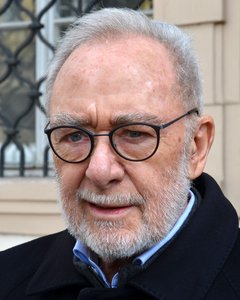
Gerhard Richter
1932 - , Njemačka
Brzi pregled
- Artistic Movement Or Style:
- Fotorealizam
- Abstrakcija
- Artists Or Movements Influenced By This Artist: ['Sigmar Polke']
- Artists Who Influenced This Artist:
- Pablo Picasso
- Jean Arp
- Date Of Birth: 9. veljače 1932.
- Full Name: Gerhard Richter
- Nationality: Njemački
- Notable Artworks:
- Život u kvadratima
- Gilbert
- S. s Dijetevim
- Place Of Birth: Dresden, Njemačka
Povezani članci

Gerhard Richter: A Retrospective on Abstraction, Memory & the Photographic Source
Explore the profound world of Gerhard Richter's abstract paintings. Discover his techniques, influences, and lasting impact on contemporary art – a guide for discerning collectors.
Monochrome Visions: Exploring the Aesthetic & Historical Significance of Black & White Photography
Explore the rich history & artistic power of black and white photography. From early techniques to iconic masters like Ansel Adams, discover why monochrome continues to captivate art lovers today. Expert insights for collectors.
25 Remek-djela Prado Muzeja: Umjetnička Baština Španjolske za Vaš Dom
Uronite u svijet španjolske umjetnosti s 25 remek-djela Prado Muzeja! Otkrijte priče iza Velázqueza, Goye i El Greca. Pronađite inspiraciju za dekoraciju interijera i kupite reprodukcije slika vrhunske kvalitete na AllPaintingsStore.com.

Grahame Sydney: Evoking Otago's Soul Through Light & Landscape
Explore the captivating landscapes of Sir Grahame Sydney, a leading New Zealand artist renowned for his magic realism & evocative depictions of Otago's beauty. Discover key works and delve into his artistic legacy.

The Subtleties of Shade: Exploring Monochrome's Enduring Power in Art History & Contemporary Practice
Explore the captivating world of monochrome painting! Discover its rich history, from Renaissance chiaroscuro to contemporary minimalism. Uncover the emotional power and artistic techniques behind this enduring art form.


