Jamstvo povrata novca u roku od 100 dana Besplatna dostava širom svijeta
449.587umjetnička djela 30.613umjetnici 4.660muzeji 32jezici
Valuta
    Jezik
      Atelje · Osnovano 2015. · Pariz, Francuska
      AllPaintingsStore
      allpaintingsstore.com
      Catalogue entry

      Untitled (D2WVMP)

      2005. Oil On Canvas, 197.0 x 132.0 cm.

      Fig. 1. Gerhard Richter, Untitled (D2WVMP), 2005. Shown as the reproduction you are specifying: , .

      § 1Catalogue data

      § 2Abstract

      Opis kolekcionarskog predmeta

      A hazy blend of photorealism and abstraction defines this tranquil forest scene by Gerhard Richter that captures the elusive nature of memory and invites you to explore his profound mastery of contemporary painting.

      Biografija umjetnika

      Gerhard Richter je njemački slikar koji je poznat po svojim inovativnim slikama koje kombiniraju fotorealizam i abstrakciju te istražuju pitanja identiteta i istorije. Njegovo umetničko delo ima veliki značaj u savremenoj kulturi i kontinuirano inspiriše druge umetnike širom sveta.

      § 3Commentary

      A Window into Uncertainty: The Ethereal World of Gerhard Richter’s Forest (8)

      The moment one encounters Forest (8), there is an immediate sense of stepping into a dreamscape where the boundaries between reality and memory begin to dissolve. Created in 2005, this monumental canvas—measuring a commanding 197 x 132 cm—is far more than a mere depiction of woodland scenery. It serves as a profound meditation on the elusive nature of perception. At first glance, the eye is drawn to a tranquil forest scene, where dense trees dominate the background and architectural structures punctuate the greenery. Yet, beneath this surface serenity lies a masterful tension. Richter employs his signature style, often referred to as Capitalist Realism, to overlay photorealistic detail with a deliberate, haunting haze of abstraction. This technique creates a visual friction that mirrors the anxieties and contradictions of the modern era, making the painting an irresistible centerpiece for those who appreciate art that challenges the eye while soothing the soul.

      The Alchemy of Diffusion and Technique

      To understand the emotional weight of this piece, one must look closely at Richter’s meticulous, almost scientific approach to the medium. The surface of Forest ( 8) is not a flat plane but a mottled, textured landscape in its own right. Richter achieved this distinctive effect through a painstaking process of layering semi-transparent acrylic paints, creating a diffusion that mimics the soft-focus quality of a photographic print. This method is not merely about technical virtuosity; it is an intentional rejection of traditional painting conventions. By blurring the lines between the sharp and the indistinct, Richter captures a sense of hesitation and uncertainty. As the artist himself has suggested, his process is akin to trying to capture something that is already gone. For the collector or interior designer, this technique offers a unique sensory experience: the painting changes character depending on the light and the viewer's distance, offering a dynamic presence that breathes life into any sophisticated space.

      A Legacy of Memory and Reflection

      Beyond its aesthetic brilliance, Forest (8) is deeply rooted in the turbulent historical fabric of Germany. Emerging from the context of a nation navigating the complexities of reunification following 1990, Richter’s work grapples with the heavy legacies of division and the trauma of the mid-20th century. The forest, often a symbol of both sanctuary and the unknown, becomes a stage for exploring how we reconstruct our identities from fragmented histories. The interplay of natural elements and man-made structures within the composition speaks to the intersection of human existence and the enduring, indifferent power of nature. This depth of meaning ensures that the artwork is not just a decorative element, but a profound conversational piece. Whether placed in a quiet study or a grand gallery, this reproduction invites viewers to linger, to question, and to find beauty within the beautiful ambiguity of the unknown.

      Pitanja i odgovori

      Kako se emocija i prigoda za darivanje spajaju kod djela "Untitled (D2WVMP)" autora Gerhard Richter?

      Svojim Tranquil emocionalnim tonom, djelo "Untitled (D2WVMP)" autora Gerhard Richter preporučuje se kao poklon za Corporate Gift.

      Koji umjetnik i koji stil stoje iza "Untitled (D2WVMP)"?

      Gerhard Richter stvorio/la je "Untitled (D2WVMP)" u sklopu pokreta Contemporary Realism.

      Kako "Untitled (D2WVMP)" uspostavlja ravnotežu između svjetla i tame?

      Zabilježene vrijednosti za "Untitled (D2WVMP)" autora Gerhard Richter su: svjetlina deep_shadow, luminancija Dark.
      § 4The artist

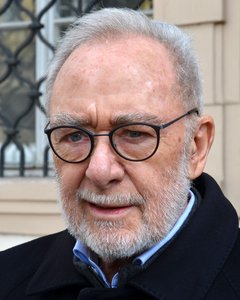
      Gerhard Richter

      Gerhard Richter

      1932 - , Njemačka

      Quick facts about Gerhard Richter

      • Artistic Movement Or Style:
        • Fotorealizam
        • Abstrakcija
      • Artists Or Movements Influenced By This Artist: ['Sigmar Polke']
      • Artists Who Influenced This Artist:
        • Pablo Picasso
        • Jean Arp
      • Date Of Birth: 9. veljače 1932.
      • Full Name: Gerhard Richter
      • Nationality: Njemački
      • Notable Artworks:
        • Život u kvadratima
        • Gilbert
        • S. s Dijetevim
      • Place Of Birth: Dresden, Njemačka

      Biografija umjetnika

      A Life Shaped by Division: The Early Years and Artistic Formation of Gerhard Richter

      Gerhard Richter’s story is inextricably linked to the fractured history of 20th-century Germany. Born in Dresden in 1932, his childhood unfolded under the shadow of a rising National Socialist regime. This formative period, marked by displacement – his family moved several times during the war years – instilled within him a profound sense of uncertainty and a questioning spirit that would permeate his artistic practice for decades to come. The idyllic landscapes of his early upbringing in Reichenau and Waltersdorf were soon disrupted by conflict, leaving an indelible mark on his psyche. His father, though not a fervent supporter of the Nazi party, navigated the complexities of life under authoritarian rule as a schoolteacher, while his mother fostered a love for literature and music within the family. This duality – a pragmatic acceptance of circumstance alongside a yearning for cultural expression – became a defining characteristic of Richter’s own artistic approach. He began formal training at the Dresden Academy of Fine Arts in 1951, initially immersed in the tradition of socialist realism demanded by the East German state. However, even within this constrained environment, a desire for artistic freedom simmered beneath the surface, fueled by growing dissatisfaction with ideological constraints and a longing to explore more expansive creative possibilities.

      Exploring Artistic Horizons: Düsseldorf and the Birth of Photorealism

      The decisive turning point arrived in 1961 when Richter, alongside Marianne Eufinger, bravely abandoned East Germany for Düsseldorf – a city brimming with artistic energy and intellectual ferment. This relocation represented a radical departure from his formative years, liberating him from the confines of socialist dogma and propelling him toward groundbreaking experimentation. Düsseldorf became Richter’s crucible where he dismantled the stylistic conventions of socialist realism, embracing techniques that would reshape the landscape of contemporary art. He swiftly adopted photorealism, meticulously reproducing photographic images with astonishing precision—a method that interrogated the very nature of visual perception and challenged accepted notions of artistic representation. Simultaneously, Richter wrestled with abstraction, generating canvases layered with vibrant hues and dynamic brushstrokes—often utilizing a revolutionary squeegee technique to manipulate paint in unpredictable ways. This embrace of chance and spontaneity underscored his conviction that artistic innovation resided not merely in mastering technical skills but also in relinquishing control and welcoming unforeseen outcomes. His collaboration with Sigmar Polke yielded the provocative term ‘Capitalist Realism,’ encapsulating their shared skepticism toward established artistic norms and their appropriation of imagery from advertising and mass media—a conceptual gesture that continues to resonate today.

      The Language of Color and Texture: Expanding Artistic Vocabulary

      Richter’s artistic vocabulary expanded throughout the 1960s and onward, encompassing a remarkable spectrum of methods and thematic concerns. His photorealistic paintings weren't simply reproductions; they were investigations into how we perceive reality—a process Richter dissected with meticulous detail while simultaneously questioning its veracity. He countered this approach by delving into abstraction, generating canvases infused with bold colors and expressive brushstrokes—often employing the squeegee technique to introduce an element of serendipity into his creative process. This method deliberately disrupted conventional artistic conventions, prioritizing spontaneity over calculated precision. Furthermore, Richter’s ‘Color Charts,’ systematic arrangements of colored squares, served as a conceptual challenge—a deliberate dismantling of traditional painting practices and a questioning of what constituted “painting” itself. These works weren't about stylistic preferences but rather about exploring the fundamental properties of color and its organizational potential—a testament to Richter’s unwavering commitment to artistic exploration.

      Influence and Legacy: Shaping Contemporary Art

      Gerhard Richter’s influence on contemporary art is undeniable. His willingness to defy categorization, his relentless pursuit of innovation, and his profound engagement with historical and political themes have cemented his position as one of the most significant artists of our time—a figure who continues to inspire generations of creatives. He resisted easy stylistic definitions, prioritizing conceptual rigor alongside technical virtuosity—a combination that earned him widespread critical acclaim and commercial success. Richter’s art speaks to the anxieties and uncertainties inherent in modern existence—grappling with issues of memory, identity, and the elusive quest for meaning amidst fragmentation. His refusal to offer definitive answers prompted viewers to confront their own assumptions and engage in critical reflection—a characteristic that distinguishes his work from many others produced during his era. His legacy transcends mere artistic achievement; it resides in his unwavering conviction that art should provoke thought and challenge conventional perspectives. Richter’s enduring influence can be discerned in the oeuvre of countless artists who have adopted his experimental techniques and embraced his philosophical stance—a testament to his transformative contribution to the visual arts. Richter's impact extends far beyond the confines of his own artistic practice—he remains a pivotal voice in contemporary art, inspiring ongoing dialogue and fostering a deeper understanding of the complexities of our time.

      § 5Comparanda

      § 6Questions

      Osnovne informacije

      • Dimensions: 197 x 132 cm
      • Notable elements or techniques: Photorealistic layering
      • Title: Untitled (D2WVMP)
      • Subject or theme: Landscape
      • Medium: Oil on Canvas
      • Movement: Capitalist Realism

      Kviz o umjetnosti

      Svako pitanje ima samo jedan točan odgovor.

      Pitanje 1:
      What is the predominant color palette used in ‘Forest (8)’?
      Pitanje 2:
      Gerhard Richter’s artistic style is often described as ‘Capitalist Realism.’ What does this term refer to?
      Pitanje 3:
      Approximately how large is the canvas upon which ‘Forest (8)’ was painted?
      Pitanje 4:
      The image description mentions people within the painting. What is a key characteristic of Richter’s approach to depicting figures?
      Pitanje 5:
      What year was ‘Forest (8)’ created?

      § 7Cite this entry

      AllPaintingsStore.com, “Gerhard Richter, Untitled (D2WVMP) (2005)”, https://allpaintingsstore.com/hr/art/gerhard-richter-untitled-d2wvmp-D2WVMP-en/ArtistReproduction/ (accessed 2 Listopad 2026).

      § 8The reproduction

      Ručno rađena uljana reprodukcija

      Ručno oslikano uljanim bojama na platnu u dimenzijama i okviru po vašem izboru, izrađeno po narudžbi od strane naših umjetnika. ( Prebacite na printove Prebacite na digitalnu sliku)

      It is specified on the order sheet in the margin; the present state of that sheet reads as follows.

      Untitled (D2WVMP)

      Tehnika reprodukcije

      Veličina reprodukcije

      -

      Odabrani vrhunski umjetnik

      Više detalja, profinjenosti i dodatnog vremena za izradu

      -

      Okvir za reprodukciju

      -

      -

      Za umjetnička djela ili reprodukcije veće od 105 cm (približno 41 inč) na bilo kojoj strani, okvir će biti isporučen u obliku rastavljenog seta za montažu. Ovaj način osigurava sigurnu dostavu i sprječava oštećenja tijekom transporta.

      Potrebna je profesionalna montaža – ovo nije proizvod za samostalnu izradu.
      Set mora sastaviti i platno zategnuti iskusni profesionalni uokvirivač, koristeći drvno ljepilo (nije uključeno u set), kljeste za zatezanje platna i stege kako bi se održao pravilan kut letvica dok se ljepilo suši. Nepravilna montaža ili neravnomjerno zategnuto platno mogu trajno oštetiti umjetničko djelo, a takva oštećenja nisu pokrivena našim jamstvom.

      • Sve letvice od punog drveta su uključene, precizno izrezane po mjeri.

      • Montira se pomoću priloženih vijaka, uz dodatak ljepila za drvo za spojeve u kutovima, koje nije uključeno u set i koje vaš okviraš mora vlastito nabaviti.

      • Potrebni su profesionalni alati koji nisu uključeni: škripc za zatezanje platna (zatezač) i stezaljke za održavanje pravokonačnosti letvica tijekom sušenja ljepila.

      Važno:
      Za spojeve u kutovima potrebno je ljepilo za drvo, letvice se moraju pričvrstiti stezgama dok se ljepilo potpuno ne osuši, a za zatezanje platna na sastavljenom okviru potreban je alat za zatezanje platna. Nijedan od ovih alata nije uključen u set. Molimo vas da prije narudžbe ove veličine osigurate uslugu iskusnog profesionalnog uokvirivača.

      Natpisna pločica

      -

      -

      Zaštitni lak

      Sjajni lak (pojačava intenzitet boja, štiti od svjetlosti i vlage)

      -

      Prilagodite svoje umjetničko djelo

      Primjeri mogućnosti prilagodbe: Zamijenite lice fotografijom kupca; Dodajte ljubimca (npr. zamijenite mačku psom); Uključite skrivenu poruku u pozadinu; Promijenite pejzaž ili elemente pozadine.

      -

      Hitna dostava

      Globalna dostava () u roku od 3-4 tjedna umjesto standardnih 5 tjedana. (30 Listopad). Bez kompromisa u kvaliteti.

      -

      Brza dostava

      Dostava širom svijeta () u roku od 5 tjedana. (6 Studeni).

      Uključeno u cijenu

      Ukupna cijena

      € 229

      Included with every order

      • Besplatna ekspresna dostava širom svijeta
      • Visokokvalitetno laneno platno
      • Potpuno osiguranje dostave
      • Jamstvo povrata carine i uvoznih poreza
      • Jamstvo vjernosti boja
      • Politika povrata u roku od 100 dana (samo u slučaju nedostataka)
      • Jamstvo povrata 100% novca
      • Popust na više proizvoda
      Order sheet