Jamstvo povrata novca u roku od 100 dana Besplatna dostava širom svijeta
449.564umjetnička djela 30.613umjetnici 4.660muzeji 32jezici
Catalogue entry

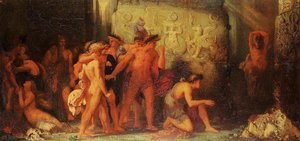
Pasiphaé

Tempera.

Fig. 1. Gustav Moreau, Pasiphaé. Shown as the reproduction you are specifying: , .

§ 1Catalogue data

§ 2Abstract

Opis kolekcionarskog predmeta

Moreau’s mesmerizing Symbolist painting depicts Pasiphae, capturing the myth's haunting beauty through intricate detail and rich color palettes—a timeless exploration of desire and transformation within a fantastical landscape.

Biografija umjetnika

Pariz Francuska Gustav Moreau Moreau Iskužite očarujuću simbolističku umjetnost Gustavea Moreaua (1826-1898), poznat po mitološkim i biblijskim slikama poput 'Salome'. Utjecao je Matissea i Rouaulta. Otkrijte njegov sanjski svijet! Gustav Moreau, Simbolizam, Francuski umjetnik, Mitološka umjetnost, Salome, Moreau slike, Alegorička umjetnost, 19. stoljeća umjetnost

§ 3Commentary

A Descent into Mythic Desire

To encounter Gustave Moreau’s Pasiphaé is to step beyond the veil of the tangible world and enter a realm where the boundaries between dream and reality dissolve. This monumental canvas, painted during the height of the Symbolist movement between 1890 and 1895, serves as much more than a mere retelling of Greek mythology; it is an immersive psychological landscape. The painting captures the profound tension of the Phoenician queen of Crete, whose legendary encounter with Zeus's bull birthed a legacy of transgression and monstrous beauty. Moreau does not rely on explicit, jarring storytelling, but instead invites the viewer into a state of quiet, unsettling contemplation, where every shadow and glimmer of light whispers of forbidden longing.

The composition is masterfully orchestrated to evoke an atmosphere of oppressive enchantment. A dense, dreamlike forest dominates the scene, with towering trees whose intertwining branches create a claustrophobic yet majestic canopy. This labyrinthine setting mirrors Pasiphae’s own tormented inner state, trapping her within a visual metaphor for her inescapable fate. As the eye wanders through the muted, atmospheric depths, one might catch glimpses of distant figures that add layers of complexity to this mythic stage, suggesting a world teeming with unseen, archetypal forces.

The Alchemy of Symbolist Technique

Moreau’s technical prowess is on full display through his meticulous use of tempera on canvas, a medium he favored for its ability to achieve an almost supernatural luminosity. He employs a palette rich in golds and deep reds, which glow against more somber, earthy tones, creating a dramatic chiaroscuro effect that breathes life into the mythological figures. His style is characterized by a unique blend of fine, intricate detail and a deliberate flattening of perspective, a hallmark of Symbolist aesthetics that prioritizes emotional resonance over photographic accuracy.

The artist’s brushwork creates a texture that feels both ancient and ethereal. By eschewing the fleeting light of the Impressionists in favor of a more permanent, jewel-like finish, Moreau achieves a sense of timelessness. This technique allows the painting to function as a window into the subconscious, where the physical world is secondary to the spiritual and emotional truths being conveyed. For the collector or designer, this piece offers a profound depth of texture and color that can serve as a commanding focal point in any curated space.

Philosophical Echoes and Emotional Resonance

Beyond its visual splendor, Pasiphaé is deeply rooted in the intellectual currents of the late 19th century. Moreau was profoundly moved by Nietzschean philosophy, particularly the concept of Eternal Recurrence—the idea that life and myth repeat in endless, archetypal cycles. In this work, the bull stands as a potent symbol of primal instinct and irrationality, while Pasiphae represents the vulnerability of the human soul when confronted with overwhelming, elemental forces. The painting captures that precise, breathless moment of transition between human agency and divine or animalistic destiny.

For those seeking to bring art into their homes that transcends mere decoration, this reproduction offers an opportunity to possess a piece of profound intellectual and emotional weight. It is an artwork that demands engagement, rewarding the viewer with new discoveries upon every glance. Whether placed in a quiet study or a grand gallery, Moreau’s vision of mythic desire provides a sophisticated, evocative atmosphere, inviting all who behold it to explore the beautiful, haunting mysteries of the human psyche.

Pitanja i odgovori

Pripada li "Pasiphaé" kojoj periodi umjetnikove karijere Gustav Moreau?

Unutar karijere umjetnika Gustav Moreau, djelo "Pasiphaé" pripada razdoblju Mature Period. Ova faza omogućuje usporedbu s ostalim djelima tog umjetnika.

U kojem je položenu (okrenu) umjetničko djelo "Pasiphaé" autora Gustav Moreau?

"Pasiphaé" autora Gustav Moreau je u Portrait formatu. Format opisuje proporcije kompozicije.

Kakav osjećaj stvaraju boje djela "Pasiphaé" autora Gustav Moreau?

"Pasiphaé" autora Gustav Moreau spaja Earthy paletu s Mysterious tonom.
§ 4The artist

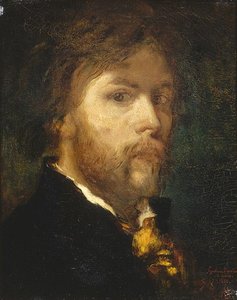
Gustav Moreau

Gustav Moreau

1826 - 1898, Francuska

Quick facts about Gustav Moreau

  • Artistic Movement Or Style: Simbolizam
  • Artists Or Movements Influenced By This Artist:
    • Henri Matisse
    • Georges Rouault
  • Artists Who Influenced This Artist:
    • Eugène Delacroix
    • Michelangelo
    • Leonardo da Vinci
  • Date Of Birth: 6. svibnja 1826.
  • Date Of Death: 18. travnja 1898.
  • Full Name: Gustave Moreau
  • Nationality: Francuz
  • Notable Artworks:
    • Salome Dansujući Pred Herodom
    • Jupiter I Semele
    • Orfeus
    • Pozorje
    • Desdemona
  • Place Of Birth: Pariz, Francuska

Biografija umjetnika

A Dream Weaver of Symbolism: The Life and Art of Gustave Moreau

Gustave Moreau, a name synonymous with the ethereal beauty and enigmatic depths of Symbolist painting, emerged from 19th-century Paris as a singular artistic voice. Born in 1826 into a bourgeois family—his father an architect and archivist—Moreau’s early life was steeped in intellectual curiosity and aesthetic sensibility. From a young age, he displayed a remarkable gift for drawing, nurtured through traditional academic training at the École des Beaux-Arts under figures like François-Édouard Picot. However, Moreau's artistic path would diverge sharply from the prevailing Realist and Impressionist currents of his time. He wasn’t interested in capturing fleeting moments or objective reality; instead, he sought to unlock the hidden realms of myth, religion, and the human psyche through a deeply personal and symbolic visual language. His journey was one of inward exploration, translating subjective emotions and spiritual yearnings onto canvas with an obsessive attention to detail and a vibrant, often opulent palette.

The Forge of Imagination: Influences and Artistic Development

Moreau’s artistic development wasn't born in a vacuum. While rejecting the dominant trends of his era, he drew inspiration from diverse sources. The dramatic use of color and exotic subject matter found in the works of Eugène Delacroix resonated deeply with him, igniting a passion for narrative painting imbued with emotional intensity. He also held Renaissance masters like Michelangelo and Leonardo da Vinci in high esteem, admiring their mastery of composition, anatomy, and psychological insight. Yet, Moreau wasn’t merely imitating these artists; he was synthesizing their influences into something entirely new. His travels to Italy in the 1850s proved pivotal, immersing him in the art of antiquity and the Renaissance, providing a wealth of motifs and stylistic cues that would populate his future works. He meticulously copied Old Master paintings, not as an exercise in replication, but as a means of absorbing their techniques and unlocking their secrets. This dedication to craft, combined with his burgeoning interest in mythology and literature, laid the foundation for his unique artistic vision. Moreau’s formative years were marked by a profound engagement with intellectual currents shaping European thought. He devoured texts on philosophy, psychology, and mythology—particularly those exploring Jungian archetypes and Freud's psychoanalytic theories—influencing his artistic explorations into the subconscious mind. His fascination with Dante Alighieri’s *Inferno* fueled his imaginative depictions of hellish landscapes and tormented figures, reflecting a preoccupation with confronting existential anxieties. Simultaneously, he cultivated an admiration for the grandeur and spiritual solemnity of Byzantine art, absorbing its stylistic conventions—particularly the use of gold leaf—which would become integral to his distinctive artistic style.

A World of Symbols: Themes and Techniques

Moreau’s paintings are not simply illustrations of myths or biblical stories; they are complex allegories that invite contemplation and interpretation. He delved into narratives like those of Salome, Orpheus, Jupiter and Semele, and countless others, not to retell them literally, but to explore their underlying psychological and spiritual truths. His canvases teem with symbolic imagery—serpents representing temptation, jewels signifying earthly desires, and figures embodying abstract concepts like grief, loss, or redemption. He masterfully created a dreamlike atmosphere through intricate detail, rich textures, and an often unsettling juxtaposition of light and shadow. Moreau’s technique was characterized by meticulous layering of paint, creating surfaces that shimmer with iridescent colors and evoke a sense of otherworldly beauty. His use of gold leaf further enhanced this effect, lending his works a Byzantine quality that underscored their spiritual dimension. He wasn't concerned with capturing realistic textures or perspectives; instead, he prioritized the expressive power of color and form to convey mood and meaning. Moreau’s artistic output spanned decades, resulting in over 15,000 paintings, watercolors and drawings—a testament to his unwavering commitment to his craft. Among his most celebrated works are *Salome Dancing before Herod*, a dramatic portrayal capturing the seductive allure of biblical myth; *Jupiter and Semele*, showcasing Moreau’s masterful composition and vibrant color palette; *Orpheus*, exploring themes of artistic inspiration and loss through evocative imagery; *The Apparition*, depicting an ethereal scene imbued with spiritual symbolism; and *Desdemona*, portraying Shakespeare's tragic heroine with poignant sensitivity. His paintings continue to captivate audiences today, offering glimpses into the hidden depths of the human soul and reminding us of the enduring power of art to transcend the boundaries of reality.

Legacy and Influence: The Enduring Power of Symbolism

Though initially met with mixed reactions, Moreau became a central figure in the burgeoning Symbolist movement during the 1890s. Unlike some of his contemporaries who actively sought public attention, he remained somewhat reclusive, preferring to work independently and avoid artistic debates. However, his influence was undeniable. He accepted a professorship at the École des Beaux-Arts, where he profoundly impacted generations of artists, including Henri Matisse and Georges Rouault. He encouraged his students to embrace imagination, symbolism, and individual expression, urging them to break free from conventional artistic norms. Moreau’s unwavering belief in the transformative potential of art—particularly its ability to communicate profound psychological truths—established him as a pioneer of modern aesthetic thought. The Musée Gustave Moreau, housed in his former studio and home in Paris, stands as a poignant memorial to his life's work—a sanctuary where visitors can immerse themselves in the mesmerizing world of this extraordinary artist.

§ 5Comparanda

§ 6Questions

Osnovne informacije

  • Influences: Romanticism
  • Artistic style: Dreamlike; Decorative
  • Subject or theme: Mythology; Greek Legend
  • Artist: Gustave Moreau
  • Notable elements or techniques: Detailed rendering; Symbolism

§ 7Cite this entry

AllPaintingsStore.com, “Gustav Moreau, Pasiphaé”, https://allpaintingsstore.com/hr/art/gustave-moreau-pasiphae-ARJELQ-en/ArtistReproduction/ (accessed 5 Listopad 2026).

§ 8The reproduction

Ručno rađena uljana reprodukcija

Ručno oslikano uljanim bojama na platnu u dimenzijama i okviru po vašem izboru, izrađeno po narudžbi od strane naših umjetnika. ( Prebacite na printove Prebacite na digitalnu sliku)

It is specified on the order sheet in the margin; the present state of that sheet reads as follows.

Pasiphaé

Tehnika reprodukcije

Veličina reprodukcije

-

Odabrani vrhunski umjetnik

Više detalja, profinjenosti i dodatnog vremena za izradu

-

Okvir za reprodukciju

-

-

Za umjetnička djela ili reprodukcije veće od 105 cm (približno 41 inč) na bilo kojoj strani, okvir će biti isporučen u obliku rastavljenog seta za montažu. Ovaj način osigurava sigurnu dostavu i sprječava oštećenja tijekom transporta.

Potrebna je profesionalna montaža – ovo nije proizvod za samostalnu izradu.
Set mora sastaviti i platno zategnuti iskusni profesionalni uokvirivač, koristeći drvno ljepilo (nije uključeno u set), kljeste za zatezanje platna i stege kako bi se održao pravilan kut letvica dok se ljepilo suši. Nepravilna montaža ili neravnomjerno zategnuto platno mogu trajno oštetiti umjetničko djelo, a takva oštećenja nisu pokrivena našim jamstvom.

  • Sve letvice od punog drveta su uključene, precizno izrezane po mjeri.

  • Montira se pomoću priloženih vijaka, uz dodatak ljepila za drvo za spojeve u kutovima, koje nije uključeno u set i koje vaš okviraš mora vlastito nabaviti.

  • Potrebni su profesionalni alati koji nisu uključeni: škripc za zatezanje platna (zatezač) i stezaljke za održavanje pravokonačnosti letvica tijekom sušenja ljepila.

Važno:
Za spojeve u kutovima potrebno je ljepilo za drvo, letvice se moraju pričvrstiti stezgama dok se ljepilo potpuno ne osuši, a za zatezanje platna na sastavljenom okviru potreban je alat za zatezanje platna. Nijedan od ovih alata nije uključen u set. Molimo vas da prije narudžbe ove veličine osigurate uslugu iskusnog profesionalnog uokvirivača.

Natpisna pločica

-

-

Zaštitni lak

Sjajni lak (pojačava intenzitet boja, štiti od svjetlosti i vlage)

-

Prilagodite svoje umjetničko djelo

Primjeri mogućnosti prilagodbe: Zamijenite lice fotografijom kupca; Dodajte ljubimca (npr. zamijenite mačku psom); Uključite skrivenu poruku u pozadinu; Promijenite pejzaž ili elemente pozadine.

-

Hitna dostava

Globalna dostava () u roku od 3-4 tjedna umjesto standardnih 5 tjedana. (2 Studeni). Bez kompromisa u kvaliteti.

-

Brza dostava

Dostava širom svijeta () u roku od 5 tjedana. (9 Studeni).

Uključeno u cijenu

Ukupna cijena

€ 229

Included with every order

  • Besplatna ekspresna dostava širom svijeta
  • Visokokvalitetno laneno platno
  • Potpuno osiguranje dostave
  • Jamstvo povrata carine i uvoznih poreza
  • Jamstvo vjernosti boja
  • Politika povrata u roku od 100 dana (samo u slučaju nedostataka)
  • Jamstvo povrata 100% novca
  • Popust na više proizvoda
Order sheet