


 Pregledaj u stvarnoj veličini
 Podijeli
 Podijeli
 Detalji
 Vodič
Vodič

 Preuzmi datoteku
 Slični predmeti
 Rentgenska snimka
 Slide show
 Statistika
Astrolabe with inscriptions in Gothic and Arabic


 Pročitajte više
Ručno rađena uljana reprodukcija
Ručno oslikano uljanim bojama na platnu u dimenzijama i okviru po vašem izboru, izrađeno po narudžbi od strane naših umjetnika. ( Prebacite na prodaju printova Prebacite na digitalnu prodaju slika)




P118B $10

P118H $10

P118W $10

P438Z $10

P508JH $12

P508YH $12

P805H $10

P805Z $10

P919BZ $10

P919G $10

P919XJ $10

P959ZH $10

P968JZ $12

W106C $8

W218G $10

W218JH $8

W218Y $10

W307PJ $10

W316G $10

W316PJ $8

W316Y $10

W398PJ $8

W4111J $10

W500HY $15

W500JH $15

W692G $12

W849H $8

W940BG $15

W953PJ $8




Odaberite jednu od naših unaprijed definiranih veličina koje odgovaraju izvornim proporcijama umjetničkog djela.

Možete unijeti vlastite dimenzije kako bi odgovarale određenom okviru ili prostoru. Ako odabrana veličina ne odgovara proporcijama izvorne slike, izrezat ćemo umjetničko djelo ili proširiti sliku dodatnim ručno oslikanim elementima. Digitalni nacrt bit će vam poslan na odobrenje prije početka proizvodnje.
Imajte na umu da pregled na ekranu ne prikazuje stvarno izrezivanje ili proširivanje. Samo će nacrt točno prikazati konačni sastav.
Iako su dostupne prilagođene veličine, preporučujemo odabir dimenzije s preddefiniranog popisa kako bismo očuvali izvorne proporcije.
Nakon narudžbe, tim AllPaintingsStore.com kontaktirat će klijenta putem e-pošte radi dobivanja uputa te dostaviti probni prikaz (mockup)
Isporuka širom svijeta () u roku od 3-4 tjedna umjesto standardnih 5 tjedana. (21 Rujan). Bez kompromisa u kvaliteti.

Besplatna ekspresna dostava širom svijeta

Visokokvalitetno laneno platno

Potpuno osiguranje transporta

Jamstvo povrata carine i uvoznih poreza

Jamstvo vjernosti boja

Politika povrata u roku od 100 dana (samo u slučaju nedostataka)

Jamstvo povrata 100% novca

Popust na više proizvoda
 Opcija stakla dostupna je samo za dimenzije manje od 110 cm

Astrolabe with inscriptions in Gothic and Arabic
Tehnika izrade
Veličina reprodukcije
-


Ukupna cijena
$ 258
Srodna umjetnička djela


Biografija umjetnika
Nardo di Cione: A Florentine Lyricist of the Late Quattrocento
Born around 1320 in Florence, Nardo di Cione – often referred to as “Il Fine” (the Master) – stands as a pivotal figure bridging the Gothic and nascent Renaissance artistic landscapes of Italy. While his life was tragically cut short around 1365, his brief but intensely productive career left an indelible mark on Florentine painting, characterized by a lyrical sensibility, profound humanism, and a masterful command of color and form. His work, meticulously reconstructed through surviving panels and frescoes, reveals an artist forging his own distinct voice within the vibrant artistic milieu of 14th-century Florence.
Nardo’s origins are deeply intertwined with that of his brother, Orcagna, a leading figure in Florentine art during the same period. Their shared workshop fostered a dynamic environment of experimentation and collaboration, though Nardo quickly established himself as possessing a unique artistic temperament. Unlike Orcagna's often monumental and structurally complex works, Nardo’s paintings are imbued with a delicate grace and emotional depth. He was not merely a painter; he was a sculptor, architect, and administrator – roles that likely informed his broader understanding of spatial relationships and visual harmony.
The Frescoes of Santa Maria Novella: A Masterpiece of Late Gothic Narrative
Nardo’s most significant contribution to the art historical record lies in the frescoes he executed within the chapel of Sant'Anna at the Chiostro dei Morti (Dead Cloister) of Santa Maria Novella. These works, dating from approximately 1345-1350, represent a cornerstone of his artistic development and offer invaluable insight into his stylistic evolution. The scenes depict episodes from the life of St. Anne and feature four saints – a testament to Nardo’s skill in portraying human figures with remarkable realism and psychological nuance.
However, it is the series of frescoes within the Strozzi Chapel that truly showcase Nardo's artistic maturity. Commissioned by the wealthy Strozzi family, these works depict key moments from Dante Alighieri’s *Divine Comedy*, specifically the judgment scenes – Hell, Paradise, and Last Judgment. Nardo masterfully translates the vivid imagery of Dante’s poem into a visual narrative, employing a dramatic composition, expressive gestures, and a rich palette to convey both the terror of damnation and the serenity of salvation. The frescoes are not simply decorative; they are profound theological meditations rendered in paint.
Key Works and Stylistic Developments
Beyond the Strozzi Chapel, Nardo’s oeuvre is relatively small but remarkably concentrated. The “Standing Madonna” (Institute of Arts, Minneapolis) exemplifies his early style – a graceful depiction of the Virgin Mary with a serene expression and flowing drapery. The “St John the Baptist with Sts John the Evangelist and James” (National Gallery, London), often considered a triptych, demonstrates his increasing mastery of perspective and composition. The panel depicting the "Crucifixion" (Galleria degli Uffizi, Florence) is particularly noteworthy for its emotional intensity and expressive rendering of Christ’s suffering.
Throughout his career, Nardo's style evolved subtly but significantly. He moved away from the rigid formality of earlier Gothic painting towards a more naturalistic and emotionally resonant approach. His use of color became increasingly sophisticated, employing subtle gradations and delicate harmonies to create a sense of depth and atmosphere. The influence of Giotto di Bondone, the dominant painter of his time, is evident in Nardo’s work, particularly in his attention to human anatomy and psychological expression, but Nardo ultimately developed a distinct lyrical style that set him apart.
Legacy and Historical Significance
Nardo di Cione's tragically short life ensured that he did not enjoy the prolonged recognition afforded to some of his contemporaries. However, his work has been increasingly appreciated in recent decades for its artistic merit and its contribution to the development of Florentine painting. He represents a crucial link between the Gothic tradition and the emerging Renaissance style, embodying a synthesis of emotional intensity, humanism, and technical skill.
His frescoes at Santa Maria Novella remain among the most celebrated examples of late Gothic art in Florence, while his Strozzi Chapel cycle offers a unique visual interpretation of Dante’s *Divine Comedy*. Nardo di Cione's legacy lies not only in his individual masterpieces but also in his role as a pivotal figure in the transition from medieval to Renaissance painting – an artist who captured the spirit of his time with remarkable grace and sensitivity.

jean le fondeur
1365 - 1436 , France
Brzi pregled
- Artistic Movement Or Style: Late Gothic/Early Renaissance
- Artists Who Influenced This Artist: ['Orcagna],\n "Artists or movements influenced by this artist": ["Giotto"]\n}']
- Date Of Birth: ca. 1320
- Date Of Death: ca. 1365
- Full Name: Nardo di Cione
- Nationality: Italian
- Notable Artworks:
- St Anna frescoes
- Standing Madonna
- Strozzi Chapel frescoes
- St John Baptist
- Crucifixion panel
- Place Of Birth: Firenze, Italy
Povezani članci
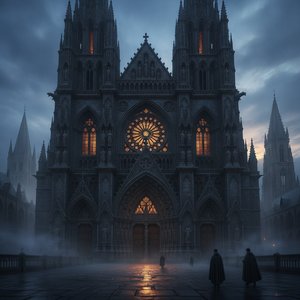
Gothic Art Guide for Hotel Designers: Leveraging Dramatic Shadows and Architectural Grandeur in Luxury Interiors
Elevate hospitality interiors with our expert guide to Gothic art. Discover how to leverage dramatic shadows, architectural grandeur, and high-end reproductions to create sophisticated, atmospheric hotel spaces that captivate guests.

