


 Pregledaj u stvarnoj veličini
 Podijeli
 Podijeli
 Detalji
 Vodič
Vodič

 Preuzmi datoteku
 Slični predmeti
 Rentgenska snimka
 Slide show
 Statistika
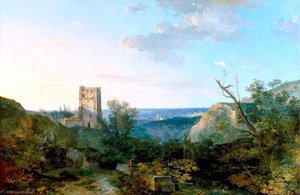
Fort Regent and St Helier, Jersey
 Romanticism
 1815
1815 54.0 x 75.0 cm
 Pročitajte više
Ručno rađena uljana reprodukcija
Ručno oslikano uljanim bojama na platnu u dimenzijama i okviru po vašem izboru, izrađeno po narudžbi od strane naših umjetnika. ( Prebacite na prodaju printova Prebacite na digitalnu prodaju slika)




































Odaberite jednu od naših unaprijed definiranih veličina koje odgovaraju izvornim proporcijama umjetničkog djela.

Možete unijeti vlastite dimenzije kako bi odgovarale određenom okviru ili prostoru. Ako odabrana veličina ne odgovara proporcijama izvorne slike, izrezat ćemo umjetničko djelo ili proširiti sliku dodatnim ručno oslikanim elementima. Digitalni nacrt bit će vam poslan na odobrenje prije početka proizvodnje.
Imajte na umu da pregled na ekranu ne prikazuje stvarno izrezivanje ili proširivanje. Samo će nacrt točno prikazati konačni sastav.
Iako su dostupne prilagođene veličine, preporučujemo odabir dimenzije s preddefiniranog popisa kako bismo očuvali izvorne proporcije.
Nakon narudžbe, tim AllPaintingsStore.com kontaktirat će klijenta putem e-pošte radi dobivanja uputa te dostaviti probni prikaz (mockup)
Isporuka širom svijeta () u roku od 3-4 tjedna umjesto standardnih 5 tjedana. (21 Rujan). Bez kompromisa u kvaliteti.

Besplatna ekspresna dostava širom svijeta

Visokokvalitetno laneno platno

Potpuno osiguranje transporta

Jamstvo povrata carine i uvoznih poreza

Jamstvo vjernosti boja

Politika povrata u roku od 100 dana (samo u slučaju nedostataka)

Jamstvo povrata 100% novca

Popust na više proizvoda
 Opcija stakla dostupna je samo za dimenzije manje od 110 cm

Fort Regent and St Helier, Jersey
Tehnika izrade
Veličina reprodukcije
-


Ukupna cijena
$ 258
Srodna umjetnička djela



Biografija umjetnika
The Ethereal Vision of John Tobias Young
In the annals of British Romanticism, few names evoke such a poignant sense of fleeting beauty as John Tobias Young. Born around 1786 in the quiet environs of Mildenhall, near Marlborough, Young’s life was a brief but luminous chapter in the history of landscape painting. Though his career was tragically truncated by his death in December 1824 at the young age of thirty-eight, he left behind a visual legacy that transcends the mere documentation of scenery. His work serves as a window into a period where the boundaries between the physical world and the spiritual sublime were perpetually blurred, capturing the very soul of the landscapes he traversed.
Young’s artistic journey was deeply shaped by his early exposure to the theatrical and the atmospheric. Before establishing himself as a master of the canvas, he served as a stage designer for Lord Barrymore’s private theatre at Wargrave. This unique background in scenography—a discipline requiring meticulous attention to depth, light, and emotional resonance—undoubtedly informed his approach to the natural world. He did not merely paint what was visible; he constructed vistas that invited the viewer into a carefully orchestrated emotional experience, much like a stage set designed to evoke wonder or melancholy.
The Spectral Beauty of the Channel Islands
While his roots lay in England, it was the rugged and enchanting landscape of Jersey that became the true muse for Young’s most profound achievements. Between 1816 and 1824, he produced a remarkable series of works often referred to as his "Jersey Paintings." These pieces are far more than topographical records; they are atmospheric meditations on the Channel Islands' dramatic coastline. Through his brush, the cliffs of Jersey become sites of sublime power, where the interplay of light and shadow suggests a haunting, spectral quality.
His technique was heavily influenced by the Luminism movement, a style he refined under the tutelage of the celebrated watercolorist Tobias Ragg. By mastering soft tonal gradations and a delicate atmospheric haze, Young was able to capture the ephemeral qualities of dawn, twilight, and the mist-laden sea. His ability to manipulate color and light allowed him to portray the rugged terrain with a breathtaking realism that felt almost supernatural. In works such as “Castle on a Rocky Road above a Bay,” one can sense the artist's profound desire to convey the spiritual resonance of nature—a hallmark of the Romantic era.
Legacy and Artistic Significance
The significance of John Tobias Young lies in his ability to bridge the gap between the meticulous observation of the landscape and the emotional depth of the Romantic ideal. His work anticipates the grandeur found in the later Hudson River School, sharing a common devotion to the majesty of the natural world. Though much of his reputation was once confined to the Southampton region, where he practiced for many years, his influence resonates through the enduring collections held in institutions such as the Victoria and Albert Museum and the Salisbury Library.
To look upon a Young landscape is to experience a sense of sublime isolation. His paintings remain vital testaments to a period of transition in British art, moving away from Neoclassical rigidity toward a more fluid, emotive expression. Even today, his depictions of the Jersey coastline continue to captivate, reminding us that true art does not just capture a moment in time, but preserves the very feeling of existence within the vast, ever-changing theater of nature.

john tobias young
1786 - 1828
Brzi pregled
- Artistic Movement Or Style: Romantic Landscape Painting
- Artists Or Movements Influenced By This Artist: ['Hudson River School']
- Artists Who Influenced This Artist:
- Edwin Young
- Tobias Ragg
- Date Of Death: 1824
- Full Name: John Tobias Young
- Nationality: British
- Notable Artworks: ['Castle on a Rocky Road above a Bay ca. 1811-1822']
- Place Of Birth: Mildenhall, England
Povezani članci

The Sublime and the Picturesque: Exploring Emotion & Nature in Romantic Landscape Painting
Explore the emotional power of Romantic landscape painting! Discover the sublime & picturesque traditions, key artists like Friedrich & Cole, and find your perfect artwork at AllPaintingsStore.

Glavna 10 Remek-djela Romantizma: Uljepšajte Svoj Dom Umjetnošću
Otkrijte 10 remek-djela romantizma koja su definirala pejzažno slikarstvo! Uronite u svijet Friedricha, Turnera i Aivazovskog. Inspirirajte svoj interijer vrhunskim umjetničkim djelima. Kupujte reprodukcije na AllPaintingsStore.com!
John Singer Sargent: 25 Remek-djela Portreta i Impresionizma | AllPaintingsStore
Uronite u svijet John Singera Sargenta! Otkrijte 25 remek-djela portreta i impresionizma, priče iza slika te tehničku genijalnost američkog slikara. Reprodukcije vrhunske kvalitete za luksuzni dekor interijera na AllPaintingsStore.com.

John Constable: 25 Remek-djela Engleskog Majstora Krajolika | AllPaintingsStore
Uronite u svijet John Constabla! Otkrijte 25 remek-djela engleskog romantizma i pejzaža. Ekskluzivne reprodukcije slika, zidna dekoracija & inspiracija za dizajn interijera na AllPaintingsStore.com. Istražite cijelu kolekciju online!
John Varley I: Intimate Observation & the British Romantic Landscape
Explore the serene landscapes of John Varley I, a key figure in British Romanticism. Discover his unique watercolour style, collaboration with William Blake & lasting artistic legacy. Learn about collecting Varley's work.

