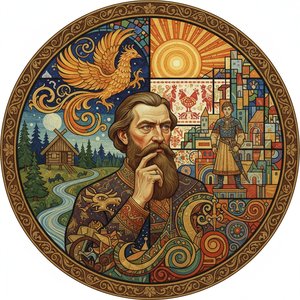
1912. Akril na platnu, 23.0 x 16.0 cm.

§ 1Katalogski podaci

- 23.0 x 16.0 cm


§ 2Apstraktno
Opis kolekcionarskog predmeta
Život Nikole Roeriča bio je zauzet umjetnošću i duhom. Ovaj simbolistički pejzaž prikazuje pastira u stilu Art Nouveau, oslanjajući se na rusku umjetnost prvog desetljeća. Isprobajte njegov prekrasan pogled!
 Prikaži više
Biografija umjetnika
Otkrijte zadivljujuću umjetnost Nickolasa Roericha (1874-1947): simbolizam, himalajski krajolici i duhovna slika. Dizajnirao za Ballets Russes te bio zagovornik očuvanja kulture.
§ 3Komentar
A Portrait of Solitude Amidst Snow
Nicholas Roerich’s “Shepherd,” painted in 1912, stands as a testament to the burgeoning Symbolist movement within Russian art and its embrace of Art Nouveau aesthetics. Measuring just 23 x 16 cm, this unassuming canvas belies a profound exploration of themes relating to spirituality and connection with nature—concepts central to Roerich’s lifelong philosophical pursuits.
- Composition & Subject Matter: The painting centers on a solitary shepherd figure positioned centrally against a simplified landscape dominated by snow-capped mountains. This deliberate framing emphasizes his isolation yet simultaneously conveys a sense of resilience and steadfastness—qualities often associated with the archetype of the shepherd as protector and guide.
- Style & Technique: Roerich skillfully employs stylized forms and muted colors characteristic of Art Nouveau, prioritizing expressive brushstrokes over meticulous realism. The technique involves layering paint to achieve texture, particularly noticeable in depictions of fur coats and boots, creating a tactile impression that complements the overall dreamlike atmosphere.
- Color Palette & Lighting: Earthy tones—browns, whites, and muted reds—form the dominant color scheme, punctuated by subtle blues-greens within the shepherd’s attire. Diffused lighting contributes to a soft luminescence, fostering an emotional resonance that evokes tranquility and contemplation.
- Symbolism & Historical Context: Beyond its aesthetic qualities, “Shepherd” carries symbolic weight. The fur coat represents hardship endured with dignity, mirroring Roerich's own experiences traversing challenging terrains—both physical and spiritual—during his expeditions into the Himalayas. Painted during a period marked by artistic experimentation and intellectual ferment, it reflects the broader Symbolist preoccupation with exploring inner landscapes and conveying transcendent ideas.
- Materials Used: Likely executed in oil paints or gouache on canvas, “Shepherd” exemplifies Roerich’s dedication to capturing atmospheric conditions and textural nuances—a hallmark of his artistic vision.
The artwork's understated elegance and evocative imagery resonate with collectors seeking pieces that transcend mere decoration, offering instead a glimpse into the artist’s worldview and inviting viewers to contemplate themes of solitude, perseverance, and communion with the natural world. Its reproduction on high-quality canvas ensures that its beauty and textural richness are faithfully preserved for generations to come.
Pitanja i odgovori
Koji umjetnik se pripisuje djelu "Shepherd"?
Autorstvo djela "Shepherd" pripisuje se Nikola Roerić.
Kakav osjećaj stvaraju boje djela "Shepherd" autora Nikola Roerić?
"Shepherd" autora Nikola Roerić spaja Neutralne boje paletu s Spokojno tonom.
Kako bi se opisala atmosfera djela "Shepherd" autora Nikola Roerić?
"Shepherd" autora Nikola Roerić opisuje se kao djelo Spokojno raspoloženja. Ova klasifikacija može pomoći u usklađivanju umjetnine s prostorom.


 Prebacite na printove


 Za umjetnička djela ili reprodukcije veće od 105 cm (približno 41 inč) na bilo kojoj strani, okvir će biti isporučen u obliku rastavljenog seta za montažu. Ovaj način osigurava sigurnu dostavu i sprječava oštećenja tijekom transporta.