


 Pregledaj u stvarnoj veličini
 Pošalji
 Podijeli
 Detalji o umjetničkom djelu

 Preuzmi
 Slični predmeti
 Rentgenska snimka
 Automatska prezentacija
Magnifying glass
 Acrylic On Canvas
- WallArt
- Pop Art
 1963
1963- Modern
 40.0 x 40.0 cm
 Prikaži više
Giclée / Umjetnički otisak
Giclée tisak muzejske kvalitete ili otisak na platnu uz brzu proizvodnju i fleksibilne opcije završne obrade. ( Kupi ručno naslikanu sliku Kupi digitalnu sliku)




P118B $10

P118H $10

P118W $10

P438Z $10

P508JH $12

P508YH $12

P805H $10

P805Z $10

P919BZ $10

P919G $10

P919XJ $10

P959ZH $10

P968JZ $12

W106C $8

W218G $10

W218JH $8

W218Y $10

W307PJ $10

W316G $10

W316PJ $8

W316Y $10

W398PJ $8

W4111J $10

W500HY $15

W500JH $15

W692G $12

W849H $8

W940BG $15

W953PJ $8




Odaberite jednu od naših unaprijed definiranih veličina koje odgovaraju izvornim proporcijama umjetničkog djela.

Možete unijeti vlastite dimenzije kako biste umjetničko djelo prilagodili specifičnom okviru ili prostoru. Ako odabrana veličina ne odgovara proporcijama izvornog rada, izrezat ćemo dio slike ili je proširiti pomoću ogledalnog efekta ili jednobojne rubne površine. Digitalni prikaz (mockup) bit će vam poslan na odobrenje prije početka proizvodnje.
Imajte na umu da pregled na zaslonu ne odražava stvarno izrezivanje ili proširivanje. Samo će mockup točno prikazati konačnu kompoziciju.
Iako su dostupne prilagođene veličine, preporučujemo odabir dimenzije iz unaprijed definirane liste kako biste očuvali izvorne proporcije.
Dostava širom svijeta () u roku od 2 tjedna umjesto standardnih 4/5 tjedana. (24 Kolovoz)

Besplatna ekspresna dostava širom svijeta

Visokokvalitetno laneno platno

Potpuno osiguranje dostave

Jamstvo povrata carine i uvoznih poreza

Garancija vjernog podudaranja boja

Politika povrata u roku od 60 dana (samo u slučaju nedostataka)

Jamstvo povrata 100% novca

Popust na više proizvoda
 Opcija stakla dostupna je samo za dimenzije manje od 110 cm

Magnifying glass
Giclée / Umjetnički otisak
Veličina reprodukcije
-


Ukupna cijena
$ 64
Opis djela
A Window into Lichtenstein’s Pop Art Vision
Roy Lichtenstein, born in Manhattan on October 27, 1923, irrevocably transformed the trajectory of twentieth-century art. His journey began with a fascination for realism—drawing and painting meticulously rendered landscapes and figures—yet he swiftly embraced the revolutionary spirit of Pop Art, rejecting traditional artistic conventions to engage directly with popular culture. This formative period instilled in him not only an appreciation for visual beauty but also a critical eye attuned to societal shifts. ### The Genesis of Comic Book Inspiration Lichtenstein’s artistic breakthrough arrived during his studies at Ohio State University, interrupted by wartime service. However, it was his encounter with Reginald Marsh at the Art Students League that truly ignited his creative spark—Marsh championed bold experimentation and encouraged Lichtenstein to push boundaries. This influence would prove crucial in shaping his distinctive style: a masterful blend of comic book aesthetics and advertising imagery. The artist’s aim wasn't merely imitation; he sought to elevate commonplace visual elements into profound statements about the human condition. ### Ben-Day Dots: A Technique Rooted in Mass Production The centerpiece of Lichtenstein’s oeuvre is undoubtedly his use of Ben-Day dots—a printing technique popularized in comic books and advertising during the 1950s. This method involved applying tiny colored dots onto a surface to simulate shading and texture, mirroring the halftone printing process prevalent at the time. More than just stylistic choice, Ben-Day dots represented Lichtenstein’s deliberate engagement with the visual language of mass media—a conscious rejection of artistic elitism and an embrace of accessibility. As Lichtenstein himself famously stated, “I want my paintings to be like comic strips.” ### Magnifying Glass: Symbolism and Critique of Perception “Magnifying Glass” (1963), a deceptively simple oil on canvas measuring 40 x 40 cm, exemplifies Lichtenstein’s artistic philosophy. The painting depicts a stark black and white magnifying glass positioned against a muted gray background—a deliberate contrast designed to draw attention to the mundane yet significant act of observation. The magnified image itself is rendered in grayscale, reinforcing the idea that Lichtenstein wasn't interested in capturing reality faithfully but rather interrogating how we perceive it. This seemingly unassuming object serves as a powerful symbol of scrutiny and contemplation, mirroring Lichtenstein’s broader critique of consumer culture and his challenge to established artistic norms. ### Legacy and Enduring Relevance “Magnifying Glass” solidified Lichtenstein’s position as a pioneer of Pop Art—a movement that fundamentally questioned the role of art in society. By appropriating imagery from popular culture—comic books, advertising—he elevated everyday objects to the level of high art, prompting viewers to reconsider their assumptions about beauty and meaning. Today, reproductions of “Magnifying Glass” continue to inspire artists and designers alike, demonstrating Lichtenstein’s enduring influence on visual culture and his ability to distill complex ideas into strikingly memorable images.Srodna umjetnička djela


Biografija umjetnika
The Genesis of a Pop Visionary
Roy Fox Lichtenstein, born in the vibrant metropolis of New York City on October 27, 1923, indelibly altered the landscape of twentieth-century art. Emerging as a pivotal figure within the Pop Art movement, Lichtenstein didn’t simply reflect his era; he actively interrogated it, transforming commonplace imagery into compelling artistic statements. His upbringing in an upper-middle-class Jewish family fostered both a cultural awareness and an early artistic inclination. Childhood exposure to museums and concerts, coupled with a deep appreciation for jazz music, laid the groundwork for a creative spirit that would challenge conventional notions of fine art. Though initially drawn to realistic drawing and painting during his formative years, Lichtenstein’s formal training commenced at the Art Students League in 1939 under Reginald Marsh, followed by studies at Ohio State University – interrupted briefly by wartime service in the Army. These experiences provided a robust technical foundation that would later be brilliantly re-contextualized through the lens of mass culture and commercial aesthetics. The seeds of his signature style weren’t sown within the hallowed halls of artistic tradition but rather in the often-overlooked world of everyday imagery, particularly comic books and advertising.Early Influences and Artistic Exploration
Lichtenstein's formative years were marked by a fascination with European art history—particularly Rembrandt and Picasso—whose mastery of chiaroscuro and expressive brushwork profoundly impacted his artistic sensibilities. He absorbed the lessons of Reginald Marsh at OSU, embracing abstraction as a means of conveying emotion and exploring innovative compositional techniques. His early drawings demonstrated an acute sensitivity to line and form, reflecting a meticulous attention to detail that would characterize his later work. Lichtenstein’s intellectual curiosity extended beyond art; he pursued scientific studies alongside his artistic endeavors, demonstrating a holistic approach to learning and creative expression. He was deeply influenced by Allan Kaprow's proto-pop aesthetic—specifically, the concept of "chance operations"—which encouraged him to experiment with unconventional materials and processes. The American Museum of Natural History served as an enduring source of inspiration, fostering his appreciation for natural forms and stimulating his imaginative vision.The Birth of Pop Art: Comic Books and Commercial Reproduction
The pivotal moment in Lichtenstein’s artistic trajectory arrived during his tenure at Rutgers University where he encountered Allan Kaprow, whose influence reignited Lichtenstein’s interest in the burgeoning movement of Pop Art. Recognizing the potential for artistic innovation within popular culture—particularly comic books and advertising—he embarked on a radical stylistic transformation that would redefine the boundaries between “high” and “low” art. He began meticulously recreating comic strip images using techniques mimicking commercial printing processes, most notably employing Ben-Day dots – tiny colored squares that created halftone patterns—to simulate the texture of newspaper reproduction. This wasn’t merely imitation; it was a deliberate critique of mass culture and its impact on artistic expression. Lichtenstein's first major Pop painting, *Look Mickey* (1961), immediately established him as a pioneer of this new aesthetic direction. He skillfully manipulated color palettes and compositional arrangements to convey both humor and pathos—challenging traditional notions of artistic seriousness while simultaneously engaging with the visual language of popular media.Major Achievements and Artistic Legacy
Lichtenstein’s prolific output spanned decades, encompassing paintings, prints, sculptures, murals, and commissions that cemented his position as one of the most influential artists of the second half of the twentieth century. His masterful command of technique—characterized by bold outlines, vibrant colors, and meticulous attention to detail—became synonymous with Pop Art style. He achieved international recognition through groundbreaking exhibitions at galleries and museums across Europe and North America, establishing himself as a leading voice in contemporary art discourse. Lichtenstein’s work continues to inspire graphic designers, illustrators, and visual artists worldwide—a testament to the enduring power of his artistic vision. His exploration of themes such as war, romance, and societal expectations—filtered through the lens of comic book imagery—challenged conventional artistic conventions and provoked critical reflection on cultural values.- Iconic Paintings: *Whaam!*, *Drowning Girl*, *Oh, Jeff…I Love You, Too…But…*, *Masterpiece*.
- Influence on Graphic Design: His techniques profoundly impacted the visual language of advertising and illustration.
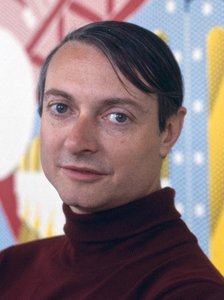
Roy Fox Lichtenstein
1923 - 1997 , Sjedinjene Američke Države
Osnovne informacije
- Artistic Movement Or Style: Pop Art
- Artists Who Influenced This Artist:
- Reginald Marsh
- Allan Kaprow
- Date Of Birth: 27. listopada 1923.
- Date Of Death: 29. rujna 1997.
- Full Name: Roy Fox Lichtenstein
- Nationality: Američan
- Notable Artworks:
- Whaam!
- Drowning Girl
- Oh, Jeff…I Love You, Too…But…
- Place Of Birth: New York City, SAD.
Srodni članci

The Psychology of Color in Roy Lichtenstein’s Pop Art Masterpieces: A Designer's Guide to Bold Visual Impact
Master the psychology of color in Roy Lichtenstein’s Pop Art. An expert guide for hotel designers on utilizing bold palettes and Ben-Day dots to create high-impact, memorable hospitality environments through premium art reproductions.


