Jamstvo povrata novca u roku od 100 dana Besplatna dostava širom svijeta
449.587umjetnička djela 30.613umjetnici 4.660muzeji 32jezici
Valuta
    Jezik
      Atelje · Osnovano 2015. · Pariz, Francuska
      AllPaintingsStore
      allpaintingsstore.com
      Catalogue entry

      Refrigerator

      1962. Acrylic On Canvas.

      Fig. 1. Roy Fox Lichtenstein, Refrigerator, 1962. Shown as the reproduction you are specifying: , .

      § 1Catalogue data

      § 2Abstract

      Opis kolekcionarskog predmeta

      Biografija umjetnika

      Roy Lichtenstein je bio američki pop umjetnik poznat po korištenju Ben-Day noktica, inspiraciji iz stripova i kritičkom mišljenju o potrošačkoj kulturi. Pogledajte 'Whaam!' i druge djela!

      § 3Commentary

      A Quintessential Lichtenstein: Exploring “Refrigerator” (1962)

      “Refrigerator,” created in 1962 by Roy Lichtenstein, is a striking example of the artist’s pioneering contribution to the Pop Art movement. This work isn't *of* a refrigerator, but rather a portrait rendered entirely within the visual language of mass production and comic book aesthetics – a deliberate commentary on American consumer culture emerging in the post-war era.

      Decoding the Style: Ben-Day Dots & Bold Lines

      Lichtenstein masterfully appropriates the techniques of commercial printing, specifically the Ben-Day dot process used in comics to create tone and shading. These evenly spaced dots, visible upon close inspection, aren’t intended to be subtle; they *are* the image, a deliberate flattening of pictorial space. Combined with thick, black outlines defining every shape – from facial features to clothing – the work achieves an immediate graphic impact. The limited color palette—a dominant pinkish-peach for skin tones contrasted with deep blues and vibrant reds—further enhances this bold, declarative style. Geometric shapes are paramount; circles, rectangles, and ovals build up the form, rejecting traditional modeling techniques in favor of simplified planes.

      Historical Context: Pop Art’s Rise

      1962 was a pivotal year for Lichtenstein and the burgeoning Pop Art movement. Artists were beginning to challenge the dominance of Abstract Expressionism by turning towards everyday imagery – advertising, comic books, and consumer products. “Refrigerator” embodies this shift, elevating a seemingly mundane subject (implied through the title) into a high art object. It’s a direct response to the increasing influence of mass media on American life and a questioning of traditional artistic hierarchies. Lichtenstein wasn't simply *depicting* popular culture; he was actively engaging with its visual vocabulary, forcing viewers to reconsider what constituted “art.”

      Subject & Symbolism: A Moment of Contemplation

      The artwork centers on a female figure, her gaze directed slightly off-center. This subtle gesture imbues the portrait with a sense of introspection or wistfulness. While seemingly straightforward, the work invites interpretation. Is she contemplating the objects of consumer desire? Is she herself an objectified image within that culture? The lack of narrative detail encourages viewers to project their own meanings onto her expression and pose. The title "Refrigerator" adds another layer of intrigue – is it a commentary on domesticity, or simply a playful juxtaposition with the stylized portrait?

      Technique & Materials

      Lichtenstein primarily employed screen printing for his Pop Art works, allowing for the precise replication of Ben-Day dots and flat color fields. "Refrigerator" likely utilizes this technique, applied to paper or canvas with oil-based inks. The resulting surface is smooth and unmodulated, further emphasizing the artwork’s artificiality and its connection to mechanical reproduction.

      Emotional Impact & Lasting Legacy

      “Refrigerator” isn't about evoking deep emotional resonance in a traditional sense. Instead, it provokes a more intellectual response – a questioning of perception, representation, and the role of art in a consumer society. Its enduring appeal lies in its iconic style, its historical significance, and its ability to spark dialogue about the relationship between art, culture, and commerce. For interior designers, a high-quality reproduction offers a bold statement piece, injecting a dose of mid-century modern vibrancy and intellectual curiosity into any space. For collectors, it represents an investment in one of the most influential artistic movements of the 20th century.
      • Artist: Roy Lichtenstein
      • Date: 1962
      • Style: Pop Art
      • Technique: Screen Printing (likely)
      • Materials: Ink on Paper/Canvas (presumed)

      Pitanja i odgovori

      Zašto je status autorskih prava za "Refrigerator" takav kakav jest?

      Status autorskih prava za djelo "Refrigerator" – i dalje je zaštićeno autorskim pravima – proizlazi iz godine smrti umjetnika, 1997.

      Koje boje dominiraju u djelu "Refrigerator" autora Roy Fox Lichtenstein?

      "Refrigerator" definira paleta boja Neutrals koju predvodi Putty (#dab0af).

      Je li djelu "Refrigerator" autora Roy Fox Lichtenstein svjetlija ili tamnija nota?

      Sveukupno, "Refrigerator" je zabilježeno kao brilliant. Doživljena svjetlina opisuje koliko se djelo čini svijetlim ili tamnim.
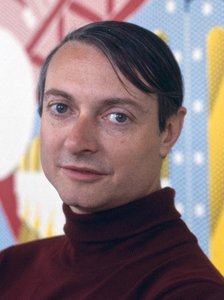
      § 4The artist

      Roy Fox Lichtenstein

      Roy Fox Lichtenstein

      1923 - 1997, Sjedinjene Američke Države

      Quick facts about Roy Fox Lichtenstein

      • Artistic Movement Or Style: Pop Art
      • Artists Who Influenced This Artist:
        • Reginald Marsh
        • Allan Kaprow
      • Date Of Birth: 27. listopada 1923.
      • Date Of Death: 29. rujna 1997.
      • Full Name: Roy Fox Lichtenstein
      • Nationality: Američan
      • Notable Artworks:
        • Whaam!
        • Drowning Girl
        • Oh, Jeff…I Love You, Too…But…
      • Place Of Birth: New York City, SAD.

      Biografija umjetnika

      The Genesis of a Pop Visionary

      Roy Fox Lichtenstein, born in the vibrant metropolis of New York City on October 27, 1923, indelibly altered the landscape of twentieth-century art. Emerging as a pivotal figure within the Pop Art movement, Lichtenstein didn’t simply reflect his era; he actively interrogated it, transforming commonplace imagery into compelling artistic statements. His upbringing in an upper-middle-class Jewish family fostered both a cultural awareness and an early artistic inclination. Childhood exposure to museums and concerts, coupled with a deep appreciation for jazz music, laid the groundwork for a creative spirit that would challenge conventional notions of fine art. Though initially drawn to realistic drawing and painting during his formative years, Lichtenstein’s formal training commenced at the Art Students League in 1939 under Reginald Marsh, followed by studies at Ohio State University – interrupted briefly by wartime service in the Army. These experiences provided a robust technical foundation that would later be brilliantly re-contextualized through the lens of mass culture and commercial aesthetics. The seeds of his signature style weren’t sown within the hallowed halls of artistic tradition but rather in the often-overlooked world of everyday imagery, particularly comic books and advertising.

      Early Influences and Artistic Exploration

      Lichtenstein's formative years were marked by a fascination with European art history—particularly Rembrandt and Picasso—whose mastery of chiaroscuro and expressive brushwork profoundly impacted his artistic sensibilities. He absorbed the lessons of Reginald Marsh at OSU, embracing abstraction as a means of conveying emotion and exploring innovative compositional techniques. His early drawings demonstrated an acute sensitivity to line and form, reflecting a meticulous attention to detail that would characterize his later work. Lichtenstein’s intellectual curiosity extended beyond art; he pursued scientific studies alongside his artistic endeavors, demonstrating a holistic approach to learning and creative expression. He was deeply influenced by Allan Kaprow's proto-pop aesthetic—specifically, the concept of "chance operations"—which encouraged him to experiment with unconventional materials and processes. The American Museum of Natural History served as an enduring source of inspiration, fostering his appreciation for natural forms and stimulating his imaginative vision.

      The Birth of Pop Art: Comic Books and Commercial Reproduction

      The pivotal moment in Lichtenstein’s artistic trajectory arrived during his tenure at Rutgers University where he encountered Allan Kaprow, whose influence reignited Lichtenstein’s interest in the burgeoning movement of Pop Art. Recognizing the potential for artistic innovation within popular culture—particularly comic books and advertising—he embarked on a radical stylistic transformation that would redefine the boundaries between “high” and “low” art. He began meticulously recreating comic strip images using techniques mimicking commercial printing processes, most notably employing Ben-Day dots – tiny colored squares that created halftone patterns—to simulate the texture of newspaper reproduction. This wasn’t merely imitation; it was a deliberate critique of mass culture and its impact on artistic expression. Lichtenstein's first major Pop painting, *Look Mickey* (1961), immediately established him as a pioneer of this new aesthetic direction. He skillfully manipulated color palettes and compositional arrangements to convey both humor and pathos—challenging traditional notions of artistic seriousness while simultaneously engaging with the visual language of popular media.

      Major Achievements and Artistic Legacy

      Lichtenstein’s prolific output spanned decades, encompassing paintings, prints, sculptures, murals, and commissions that cemented his position as one of the most influential artists of the second half of the twentieth century. His masterful command of technique—characterized by bold outlines, vibrant colors, and meticulous attention to detail—became synonymous with Pop Art style. He achieved international recognition through groundbreaking exhibitions at galleries and museums across Europe and North America, establishing himself as a leading voice in contemporary art discourse. Lichtenstein’s work continues to inspire graphic designers, illustrators, and visual artists worldwide—a testament to the enduring power of his artistic vision. His exploration of themes such as war, romance, and societal expectations—filtered through the lens of comic book imagery—challenged conventional artistic conventions and provoked critical reflection on cultural values.
      • Iconic Paintings: *Whaam!*, *Drowning Girl*, *Oh, Jeff…I Love You, Too…But…*, *Masterpiece*.
      • Influence on Graphic Design: His techniques profoundly impacted the visual language of advertising and illustration.
      Lichtenstein passed away on September 29, 1997, leaving behind a body of work that remains as relevant and provocative today as it was during his artistic prime—a legacy defined by innovation, intellectual rigor, and an unwavering commitment to challenging established artistic paradigms. His art serves as a powerful reminder of the transformative potential of appropriation and the enduring fascination with popular culture—a testament to the genius of Roy Fox Lichtenstein.

      § 5Comparanda

      § 6Questions

      Osnovne informacije

      • subject: Female portrait
      • style: Comic book aesthetics, Ben-Day dots, flat planes of color, bold outlines
      • influences: Comic books, commercial art
      • year: 1962

      Kviz o umjetnosti

      Svako pitanje ima samo jedan točan odgovor.

      Pitanje 1:
      Roy Lichtenstein is most closely associated with which art movement?
      Pitanje 2:
      What visual technique, borrowed from commercial printing, is a hallmark of Lichtenstein's style and prominently featured in 'Refrigerator'?
      Pitanje 3:
      The artwork 'Refrigerator', created in 1962, draws significant inspiration from what source material?
      Pitanje 4:
      Which of the following best describes the typical color palette and forms used by Lichtenstein in works like 'Refrigerator'?
      Pitanje 5:
      What is a defining characteristic of the composition in 'Refrigerator'?

      § 7Cite this entry

      AllPaintingsStore.com, “Roy Fox Lichtenstein, Refrigerator (1962)”, https://allpaintingsstore.com/hr/art/roy-lichtenstein-refrigerator-6WHLN2-en/ArtistReproduction/ (accessed 1 Listopad 2026).

      § 8The reproduction

      Ručno rađena uljana reprodukcija

      Ručno oslikano uljanim bojama na platnu u dimenzijama i okviru po vašem izboru, izrađeno po narudžbi od strane naših umjetnika. ( Prebacite na printove Prebacite na digitalnu sliku)

      It is specified on the order sheet in the margin; the present state of that sheet reads as follows.

      Refrigerator

      Tehnika reprodukcije

      Veličina reprodukcije

      -

      Odabrani vrhunski umjetnik

      Više detalja, profinjenosti i dodatnog vremena za izradu

      -

      Okvir za reprodukciju

      -

      -

      Za umjetnička djela ili reprodukcije veće od 105 cm (približno 41 inč) na bilo kojoj strani, okvir će biti isporučen u obliku rastavljenog seta za montažu. Ovaj način osigurava sigurnu dostavu i sprječava oštećenja tijekom transporta.

      Potrebna je profesionalna montaža – ovo nije proizvod za samostalnu izradu.
      Set mora sastaviti i platno zategnuti iskusni profesionalni uokvirivač, koristeći drvno ljepilo (nije uključeno u set), kljeste za zatezanje platna i stege kako bi se održao pravilan kut letvica dok se ljepilo suši. Nepravilna montaža ili neravnomjerno zategnuto platno mogu trajno oštetiti umjetničko djelo, a takva oštećenja nisu pokrivena našim jamstvom.

      • Sve letvice od punog drveta su uključene, precizno izrezane po mjeri.

      • Montira se pomoću priloženih vijaka, uz dodatak ljepila za drvo za spojeve u kutovima, koje nije uključeno u set i koje vaš okviraš mora vlastito nabaviti.

      • Potrebni su profesionalni alati koji nisu uključeni: škripc za zatezanje platna (zatezač) i stezaljke za održavanje pravokonačnosti letvica tijekom sušenja ljepila.

      Važno:
      Za spojeve u kutovima potrebno je ljepilo za drvo, letvice se moraju pričvrstiti stezgama dok se ljepilo potpuno ne osuši, a za zatezanje platna na sastavljenom okviru potreban je alat za zatezanje platna. Nijedan od ovih alata nije uključen u set. Molimo vas da prije narudžbe ove veličine osigurate uslugu iskusnog profesionalnog uokvirivača.

      Natpisna pločica

      -

      -

      Zaštitni lak

      Sjajni lak (pojačava intenzitet boja, štiti od svjetlosti i vlage)

      -

      Prilagodite svoje umjetničko djelo

      Primjeri mogućnosti prilagodbe: Zamijenite lice fotografijom kupca; Dodajte ljubimca (npr. zamijenite mačku psom); Uključite skrivenu poruku u pozadinu; Promijenite pejzaž ili elemente pozadine.

      -

      Hitna dostava

      Globalna dostava () u roku od 3-4 tjedna umjesto standardnih 5 tjedana. (30 Listopad). Bez kompromisa u kvaliteti.

      -

      Brza dostava

      Dostava širom svijeta () u roku od 5 tjedana. (6 Studeni).

      Uključeno u cijenu

      Ukupna cijena

      € 227

      Included with every order

      • Besplatna ekspresna dostava širom svijeta
      • Visokokvalitetno laneno platno
      • Potpuno osiguranje dostave
      • Jamstvo povrata carine i uvoznih poreza
      • Jamstvo vjernosti boja
      • Politika povrata u roku od 100 dana (samo u slučaju nedostataka)
      • Jamstvo povrata 100% novca
      • Popust na više proizvoda
      Order sheet