


 Pregledaj u stvarnoj veličini
 Pošalji
 Podijeli
 Detalji o umjetničkom djelu

 Preuzmi
 Slični predmeti
 Rentgenska snimka
 Automatska prezentacija
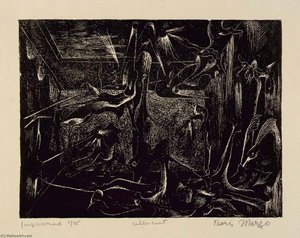
Untitled
 Etching
- Contemporary Realism
 1978
1978- Modern
 28.0 x 30.0 cm
 Kerala Museum
 Prikaži više
Giclée / Umjetnički otisak
Giclée tisak muzejske kvalitete ili otisak na platnu uz brzu proizvodnju i fleksibilne opcije završne obrade. ( Kupi ručno naslikanu sliku Kupi digitalnu sliku)




P118B $10

P118H $10

P118W $10

P438Z $10

P508JH $12

P508YH $12

P805H $10

P805Z $10

P919BZ $10

P919G $10

P919XJ $10

P959ZH $10

P968JZ $12

W106C $8

W218G $10

W218JH $8

W218Y $10

W307PJ $10

W316G $10

W316PJ $8

W316Y $10

W398PJ $8

W4111J $10

W500HY $15

W500JH $15

W692G $12

W849H $8

W940BG $15

W953PJ $8




Odaberite jednu od naših unaprijed definiranih veličina koje odgovaraju izvornim proporcijama umjetničkog djela.

Možete unijeti vlastite dimenzije kako biste umjetničko djelo prilagodili specifičnom okviru ili prostoru. Ako odabrana veličina ne odgovara proporcijama izvornog rada, izrezat ćemo dio slike ili je proširiti pomoću ogledalnog efekta ili jednobojne rubne površine. Digitalni prikaz (mockup) bit će vam poslan na odobrenje prije početka proizvodnje.
Imajte na umu da pregled na zaslonu ne odražava stvarno izrezivanje ili proširivanje. Samo će mockup točno prikazati konačnu kompoziciju.
Iako su dostupne prilagođene veličine, preporučujemo odabir dimenzije iz unaprijed definirane liste kako biste očuvali izvorne proporcije.
Dostava širom svijeta () u roku od 2 tjedna umjesto standardnih 4/5 tjedana. (17 Kolovoz)

Besplatna ekspresna dostava širom svijeta

Visokokvalitetno laneno platno

Potpuno osiguranje dostave

Jamstvo povrata carine i uvoznih poreza

Garancija vjernog podudaranja boja

Politika povrata u roku od 60 dana (samo u slučaju nedostataka)

Jamstvo povrata 100% novca

Popust na više proizvoda
 Opcija stakla dostupna je samo za dimenzije manje od 110 cm

Untitled
Giclée / Umjetnički otisak
Veličina reprodukcije
-


Ukupna cijena
$ 64
Opis djela
A Poignant Encounter in Etching
In this evocative black and white etching from 1978, the legendary Indian printmaker Somnath Hore invites us into a moment of profound human connection. The composition centers on an intimate, almost sacred embrace between two figures; a man, draped in what appears to be a simple robe or long shirt, cradles another person with a tenderness that transcends the starkness of the medium. This central interaction is framed by a quiet, domestic setting where a window and a wall provide a sense of enclosure, while a solitary potted plant in the lower corner introduces a delicate touch of nature into the somber scene. The interplay of light and shadow across the figures creates a palpable sense of weight and presence, drawing the viewer into the silent dialogue between the subjects.
The technical mastery of Hore is on full display through his signature use of meticulous hatching and cross-hatching. These fine, rhythmic lines do more than merely define form; they imbue the paper with texture and emotional depth, allowing the artist to sculpt light out of darkness. The etching technique lends a raw, visceral quality to the work, where every stroke feels like a deliberate mark of witness. This method is particularly effective in capturing the subtle nuances of the figures' expressions and the heavy atmosphere that surrounds them, making the piece feel less like a static image and more like a living, breathing fragment of history.
The Weight of History and Human Spirit
To understand this work, one must look through the lens of Somnath Hore’s profound engagement with the socio-political landscape of twentieth-century Bengal. As an artist who stood as a witness to the devastating Bengal famine and the turbulent Tebhaga movement, Hore’s oeuvre is deeply rooted in the reality of human suffering and resilience. While this specific untitled piece presents an intimate scene, it carries the echoes of his larger mission: to capture the essence of the human experience amidst hardship. The shadows within the etching can be seen as metaphors for the historical struggles that shaped his era, while the embrace serves as a symbol of enduring compassion and the strength found in solidarity.
For the discerning collector or interior designer, this reproduction offers more than just a visual element; it provides a soulful focal point for a curated space. The monochromatic palette and the sophisticated interplay of line work make it an ideal addition to a gallery wall or a minimalist study, where its quiet intensity can command attention without overwhelming the surroundings. Owning a piece that reflects such deep historical consciousness and technical brilliance allows one to bring a sense of gravity, empathy, and timelessness into a modern living environment.
Srodna umjetnička djela



Biografija umjetnika
The Witness of Bengal’s Turbulent Century
Somnath Hore (1921–2006) was far more than a mere creator of forms; he was a profound chronicler of the human condition, standing as an unflinching witness to the socio-imaginative upheavals of twentieth-century Bengal. His artistic journey was inextricably linked to the very marrow of social struggle, shaped by the devastating echoes of the 1943 Bengal famine and the defiant spirit of the Tebhaga peasant movement. Born in Chittagong, Hore’s early life was deeply colored by the political currents of his era. His affiliation with the Communist Party during his youth infused his work with a powerful socialist ideology, transforming his practice into a medium for documenting historical trauma and advocating for social justice. He did not merely observe history from the periphery; he translated the hunger, the resistance, and the resilience of the marginalized into a visual language that remains hauntingly relevant today.The Architecture of Suffering and Technique
The technical brilliance of Hore’s oeuvre lies in his ability to translate visceral, often agonizing experiences into delicate, rhythmic textures. As a master of printmaking, he achieved legendary status through his command of lithography and intaglio, using these mediums to explore the depths of human vulnerability. He is perhaps most celebrated for his development of the unique pulp-print technique, a method that allowed him to imbue his work with a raw, tactile quality. This was most notably realized in his critically acclaimed Wounds series, where the very texture of the paper seemed to mirror the physical and emotional scars of the people he depicted. Through meticulous hatching and cross-hatching, Hore sculpted light out of darkness, using fine, rhythmic lines to create a sense of depth that was both aesthetically masterful and emotionally heavy. Whether through the starkness of a charcoal drawing or the intricate layers of an etching, his work captures a profound intimacy—a moment where the artist’s hand becomes a vessel for collective memory.A Sculptural Legacy in Clay and Spirit
As his artistic vision matured, Hore expanded his dialogue with form, moving from the two-dimensional plane into the tactile, three-dimensional world of sculpture. Utilizing stoneware clay and bronze, he brought a contorted, expressive energy to his figures, echoing the tension and endurance found in his earlier prints. This transition allowed him to explore the weight and presence of the human body in space, imbuing his sculptures with a humanist sensibility that was both grounded in realism and elevated by poetic expression. His later years were deeply rooted in the academic and creative community of Santiniketan, where he headed the Graphics and Printmaking Department at Kala Bhavan. Working alongside luminaries such as K.G. Subramanyan and Ramkinkar Baij, Hore helped shape the trajectory of modern Indian art. His legacy remains a testament to the power of art to serve as both a mirror to society’s darkest moments and a celebration of the indomitable human spirit.
Somnath Hore
1921 - 2006 , India
Osnovne informacije
- Artistic Movement Or Style: Social realism
- Date Of Birth: 1921
- Full Name: Somnath Hore
- Nationality: Indian
- Notable Artworks: ['Untitled']
- Place Of Birth: India
Srodni članci

Timeless Contrast: A Professional Guide to Black and White Photography for Large-Scale Hotel Decor
A professional guide for hotel designers on utilizing black and white photography for large-scale decor. Learn to master scale, texture, and monochrome contrast to create impactful, high-end hospitality environments through efficient, bulk art procurement solutions.

Mastering Etching: A Professional Guide to Intaglio Printmaking Techniques for High-End Interior Curation
Master the intricate techniques of intaglio etching with our professional guide. Discover how fine-line printmaking adds depth and sophistication to luxury hotel interiors through high-quality, museum-grade reproductions for large-scale design projects.



