Jamstvo povrata novca u roku od 100 dana Besplatna dostava širom svijeta
449.587umjetnička djela 30.613umjetnici 4.660muzeji 32jezici
Valuta
    Jezik
      Atelje · Osnovano 2015. · Pariz, Francuska
      AllPaintingsStore
      allpaintingsstore.com
      Catalogue entry

      Complex-Simple

      Oil.

      Fig. 1. Vasily Wassilyevich Kandinsky, Complex-Simple. Shown as the reproduction you are specifying: , .

      § 1Catalogue data

      § 2Abstract

      Opis kolekcionarskog predmeta

      Explore Wassily Kandinsky's 'Complex-Simple,' a pivotal Neo-Minimalist masterpiece from 1939. Discover vibrant colors, geometric forms & its influence on modern art with hand-painted reproductions.

      Biografija umjetnika

      Otkrijte svijet apstraktne umjetnosti s Kandinskyjevom "Kompozicija VII" i drugim velikanskim djelima koja su promijenila povijest umjetnosti!

      § 3Commentary

      Introduction to Neo-Minimalism and Wassily Kandinsky

      Neo-Minimalism is a contemporary art movement that emerged as an evolution of minimalism, incorporating new technologies and ethical values. Wassily Kandinsky, a pioneer of abstract art, significantly contributed to the development of Neo-Minimalism. His work, including Complex-Simple, paved the way for future generations of artists to explore the emotional power of abstract art.

      Complex-Simple: An Abstract Masterpiece

      Complex-Simple, painted by Kandinsky in 1939, is a prime example of Neo-Minimalism. The painting features geometric forms, bold colors, and a unique composition that invites viewers to explore their emotional responses. As seen on AllPaintingsStore.com, this masterpiece is a testament to Kandinsky's innovative style.

      Kandinsky's Influence on Neo-Minimalism

      Kandinsky's influence on Neo-Minimalism is evident in his use of geometric forms and bold colors. His work has inspired countless artists to create their own Neo-Minimalist masterpieces. The Centre Pompidou museum has an extensive collection of Kandinsky's works, including Complex-Simple, which showcases his contribution to the development of abstract art.
      • Visit AllPaintingsStore.com to explore hand-made oil painting reproductions of Kandinsky's works, including Complex-Simple.
      • Learn more about Neo-Minimalism and its key artists on Wikipedia.
      • Discover the Musée de Grenoble's collection of modern art, featuring works by Kandinsky and other prominent artists.
      Key aspects of Neo-Minimalism include the use of geometric forms, bold colors, and a focus on emotional expression. Kandinsky's work embodies these principles, making him a leading figure in the development of this art movement.
      The legacy of Kandinsky continues to inspire artists and art enthusiasts alike, with his innovative style and contribution to Neo-Minimalism remaining unparalleled.

      Pitanja i odgovori

      Koje emocije prenosi "Complex-Simple" autora Vasily Wassilyevich Kandinsky?

      "Complex-Simple" autora Vasily Wassilyevich Kandinsky odiše Reflective emocionalnim tonom.

      U kojoj je tehnici izvedeno djelo "Complex-Simple" autora Vasily Wassilyevich Kandinsky?

      "Complex-Simple" je izvedeno u tehnici Oil.

      Za koju je prostoriju preporučeno djelo "Complex-Simple" autora Vasily Wassilyevich Kandinsky?

      Reprodukcija djela "Complex-Simple" izvrsno se uklapa u Living Room.

      § 4The artist

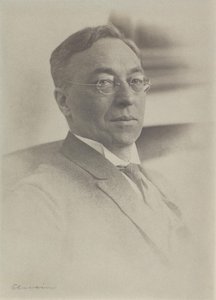
      Vasily Wassilyevich Kandinsky

      Vasily Wassilyevich Kandinsky

      1866 - 1944, Rusija

      Quick facts about Vasily Wassilyevich Kandinsky

      • Artistic Movement Or Style: Abstraktna umjetnost, Ekspresionizam
      • Artists Or Movements Influenced By This Artist: ['Abstrakt ekspresionizam']
      • Artists Who Influenced This Artist:
        • Claude Monet
        • Richard Wagner
      • Date Of Birth: 1866.
      • Date Of Death: 1944.
      • Full Name: Wassily Wassilyevich Kandinsky
      • Nationality: Rusija
      • Notable Artworks:
        • Murnau s Rainbow
        • Tempered Elan
        • An Intimate Party
      • Place Of Birth: Moskva, Rusija

      Biografija umjetnika

      A Life Immersed in Color and Spirit

      Wassily Wassilyevich Kandinsky, born December 4, 1866, in Moscow, Russia, was a revolutionary figure who irrevocably altered the course of modern art. His journey wasn’t one of immediate artistic calling; initially destined for a career in law and economics at the University of Moscow, it was a profound encounter with Impressionist painting – specifically Claude Monet's “Haystacks” – and a deeply moving experience witnessing Wagner’s opera "Lohengrin" that ignited within him an irrepressible desire to pursue art. This pivotal moment, occurring around age thirty, marked not merely a career change but a complete transformation of perspective, setting him on a path toward pioneering abstraction. He soon relocated to Munich, enrolling at the prestigious Academy of Fine Arts and studying under Franz von Stuck, though even within formal training, Kandinsky’s spirit yearned for exploration beyond conventional boundaries. Early influences included Russian folk art, gleaned from an ethnographic expedition to the Vologda region in 1889, which instilled a fascination with vibrant color palettes and symbolic imagery. This foundation would prove crucial as he began to develop his unique artistic language. These early explorations weren’t simply about aesthetic preference; they were rooted in a deep cultural connection and a burgeoning understanding of how art could communicate beyond the literal. He experimented with landscapes and portraits, demonstrating considerable skill but always feeling constrained by representational limitations.

      The Dawn of Abstraction: From Expressionism to Inner Necessity

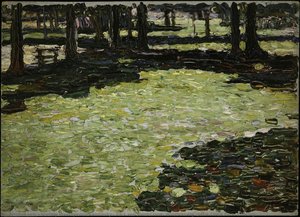
      Kandinsky’s early works reveal a strong expressionistic bent, characterized by bold colors and emotional intensity – pieces like “Papeln (Poplars)” from 1902 exemplify this period. However, he wasn't content with merely representing the external world; he sought to express inner realities, spiritual truths that transcended mere visual depiction. This quest led him gradually away from representational art and toward a revolutionary exploration of color, form, and their emotional resonance. He believed that colors possessed inherent psychological effects, capable of evoking specific feelings and sensations in the viewer. This conviction was deeply intertwined with his burgeoning interest in Theosophy, a spiritual movement emphasizing esoteric knowledge and universal brotherhood. As he delved deeper into these ideas, Kandinsky’s paintings became increasingly non-objective, shedding recognizable forms in favor of abstract compositions driven by an “inner necessity.” This wasn't simply about abandoning representation; it was about discovering a new visual language capable of expressing the intangible realms of emotion and spirituality. He sought to create a visual equivalent of music, where color and form harmonized to evoke profound emotional responses.
      • Notable Early Works: “Papeln (Poplars),” “Fruitful Tree,” “Moscow Landscape”
      • Influences: Impressionism (Monet), Russian Folk Art

      Geometric Harmony and Spiritual Resonance

      The period following his involvement with the influential artist group Der Blaue Reiter (The Blue Rider), which he co-founded in Munich in 1911, saw a further evolution in Kandinsky’s style. While earlier works often featured fluid, organic shapes, he began to explore geometric abstraction, focusing on the interplay of circles, triangles, and squares. “Several Circles” (140 x 140 cm) stands as a prime example of this phase – a dynamic composition where color and form interact in a harmonious yet energetic dance. He theorized extensively about the relationship between art and spirituality, arguing that abstract forms could convey spiritual truths more effectively than figurative representations.
      • Theoretical Writings: “Concerning the Spiritual in Art” (1911)
      • The Blaue Reiter Group: Collaboration with Franz Marc and Alexei von Jawlensky

      Bauhaus Influence and Lasting Legacy

      The outbreak of World War I forced Kandinsky's return to Russia in 1914, but following the Russian Revolution, he found himself increasingly at odds with the prevailing artistic climate. In 1920, he accepted a teaching position at the Bauhaus school in Germany, where he profoundly influenced generations of artists with his theories on color, form, and abstraction. The Bauhaus provided an ideal environment for Kandinsky to further develop his ideas and explore new creative avenues. He continued to experiment with geometric forms and vibrant colors, often incorporating layered impasto techniques to create textured surfaces that added depth and complexity to his compositions – as seen in later works like “An Intimate Party” (1942). After the closure of the Bauhaus by the Nazi regime in 1933, Kandinsky moved to France, where he remained for the rest of his life. His impact on modern art is immeasurable; he is widely recognized as a pioneer of abstract expressionism and a key figure in the development of non-representational painting. His works are held in major museums worldwide, including the Tretyakov Gallery in Moscow, which houses his monumental “Composition VII,” a testament to his artistic vision and enduring legacy. He died December 13, 1944, in Neuilly-sur-Seine, France.
      • Major Achievements: Bauhaus Teaching Position, Development of Geometric Abstraction
      • Notable Later Works: “Composition VII,” “Landscape with Figures”

      § 5Comparanda

      § 6Questions

      Osnovne informacije

      • Medium: Oil on canvas
      • Title: Complex-Simple
      • Artist: Wassily Kandinsky
      • Location: Centre Pompidou, Paris
      • Year: 1939
      • Artistic style: Abstract Art

      Kviz o umjetnosti

      Svako pitanje ima samo jedan točan odgovor.

      Pitanje 1:
      What art movement is ‘Complex-Simple’ primarily associated with?
      Pitanje 2:
      Which of the following best describes the dominant colors used in ‘Complex-Simple’?
      Pitanje 3:
      According to the text, what is a key influence of Kandinsky’s work on Neo-Minimalism?
      Pitanje 4:
      Where can one find a significant collection of Kandinsky’s works, including ‘Complex-Simple’?
      Pitanje 5:
      What does the text suggest Kandinsky’s early work, such as ‘Haystacks,’ influenced?

      § 7Cite this entry

      AllPaintingsStore.com, “Vasily Wassilyevich Kandinsky, Complex-Simple”, https://allpaintingsstore.com/hr/art/wassily-wassilyevich-kandinsky-complex-simple-5ZKCVL-en/ (accessed 2 Listopad 2026).

      § 8The reproduction

      Ručno rađena uljana reprodukcija

      Ručno oslikano uljanim bojama na platnu u dimenzijama i okviru po vašem izboru, izrađeno po narudžbi od strane naših umjetnika. ( Prebacite na printove Prebacite na digitalnu sliku)

      It is specified on the order sheet in the margin; the present state of that sheet reads as follows.

      Complex-Simple

      Tehnika reprodukcije

      Veličina reprodukcije

      -

      Odabrani vrhunski umjetnik

      Više detalja, profinjenosti i dodatnog vremena za izradu

      -

      Okvir za reprodukciju

      -

      -

      Za umjetnička djela ili reprodukcije veće od 105 cm (približno 41 inč) na bilo kojoj strani, okvir će biti isporučen u obliku rastavljenog seta za montažu. Ovaj način osigurava sigurnu dostavu i sprječava oštećenja tijekom transporta.

      Potrebna je profesionalna montaža – ovo nije proizvod za samostalnu izradu.
      Set mora sastaviti i platno zategnuti iskusni profesionalni uokvirivač, koristeći drvno ljepilo (nije uključeno u set), kljeste za zatezanje platna i stege kako bi se održao pravilan kut letvica dok se ljepilo suši. Nepravilna montaža ili neravnomjerno zategnuto platno mogu trajno oštetiti umjetničko djelo, a takva oštećenja nisu pokrivena našim jamstvom.

      • Sve letvice od punog drveta su uključene, precizno izrezane po mjeri.

      • Montira se pomoću priloženih vijaka, uz dodatak ljepila za drvo za spojeve u kutovima, koje nije uključeno u set i koje vaš okviraš mora vlastito nabaviti.

      • Potrebni su profesionalni alati koji nisu uključeni: škripc za zatezanje platna (zatezač) i stezaljke za održavanje pravokonačnosti letvica tijekom sušenja ljepila.

      Važno:
      Za spojeve u kutovima potrebno je ljepilo za drvo, letvice se moraju pričvrstiti stezgama dok se ljepilo potpuno ne osuši, a za zatezanje platna na sastavljenom okviru potreban je alat za zatezanje platna. Nijedan od ovih alata nije uključen u set. Molimo vas da prije narudžbe ove veličine osigurate uslugu iskusnog profesionalnog uokvirivača.

      Natpisna pločica

      -

      -

      Zaštitni lak

      Sjajni lak (pojačava intenzitet boja, štiti od svjetlosti i vlage)

      -

      Prilagodite svoje umjetničko djelo

      Primjeri mogućnosti prilagodbe: Zamijenite lice fotografijom kupca; Dodajte ljubimca (npr. zamijenite mačku psom); Uključite skrivenu poruku u pozadinu; Promijenite pejzaž ili elemente pozadine.

      -

      Hitna dostava

      Globalna dostava () u roku od 3-4 tjedna umjesto standardnih 5 tjedana. (31 Listopad). Bez kompromisa u kvaliteti.

      -

      Brza dostava

      Dostava širom svijeta () u roku od 5 tjedana. (7 Studeni).

      Uključeno u cijenu

      Ukupna cijena

      € 229

      Included with every order

      • Besplatna ekspresna dostava širom svijeta
      • Visokokvalitetno laneno platno
      • Potpuno osiguranje dostave
      • Jamstvo povrata carine i uvoznih poreza
      • Jamstvo vjernosti boja
      • Politika povrata u roku od 100 dana (samo u slučaju nedostataka)
      • Jamstvo povrata 100% novca
      • Popust na više proizvoda
      Order sheet